MISIÓN DE OBSERVACIÓN ELECTORAL
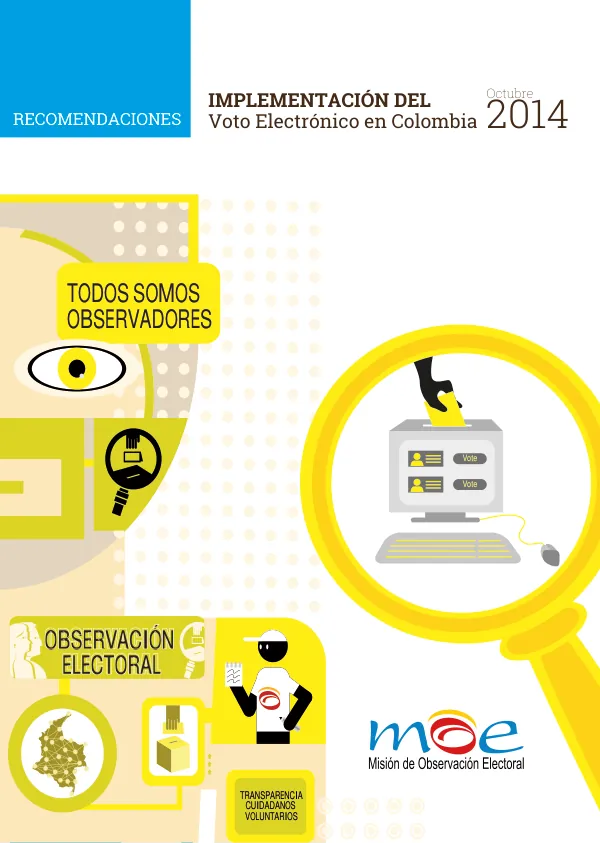
IMPLEMENTACIÓN DEL Voto Electrónico en Colombia 2014
The implementation of electronic voting in Colombia in 2014 was a significant development in the country's electoral process.
2014 · 37 pages
Sign in to readA free account is required to download.
Abstract
The introduction of technology aimed to improve the efficiency and transparency of elections, while also enhancing the voting experience for citizens. However, the implementation of electronic voting also raised concerns about the potential risks and challenges associated with this new technology. The Colombian Constitution and international human rights instruments, such as the Universal Declaration of Human Rights and the International Covenant on Civil and Political Rights, establish the principles of free, fair, and transparent elections. The Constitution emphasizes the importance of the popular will in the exercise of power and the need for periodic, authentic elections to ensure the legitimacy of the government. The concept of electronic voting refers to the use of information and communication technologies (ICTs) in the electoral process. This can include various components, such as voter registration, vote counting, and result transmission. The environment in which electronic voting takes place is critical, as it must be controlled to ensure the integrity and confidentiality of the voting process. A controlled environment is essential to guarantee the accuracy and reliability of the voting process. This can be achieved by implementing measures such as secure voting systems, voter verification, and audit trails. The use of electronic voting also raises concerns about the potential for tampering or manipulation of the voting process. The Colombian electoral authority has implemented various measures to ensure the security and integrity of the electronic voting system. These measures include the use of secure voting machines, voter verification, and audit trails. However, the effectiveness of these measures in preventing tampering or manipulation of the voting process is still a subject of debate. The implementation of electronic voting in Colombia has also raised concerns about the potential impact on the voting experience of citizens. Some citizens have expressed concerns about the lack of transparency and accountability in the voting process, while others have raised concerns about the potential for technical errors or malfunctions. In order to address these concerns, the Colombian electoral authority has implemented various measures to improve the transparency and accountability of the voting process. These measures include the use of transparent voting systems, voter verification, and audit trails. The authority has also established a system of checks and balances to ensure that the voting process is fair and transparent. The implementation of electronic voting in Colombia has also raised concerns about the potential impact on the electoral process as a whole. Some experts have raised concerns about the potential for the electronic voting system to be vulnerable to cyber attacks or other forms of tampering. Others have raised concerns about the potential for the electronic voting system to be used to manipulate the outcome of elections.
Related documents