MISIÓN DE OBSERVACIÓN ELECTORAL
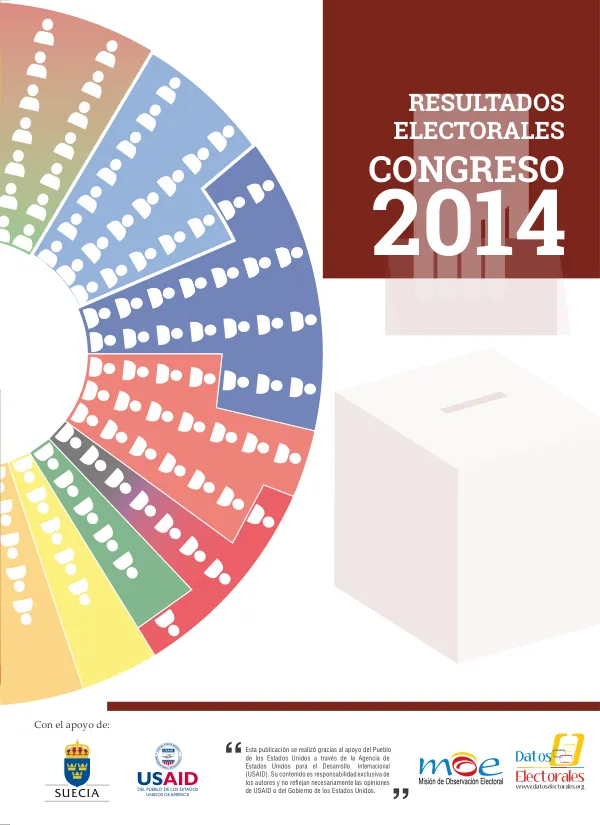
Resultados Elecciones Congreso 2014
The 2014 Colombian Congressional Elections took place in November 2014, with the participation of various parties and movements.
2014 · 45 pages
Sign in to readA free account is required to download.
Abstract
The elections resulted in the formation of the 2014-2018 Congress, with 166 members in the Senate and 166 members in the Chamber of Representatives. The participation rate in the elections was 44.8%, with a total of 12,136,466 valid votes cast. The most voted parties in the Senate were the Partido de la U (44.8%), followed by the Partido Liberal Colombiano (23.4%), and the Partido Conservador Colombiano (12.3%). In the Chamber of Representatives, the Partido de la U (44.8%) was also the most voted party, followed by the Partido Liberal Colombiano (23.4%), and the Partido Conservador Colombiano (12.3%). The number of effective parties in the Senate was 28, while in the Chamber of Representatives it was 44. The umbral of 2% was reached by 63 parties in the Senate and 1998 parties in the Chamber of Representatives. The umbral of 3% was reached by 15 parties in the Senate and 14 parties in the Chamber of Representatives. The participation rate in the elections varied by department, ranging from 35% in San Andrés to 64% in Cundinamarca. The average participation rate in the Chamber of Representatives was 44%, while in the Senate it was also 44%. The elections resulted in the formation of a Congress with a diverse representation of parties and movements. The Partido de la U emerged as the most voted party, followed by the Partido Liberal Colombiano and the Partido Conservador Colombiano. The participation rate in the elections was relatively high, with 44.8% of the eligible voters casting their ballots. The number of effective parties in the Senate and the Chamber of Representatives was relatively high, indicating a diverse representation of parties and movements in the Congress. The umbral of 2% and 3% was reached by a significant number of parties, indicating a competitive electoral landscape. The participation rate in the elections varied by department, with some departments having a higher participation rate than others. The average participation rate in the Chamber of Representatives and the Senate was 44%, indicating a relatively high level of participation in the elections. The elections resulted in the formation of a Congress with a diverse representation of parties and movements, and a relatively high participation rate. The number of effective parties in the Senate and the Chamber of Representatives was relatively high, indicating a competitive electoral landscape.
Related documents