USAID DEC
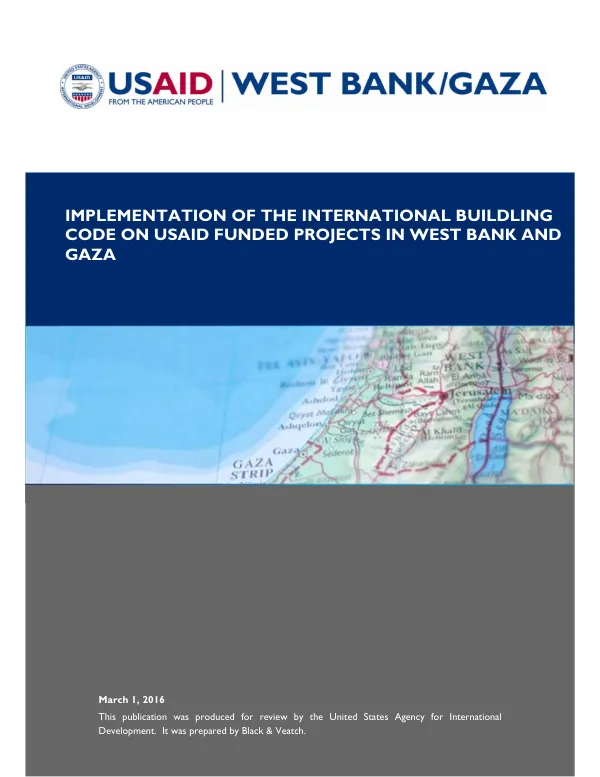
Implementation of the International Building Code on USAID Funded Projects in West Bank and Gaza
Sign inBLACK AND VEATCH, INTERNATIONAL
Implementation of the International Building Code on USAID Funded Projects in West Bank and Gaza
The International Building Code (IBC) is implemented on USAID-funded projects in the West Bank and Gaza.
2016 · 177 pages
Sign in to readA free account is required to download.
Abstract
The IBC is a comprehensive building code that sets minimum requirements for building design, construction, and safety. The code is based on the 2012 IBC chapters and is intended to ensure that buildings are safe and accessible for occupants. The current level of understanding of the IBC among building professionals in the region is limited. A survey conducted in 2012 found that only 20% of respondents had a good understanding of the code. The majority of respondents reported that they had not received adequate training on the IBC. The current education level of new graduates in the field of architecture and engineering is also a concern, with many graduates lacking the necessary knowledge and skills to design and build buildings that meet the requirements of the IBC. The current regulatory framework for building design and control in the West Bank and Gaza is inadequate. The Palestinian National Authority has established a number of regulations and standards for building design and construction, but these regulations are often outdated and do not align with international best practices. The lack of a clear and consistent regulatory framework has led to a lack of confidence in the building industry, with many builders and developers opting to ignore or circumvent the regulations. The IBC has a number of implications for building design and construction in the West Bank and Gaza. The code requires that buildings be designed and constructed to withstand natural disasters such as earthquakes and floods. It also requires that buildings be accessible and safe for occupants, with features such as emergency exits, fire suppression systems, and accessible routes. The code also sets minimum requirements for building materials, including structural integrity, fire resistance, and durability. The IBC has a number of structural design implications for buildings in the West Bank and Gaza. The code requires that buildings be designed to withstand seismic activity, with features such as seismic-resistant design, ductile detailing, and seismic isolation systems. It also requires that buildings be designed to withstand wind loads, with features such as wind-resistant design, wind tunnel testing, and wind-induced vibration control. The IBC also has implications for fire systems and mechanical, electrical, and plumbing (MEP) design. The code requires that buildings be equipped with fire suppression systems, including sprinkler systems, fire alarms, and emergency lighting. It also requires that buildings be designed with safe and accessible means of egress, including stairways, elevators, and emergency exits. The IBC has a number of architectural design implications for buildings in the West Bank and Gaza. The code requires that buildings be designed to be accessible and safe for occupants, with features such as accessible routes, emergency exits, and fire suppression systems. It also requires that buildings be designed to be energy-efficient, with features such as insulation, glazing, and HVAC systems. Implementation of the IBC on USAID-funded projects in the West Bank and Gaza will require a number of steps. First, building professionals in the region will need to receive training on the IBC and its requirements. Second, the regulatory framework for building design and control will need to be updated to align with international best practices. Finally, building owners and developers will need to be educated on the benefits of implementing the IBC and the costs of non-compliance. The USAID Infrastructure Needs Program (INP II) is a key partner in the implementation of the IBC on USAID-funded projects in the West Bank and Gaza. The program provides technical assistance and training to building professionals in the region, as well as support for the development of a regulatory framework that aligns with international best practices. The program also provides funding for the implementation of IBC-compliant building designs and construction projects. Overall, the implementation of the IBC on USAID-funded projects in the West Bank and Gaza will require a coordinated effort from building professionals, regulatory agencies, and building owners and developers. With the right training, support, and resources, the IBC can be implemented effectively, ensuring that buildings in the region are safe, accessible, and energy-efficient.