USAID DEC
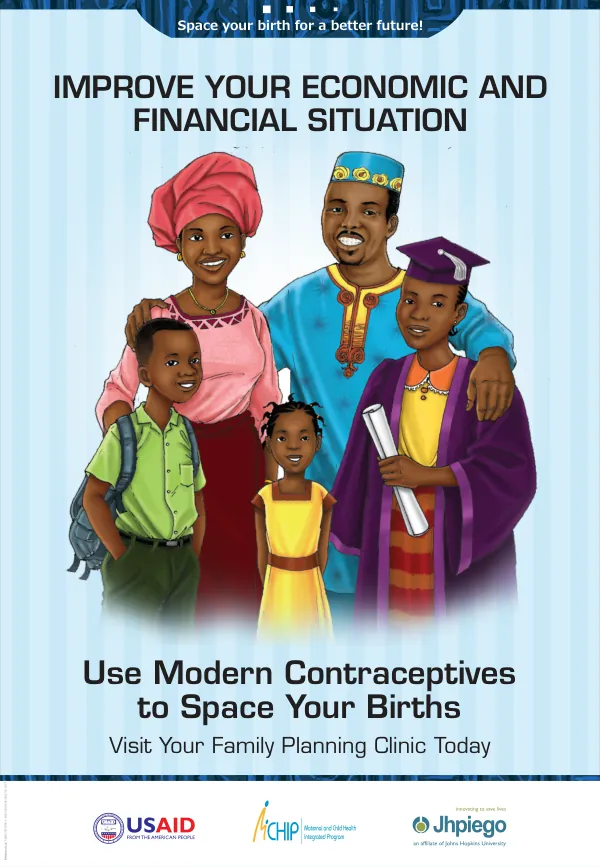
Improve Your Economic and Financial Situation
Family planning is a crucial aspect of improving economic and financial stability for individuals and families.
1 pages
Sign in to readA free account is required to download.
Abstract
The use of modern contraceptives is a key strategy in achieving this goal. By spacing births, families can allocate resources more effectively, invest in education and skills development, and increase their earning potential. The benefits of family planning are numerous. For women, spacing births can reduce the risk of maternal mortality, improve health outcomes, and enhance their overall well-being. For families, it can lead to improved economic stability, increased food security, and better access to education and healthcare services. By delaying the onset of childbearing, women can pursue education and training, acquire skills, and enter the workforce, thereby increasing their earning potential and contributing to the overall household income. The use of modern contraceptives is a critical component of family planning. These methods are highly effective in preventing unintended pregnancies and can be used in conjunction with other family planning strategies. In addition to modern contraceptives, other family planning services include counseling, education, and support for women and couples. These services can help individuals make informed decisions about their reproductive health and reproductive health outcomes. Family planning clinics play a vital role in providing access to modern contraceptives and other family planning services. These clinics offer a range of services, including counseling, education, and support for women and couples. They also provide access to modern contraceptives, including injectables, implants, and implants with hormonal methods. By visiting a family planning clinic, individuals can receive accurate information about their reproductive health, access modern contraceptives, and make informed decisions about their reproductive health. In Rwanda, the use of modern contraceptives has been promoted as a key strategy for improving economic and financial stability. The government has implemented various initiatives to increase access to modern contraceptives, including the distribution of free or low-cost contraceptives, the provision of counseling and education services, and the establishment of family planning clinics. These initiatives have contributed to a significant increase in the use of modern contraceptives among women of reproductive age, thereby improving their reproductive health outcomes and contributing to the overall economic and financial stability of the country.