MINISTRY OF HEALTH
Improved Maternal Health through Traditional Birth Attendants
The USAID Primary Health Care Project in Iraq (PHCPI) aims to improve maternal health and reduce child mortality in Iraq by targeting best practice interventions that enhance the quality of services, increase utilization, and empower patients and the community.
2014 · 2 pages
Sign in to readA free account is required to download.
Abstract
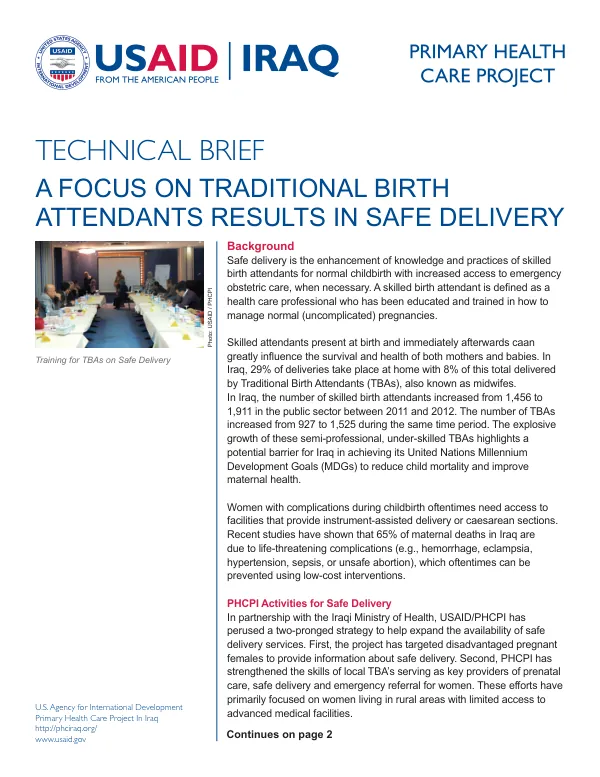
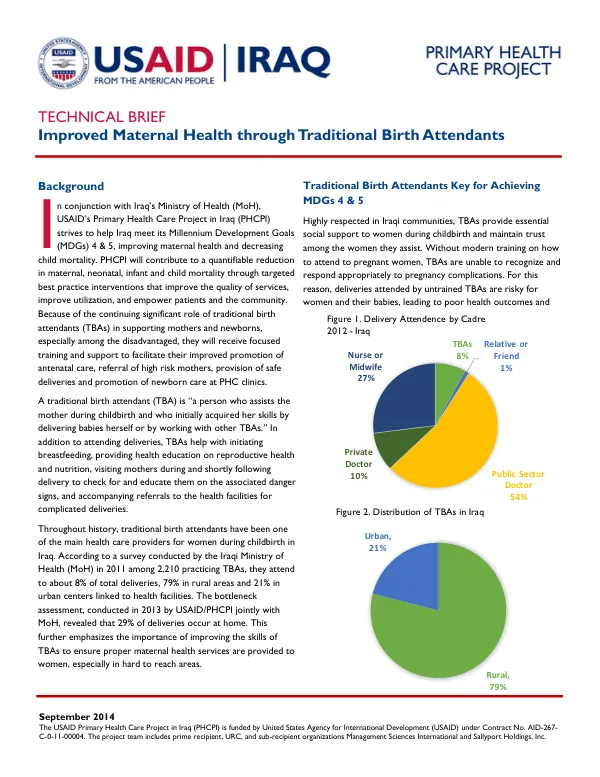
In conjunction with Iraq's Ministry of Health (MoH), PHCPI strives to help Iraq meet its Millennium Development Goals (MDGs) 4 and 5. Traditional birth attendants (TBAs) play a significant role in supporting mothers and newborns, particularly among disadvantaged populations, and will receive focused training and support to improve their promotion of antenatal care, referral of high-risk mothers, provision of safe deliveries, and promotion of newborn care. TBAs are individuals who assist mothers during childbirth and have acquired their skills by delivering babies themselves or working with other TBAs. They provide essential social support to women during childbirth and maintain trust among the women they assist. However, without modern training on how to attend to pregnant women, TBAs are unable to recognize and respond appropriately to pregnancy complications, leading to poor health outcomes and even death. In response to this, PHCPI has assisted the MoH in developing a TBA strategy through a cascade of training courses and updating and developing guides for Private Unlicensed Midwife Trainers, Work Contexts of Community Midwives, a TBA Colored Guide, and other IEC materials. TBAs are highly respected in Iraqi communities and attend to about 8% of total deliveries, with 79% in rural areas and 21% in urban centers linked to health facilities. The bottleneck assessment conducted in 2013 revealed that 29% of deliveries occur at home, emphasizing the importance of improving the skills of TBAs to ensure proper maternal health services are provided to women, especially in hard-to-reach areas. PHCPI has developed an evidence-based TBA training and implementation strategy through collaboration between the MoH and PHCPI. The project has achieved several milestones, including the development of a database of functional TBAs in the project catchment areas, the development of Work Contexts of Community Midwives (TBA protocols) as the nucleus for the TBA training framework, and the development of a Guide for Private Unlicensed Midwife Trainers (TBA curriculum). Additionally, 2000 Arabic TBA colored guides were developed, printed, and distributed to be used by PHC trainers to train TBAs on 24 basic messages discussing safe delivery, danger signs, referral indicators, puerperal complications, breastfeeding, complementary nutrition, family planning, and other important instructions. Furthermore, 2 TBA TOT training workshops were held in Baghdad and Erbil, and 43 rollouts of TBA trainings have been conducted, training about 800 TBA trainers and TBAs affiliated with PHCC catchment areas.