MINISTRY OF HEALTH
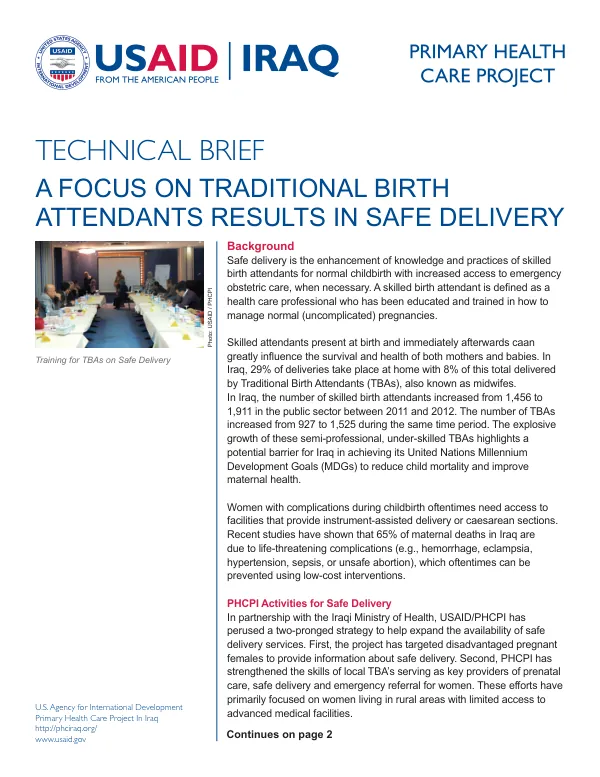
A Focus on Traditional Birth Attendants Results in Safe Delivery
The primary health care project in Iraq, led by the U.S.
2014 · 2 pages
Sign in to readA free account is required to download.
Abstract
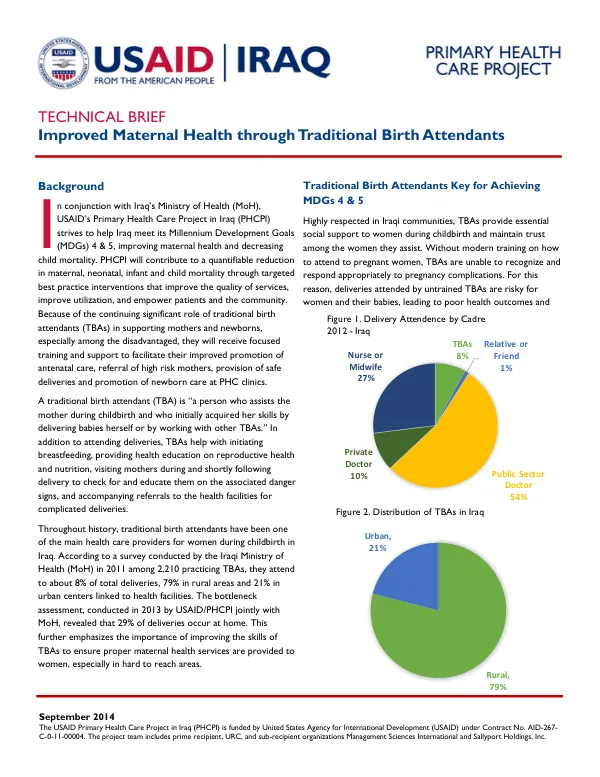
Agency for International Development, focuses on improving maternal and neonatal health through the enhancement of safe delivery services. A skilled birth attendant is defined as a healthcare professional educated and trained in managing normal pregnancies, and their presence at birth can significantly influence the survival and health of both mothers and babies. In Iraq, 29% of deliveries take place at home, with 8% of this total delivered by Traditional Birth Attendants (TBAs), also known as midwives. The number of skilled birth attendants increased from 1,456 to 1,911 in the public sector between 2011 and 2012, while the number of TBAs increased from 927 to 1,525 during the same time period. This growth highlights a potential barrier for Iraq in achieving its United Nations Millennium Development Goals (MDGs) to reduce child mortality and improve maternal health. The Iraqi Ministry of Health recognizes that TBAs will continue to be the first point of contact for many expectant women, particularly in rural areas. Therefore, the project has included the training of TBAs as a core component of its strategy for increasing access to safe delivery. The project has developed a database of active TBAs in the project's catchment areas, safe delivery guidelines, protocols, and training curriculum for TBAs focusing on childbirth and newborn lifesaving interventions. The project has also developed Emergency Maternal, Obstetrics, and Neonatal Care (EMONC) home visit guidelines and training curriculum for health providers and TBAs to provide information on basic emergency obstetric care and pre-referral case management of severe complications. Additionally, the project has printed and disseminated pictograms to Primary Health Care (PHC) clinics, promoted the use of these pictograms at PHC clinics with delivery rooms, and conducted regular medical chart audits to review the management of labor and recommend specific interventions at PHCPI-targeted clinics providing delivery services. The project has achieved significant progress in helping women gain access to skilled birth attendants and proper medical care. The number of proper case management of pre-eclampsia, hypertension, labor, and delivery, active management of the third stage of labor (AMTSL), and detection and management of serious medical conditions such as maternal sepsis and post-partum hemorrhage has increased. The project has also increased the number of women receiving proper antepartum and postpartum care through emergency obstetric and newborn care services, and referrals of obstetric emergencies by TBAs have improved. Furthermore, the project has trained 138 medical and paramedical staff at 37 PHC clinics in 11 Governorates on EMONC guidelines, mentored 15 new trainers to continue the training program, and mentored over 55 medical and paramedical staff to serve as new trainers of TBAs in all Governorates.
Related documents
Documents in this collection
 2014
2014USAID DEC
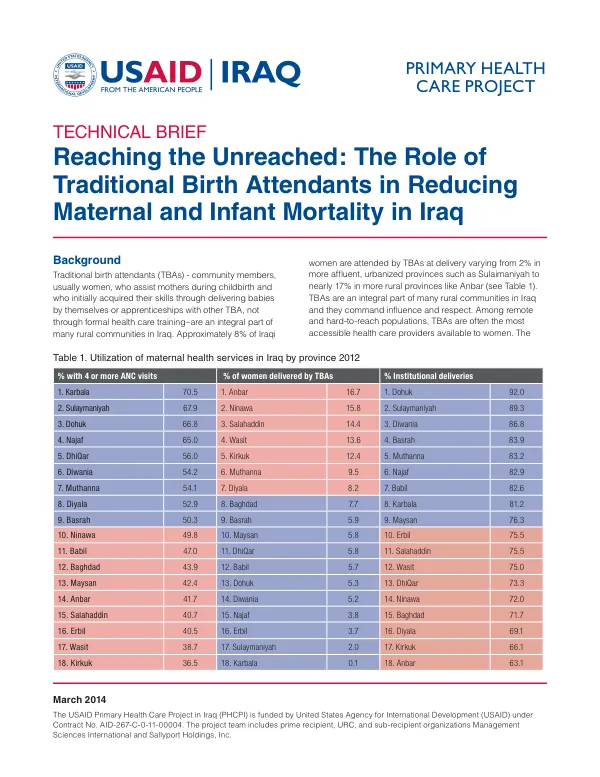
USAID Primary Health Care Project in Iraq: Reaching the Unreached - The Role of Traditional Birth Attendants in Reducing Maternal and Infant Mortality in Iraq
Open record 2014
2014USAID DEC