USAID DEC
USAID Primary Health Care Project in Iraq: Reaching the Unreached - The Role of Traditional Birth Attendants in Reducing Maternal and Infant Mortality in Iraq
Sign inMINISTRY OF HEALTH
USAID Primary Health Care Project in Iraq: Reaching the Unreached - The Role of Traditional Birth Attendants in Reducing Maternal and Infant Mortality in Iraq
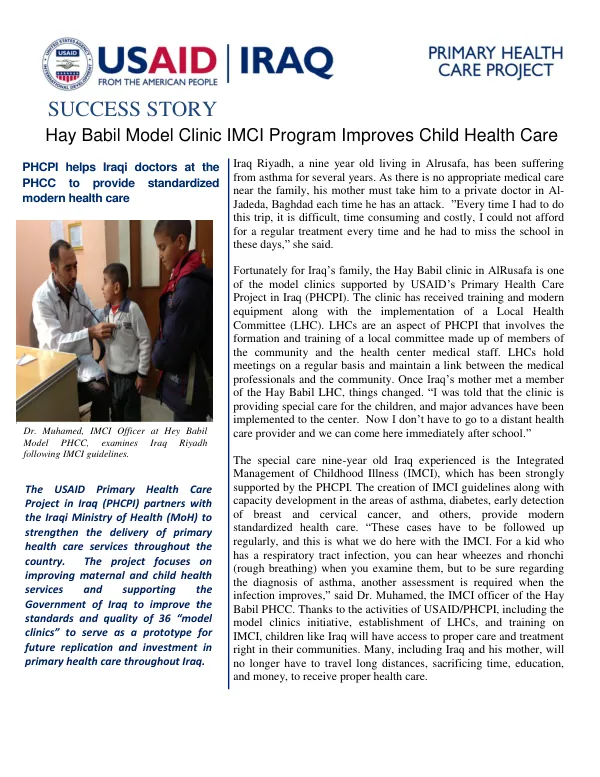
The USAID Primary Health Care Project in Iraq (PHCPI) aims to reduce maternal and child mortality in the project target areas.
2014 · 2 pages
Sign in to readA free account is required to download.
Abstract
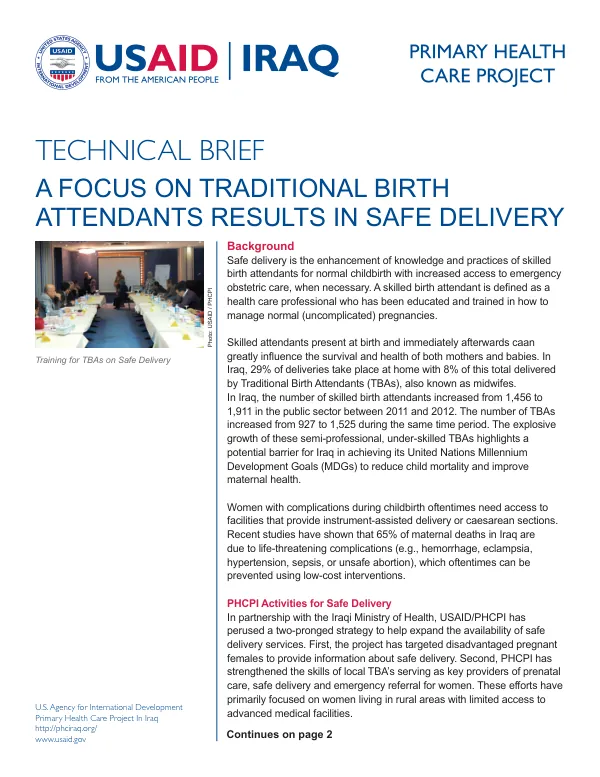
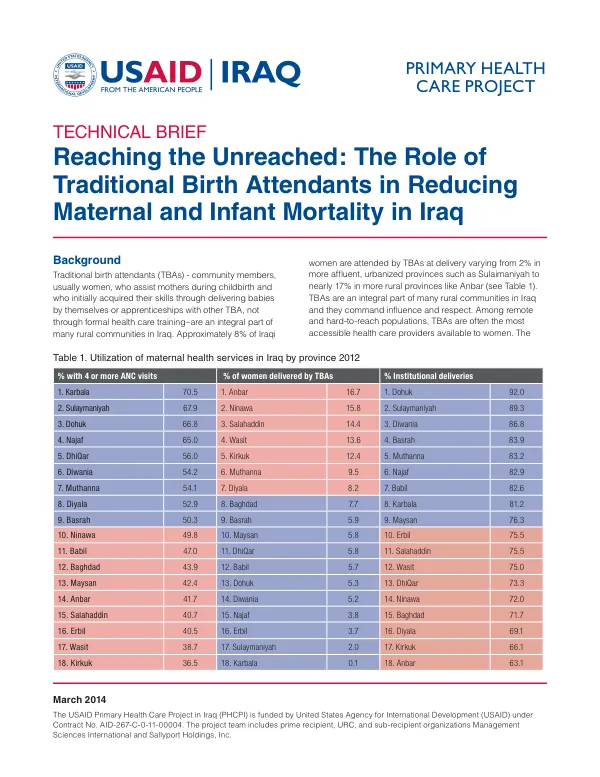
The project is funded by the United States Agency for International Development (USAID) under Contract No. AID-267-C-0-11-00004. The project team includes prime recipient, URC, and sub-recipient organizations Management Sciences International and Sallyport Holdings, Inc. Traditional birth attendants (TBAs) play a crucial role in rural communities in Iraq, with approximately 8% of Iraqi women attended by TBAs at delivery. TBAs are often the most accessible healthcare providers available to women in remote and hard-to-reach populations. The utilization of maternal health services in Iraq varies by province, with the highest percentage of institutional deliveries in Sulaimaniyah (92.0%) and the lowest in Anbar (16.7%). The PHCPI project has developed a package of low-cost, high-impact interventions for improving maternal, neonatal, and child health (MNCH). A key component of this is expanding the role of TBAs beyond childbirth to broader MNCH care. The project has developed a competency-based TBA training handbook and guide, which was field-tested for audiences with low literacy levels. The training adopts a practical and hands-on approach using local materials and is conducted as close to communities as possible. The Government of Iraq has taken a leadership role in the process, appointing a TBA Manager within the Ministry of Health in Baghdad as well as in Kurdistan. A TBA Technical Working Group, comprised of experts from the MOH Maternal, Newborn, and Child Health Programs as well as universities and nursing schools, has guided the development of the TBA strategy. The USAID/PHCPI TBA model is based on a decentralized process whereby provinces, districts, and primary health care centers themselves take the lead in implementation. The potential role of TBAs in reducing maternal, neonatal, and child mortality is significant, with opportunities to promote healthy behaviors and reduce mortality in the communities in which they live and work. The PHCPI project is working to expand the role of TBAs through training and equipping them with the necessary skills and knowledge to provide MNCH care. An operational research study is planned later this year to assess the effectiveness and impact of the TBA training on perinatal mortality.