USAID DEC
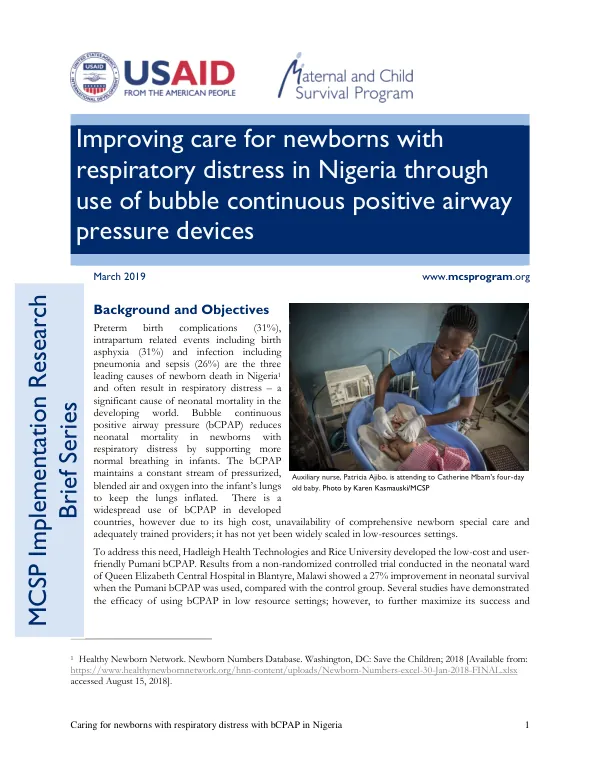
Improving Care for Newborns with Respiratory Distress in Nigeria Through Use of Bubble Continuous Positive Airway Pressure Devices
Sign inFEDERAL MINISTRY OF HEALTH
Improving Care for Newborns with Respiratory Distress in Nigeria Through Use of Bubble Continuous Positive Airway Pressure Devices
The Pumani bCPAP device was developed to support the use of bubble continuous positive airway pressure (bCPAP) in low-resource settings.
2019 · 6 pages
Sign in to readA free account is required to download.
Abstract
This intervention aims to reduce neonatal mortality in newborns with respiratory distress by maintaining a constant stream of pressurized, blended air and oxygen into the infant's lungs to keep the lungs inflated. The device is low-cost and user-friendly, making it a viable option for resource-constrained settings. The Pumani bCPAP was initially implemented in five hospitals in Ebonyi and Kogi States, two Federal hospitals, and three mission hospitals. Due to low recruitment of eligible patients, the intervention was extended to two additional hospitals in Cross River State. The study was conducted from August 2016 to June 2018, and the facilities were selected based on the volume of deliveries, availability of oxygen, electricity, and doctors and nursing staff 24 hours a day. The study aimed to assess the feasibility and acceptability of the Pumani bCPAP in selected hospitals, identify challenges and facilitators to implementation, and evaluate the effectiveness of capacity building for providers. The study found that the planned step-down competency-based training led by champions at their home institutions in Ebonyi State was ineffective due to limited time, a large group of staff, and limited opportunities for hands-on learning. To address this gap, a series of intensive, competency-based workshops were conducted by champions, with support from MCSP, at facilities in Ebonyi, resulting in strengthened staff capacity to implement bCPAP. A total of 76 neonates were treated with the Pumani bCPAP device from all seven facilities, significantly lower than the planned participation size. The availability of improvised bCPAP (ibCPAP) was a limitation to enrolling eligible babies on the bCPAP device, as clinicians tended to put patients on this alternate equipment in the face of severe and erratic power outages. The project did not support the use of ibCPAP for fear of the potential risk of retinopathy leading to blindness in infants. The study found four categories of challenges with applying bCPAP to eligible newborns: human resources for health, facility infrastructure, equipment, and financing. Many healthcare workers deviated from the protocol or did not consistently use the TRY CPAP algorithm, which was developed to guide the use of bCPAP. The study also found that facility infrastructure, such as the availability of oxygen and electricity, was a significant challenge to implementing bCPAP. Additionally, the cost of the Pumani bCPAP device and the need for ongoing maintenance and repair were identified as significant challenges. The study's findings highlight the need for continued support and capacity building for healthcare workers in Nigeria to effectively implement bCPAP and improve outcomes for newborns with respiratory distress. The study also underscores the importance of addressing the challenges related to human resources for health, facility infrastructure, equipment, and financing to ensure the sustainability of bCPAP implementation in Nigeria.
Related documents