BANK FOR WEST AFRICAN DEVELOPMENT
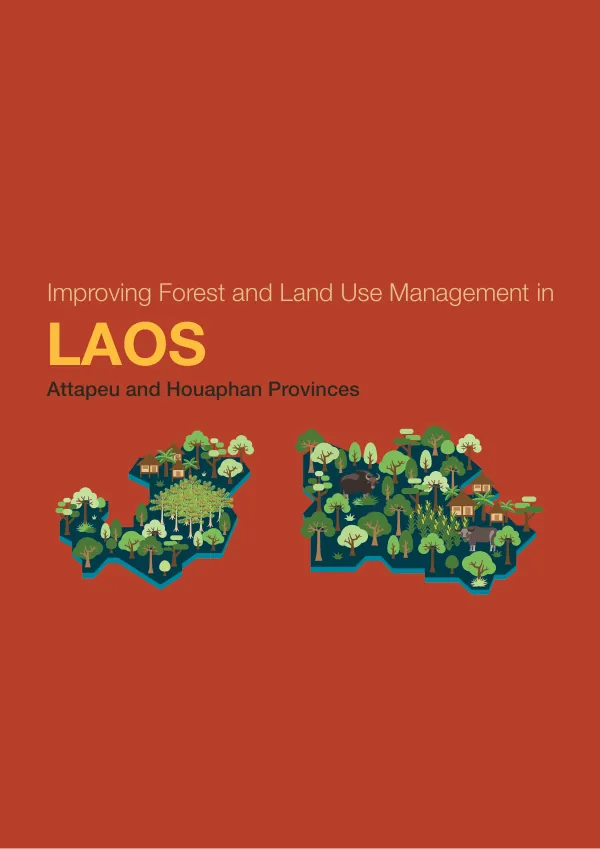
Improving Forest and Land Use Management in LAOS
Improving Forest and Land Use Management in Laos is a critical issue due to the country's rich natural resources, including high-value forests.
2015 · 7 pages
Sign in to readA free account is required to download.
Abstract
Shifting cultivation, unplanned logging, and land conversion for agriculture and other uses, coupled with rural poverty and a rapidly growing population, are resulting in the rapid loss of forest resources. The main threats to forest resources include logging, agriculture, forest fires, infrastructure development, and mining. The Department of Forestry (DOF) within the Ministry of Agriculture and Forestry (MAF) has been a key partner for USAID LEAF, a program that works to slow climate change by developing strategies to sustainably reduce greenhouse gas emissions from the forestry and land use sector. USAID LEAF collaborates with the Department of Forest Resource Management (DFRM) in the Ministry of Natural Resources and Environment (MoNRE) to strengthen forest management systems, support the development of jurisdictional REDD+ frameworks, implement land use planning, and promote improved livelihoods. The Laos 2020 Forestry Strategy sets targets of reducing deforestation and forest degradation and increasing national forest cover to 70%. To meet these goals, the Government of Laos promotes reforestation through land zoning and encourages alternative agricultural practices. USAID LEAF collaborates with the Department of Forestry in Houaphan and Attapeu provinces to support the development of improved forest and land management strategies. USAID LEAF initiatives focus on two landscapes, the Nam Xam National Biodiversity Conservation Area (NBCA) in Houaphan and Sanamxay district in Attapeu. The program includes three key activities: Capacity Building, Forests, Land Use Planning, and Livelihoods; Forest Management and Livelihoods; and Improved Forest Management. In Houaphan, USAID LEAF initiatives have decreased deforestation and forest degradation and generated greater community engagement in management of the Nam Xam NBCA. In Houaphan, USAID LEAF activities have strengthened management capacity and conservation planning processes of the remote 70,000-hectare conservation area. The program has also supported consultative planning and development of a mechanism for community-based land use management, increased community awareness of important land use regulations, and improved livelihoods through better livestock management. Additionally, USAID LEAF has introduced and supported participatory land use planning covering nearly 10,000 hectares, strengthened security, land tenure, and usage rights to village land and forest resources, and encouraged sustainable land management. In Attapeu, USAID LEAF activities have restored forest areas, increased incomes, and led to a balance between growth and conservation. The program has developed community reforestation plans to address local forest loss, supported village-led restoration of more than 1,000 hectares of forest, established village forest management guidelines, and trained villages on implementation. USAID LEAF has also introduced improvements to growers and processors of coffee, the main cash crop of local farmers, resulting in added value and increased incomes. The results of USAID LEAF activities in Laos include the effective management of forests and forest resources by 650 households, the sustainable management of 10,000 hectares of natural resources through participatory land use planning, and the improvement of livelihoods for 200 households through better livestock management practices. Additionally, 60 professors from 6 universities have benefited from a new climate change curriculum, and 6 gender champions have actively mainstreamed gender in climate change programs.