USAID DEC
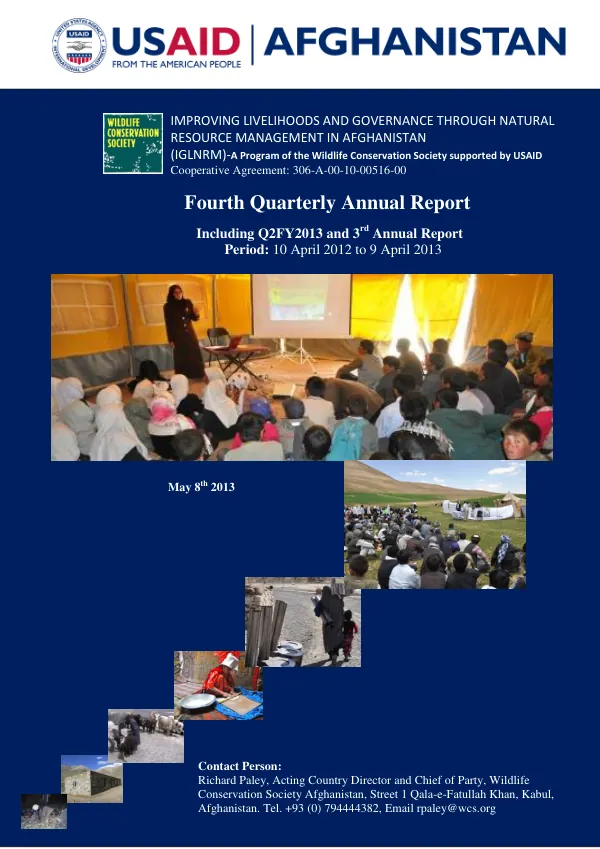
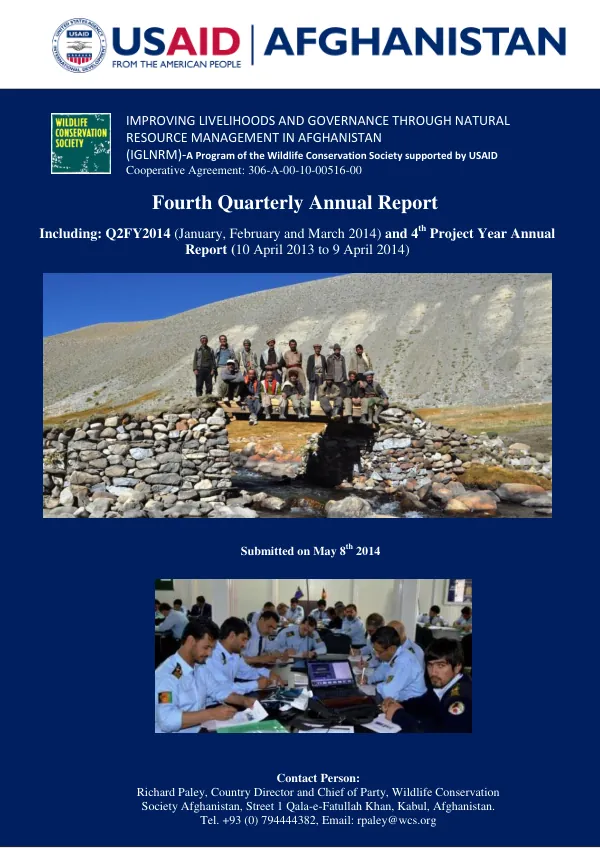
Improving Livelihoods and Governance Through Natural Resource Management in Afghanistan
Sign inAFGHANISTAN MINISTRY OF AGRICULTURE, IRRIGATION AND LIVESTOCK
Improving Livelihoods and Governance Through Natural Resource Management in Afghanistan
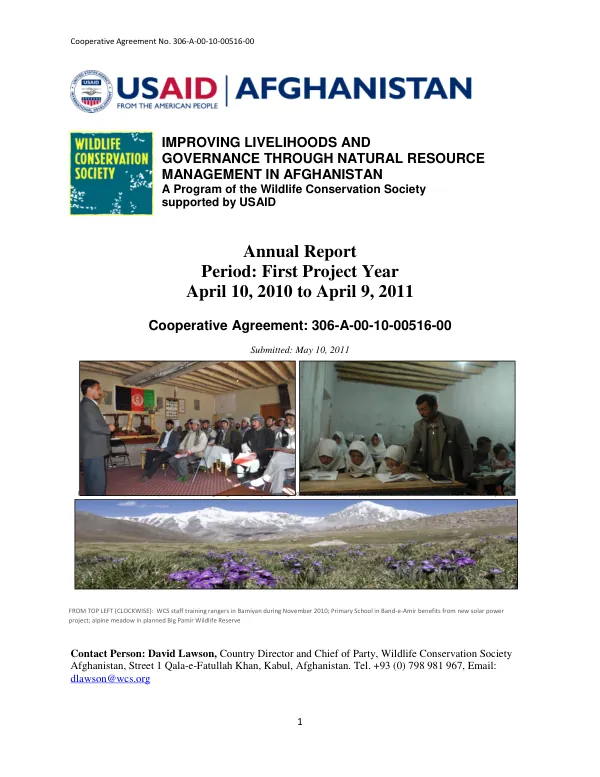
The project, Improving Livelihoods and Governance through Natural Resource Management in Afghanistan, is a three-year cooperative agreement between the Wildlife Conservation Society and USAID.
2011 · 28 pages
Sign in to readA free account is required to download.
Abstract
The project aims to ensure sustainable community management of lands and resources, involving national parks and protected areas, and providing real tangible benefits to communities. The project focuses on two provinces, Badakhshan and Bamiyan, as testing grounds for activities and programs that can be duplicated in other areas of the country. Capacity development is central to this program, with activities including training, mentoring, and education to develop capacity at local, provincial, and national levels. The project is organized around five objectives, which correspond with central themes in USAID's and Afghanistan's development policies. These objectives include building technical capacity for natural resource management, facilitating community livelihood development, creating and strengthening community governance institutions, strengthening laws, policies, and institutions, and building capacity to manage the health interface between livestock, wildlife, and people. During the first year of the project, significant accomplishments include developing the draft final Management Plan for Band-e-Amir National Park in consultation with local communities. WCS also assisted 15 villages around the park to form and officially register a Social Organization, Band-e-Amir Community Association, which will have the legal authority to manage the park's resources. Additionally, WCS trained WCS staff in Bamiyan to train rangers in sustainable resource management, and implemented a solar power project in Band-e-Amir, benefiting a primary school. The project supports USAID's Strategic Objective SO 5: A Thriving Licit Economy Led by the Private Sector, and results are reported under Objective 5: A Sustainable, Thriving Agricultural Environment, and Program Element 5.2: Improved Natural Resource Management as a Result of USG Assistance. The project's geographic areas and components include Bamiyan and Badakhshan, and a national capacity building component, united through five objectives. Capacity development is a critical component of the project, with activities including training, mentoring, and education to develop capacity at local, provincial, and national levels. The project's objectives are cross-cutting and mutually supporting, with best practices disseminated across all regions served and through WCS's Afghan government partners across the nation. The project's geographic areas and components are significant in terms of watershed protection and management, primarily comprising collection and transport zones. The project's capacity building and training lead to immediate benefits in the short term as jobs are created and critical management skills are built; in the medium term as Afghans at all levels develop the ability to sustainably manage the country's natural resource base for economic gains; and in the long term as a management system will be built that can be expanded across the country to provide benefits to Afghanistan and its people.