TETRA TECH
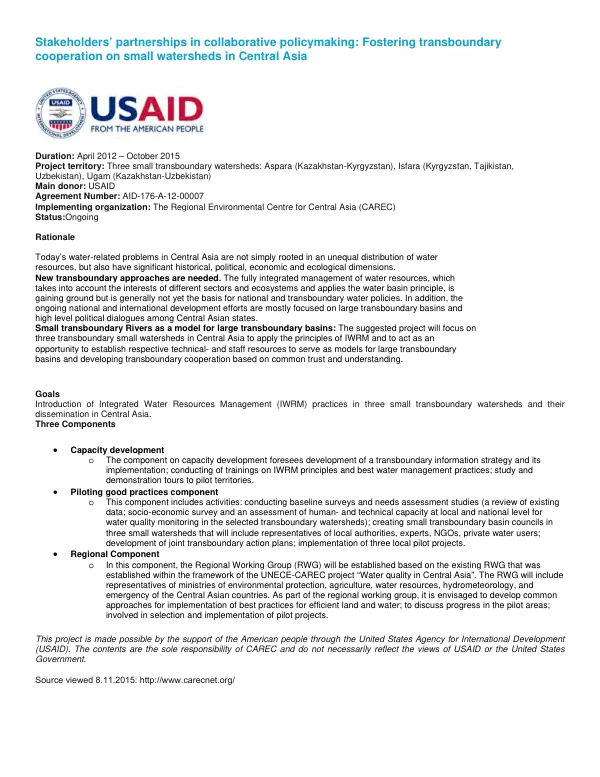
USAID Regional Water and Vulnerable Environment Activity Annual Report
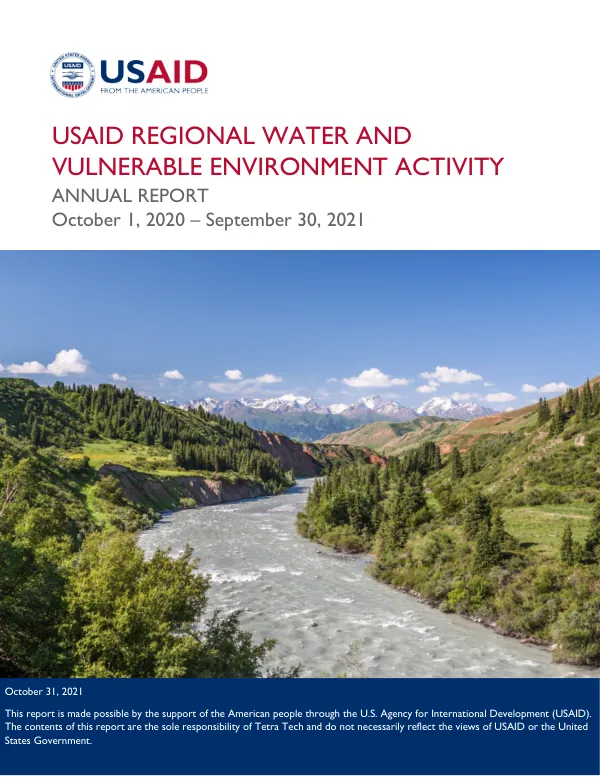
The USAID Regional Water and Vulnerable Environment Activity strengthens regional capacity to sustainably manage shared water resources for improved stability, economic prosperity, and ecosystem health.
2021 · 63 pages
Sign in to readA free account is required to download.
Abstract
The activity targets the Amu Darya and Syr Darya river basins, which are critical to the livelihoods of millions of people in Central Asia. The activity aims to improve water management practices, enhance regional cooperation, and promote sustainable economic development. The activity focuses on four key areas: (1) improving water management practices, (2) enhancing regional cooperation, (3) promoting sustainable economic development, and (4) supporting vulnerable communities. To achieve these objectives, the activity works with national and regional governments, regional organizations, and local communities, as well as with international partners, including the European Union, the German Agency for International Cooperation, and the International Fund for Saving the Aral Sea. The activity has made significant progress in improving water management practices, including the development of a regional water management plan and the establishment of a basin water organization. The activity has also enhanced regional cooperation, including the establishment of a regional coordination committee and the development of a regional development and cooperation strategy. Additionally, the activity has promoted sustainable economic development, including the development of a benefit-sharing methodology and the establishment of a small basin council. The activity has also supported vulnerable communities, including the development of a gender equity and social inclusion plan and the establishment of a community of practice for water management. The activity has also provided technical assistance to national and regional governments, including the development of environmental mitigation and monitoring plans and the provision of training and capacity-building programs. The activity has achieved significant results, including a 27% increase in water use efficiency and a 25% increase in water conservation. The activity has also improved regional cooperation, including the establishment of a regional coordination committee and the development of a regional development and cooperation strategy. Additionally, the activity has promoted sustainable economic development, including the development of a benefit-sharing methodology and the establishment of a small basin council. The activity has also made significant progress in addressing the COVID-19 pandemic, including the development of a regional response plan and the provision of technical assistance to national and regional governments. The activity has also supported the development of a regional water management plan and the establishment of a basin water organization. The activity has also made significant progress in promoting sustainable economic development, including the development of a benefit-sharing methodology and the establishment of a small basin council. The activity has also supported vulnerable communities, including the development of a gender equity and social inclusion plan and the establishment of a community of practice for water management. The activity has also provided technical assistance to national and regional governments, including the development of environmental mitigation and monitoring plans and the provision of training and capacity-building programs. The activity has also supported the development of a regional water management plan and the establishment of a basin water organization.