USAID DEC
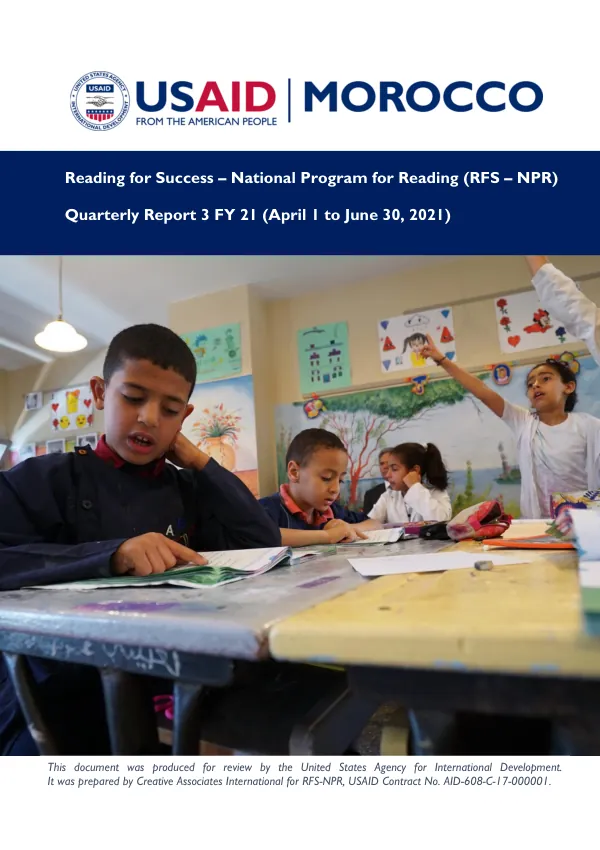
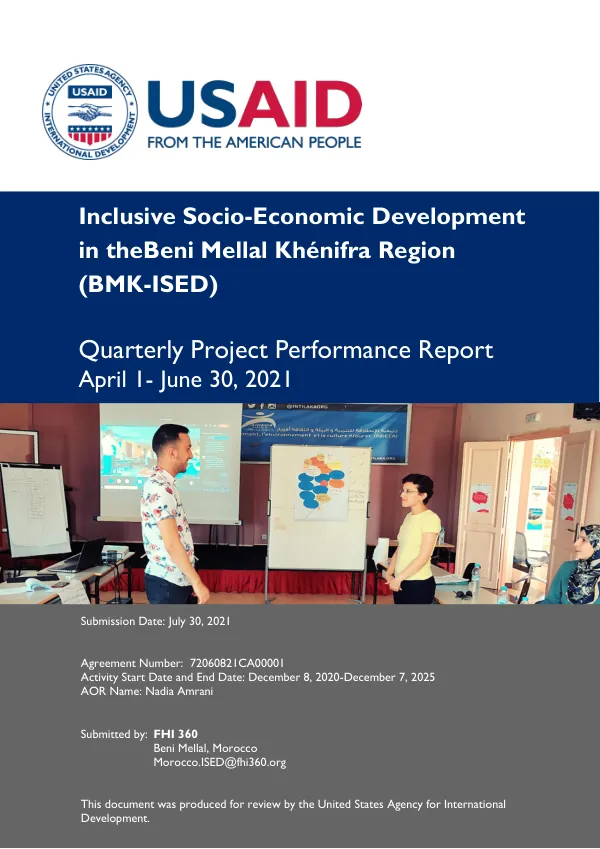
Inclusive Socio-Economic Development in the Beni Mellal Khénifra Region (BMK-ISED) Third Quarterly Project Performance Report
Sign inFHI 360
Inclusive Socio-Economic Development in the Beni Mellal Khénifra Region (BMK-ISED) Third Quarterly Project Performance Report
The Beni Mellal Khénifra (BMK) Region has enormous potential for accelerated and inclusive growth.
2021 · 54 pages
Sign in to readA free account is required to download.
Abstract
The region's strong agricultural sector, opportunities for tourism, major phosphate mines, and willing workforce provide a solid foundation for growth. The leadership of the Sub-national Government Institutions (SGIs) has demonstrated its commitment to growth and understanding of socio-economic barriers to a more robust economy and engaged civil society. The Inclusive Socio-Economic Development in Beni Mellal-Khénifra (BMK-ISED) project was co-designed by USAID and regional stakeholders to address socio-cultural and economic constraints holistically. The project reflects the consensus that emerged between USAID and regional actors that to achieve sustainable and equitable accelerated growth, the BMK region must address these constraints holistically. The third quarterly Project Performance Report (PPR) covers the period from April 1-June 30, 2021. This quarter marked the end of the project start-up phase and the beginning of the implementation phase. The quarter was significant for the generally smooth completion of most start-up activities and the robust launch of several initiatives to improve governance and promote livelihoods. BMK-ISED has benefitted from strong support from the USAID Agreement Officer's Representative (AOR), from FHI 360 headquarters, and the full participation of BMK-ISED stakeholders. The project began full implementation of most planned activities this quarter. The success of these initiatives will depend on how well each activity is carried out and how all of them, taken together, produce change that is systemic and sustainable. The project's implementation phase is focused on improving governance and promoting livelihoods. Innovations in participatory governance, creative and in-depth backstopping of civil society organizations, support for the business "ecosystem" that will promote investment, expanding market opportunities to create jobs, and providing grants at the communal level are key components of the project. The project has made significant progress in the first quarter of implementation. The project has recruited new staff, built relationships with stakeholders, and launched several initiatives to improve governance and promote livelihoods. The project has also benefitted from strong support from the USAID AOR, from FHI 360 headquarters, and the full participation of BMK-ISED stakeholders. The project's success will depend on how well each activity is carried out and how all of them, taken together, produce change that is systemic and sustainable. The project's innovations in participatory governance, creative and in-depth backstopping of civil society organizations, support for the business "ecosystem" that will promote investment, expanding market opportunities to create jobs, and providing grants at the communal level are key components of the project's strategy to achieve sustainable and equitable accelerated growth in the BMK region. The project's implementation phase is expected to continue with the launch of several new initiatives to improve governance and promote livelihoods. The project will continue to benefit from strong support from the USAID AOR, from FHI 360 headquarters, and the full participation of BMK-ISED stakeholders. The project's success will depend on how well each activity is carried out and how all of them, taken together, produce change that is systemic and sustainable. The project's geographic focus is on the Beni Mellal Khénifra Region in Morocco. The project's timeframes are from December 8, 2020 to December 7, 2025. The project's recommendations are to continue to support the implementation of the project's activities and to provide ongoing support to the project's stakeholders.
Related documents
Documents in this collection
 2021
2021USAID DEC
Inclusive Socio-Economic Development in the Beni Mellal Khénifra Region (ISED-BMK) Quarterly Project Performance Report January 1-March 31, 2021
Open record 2021
2021USAID DEC