JOHNS HOPKINS UNIVERSITY BLOOMBERG SCHOOL OF PUBLIC HEALTH/INFO PROJECT
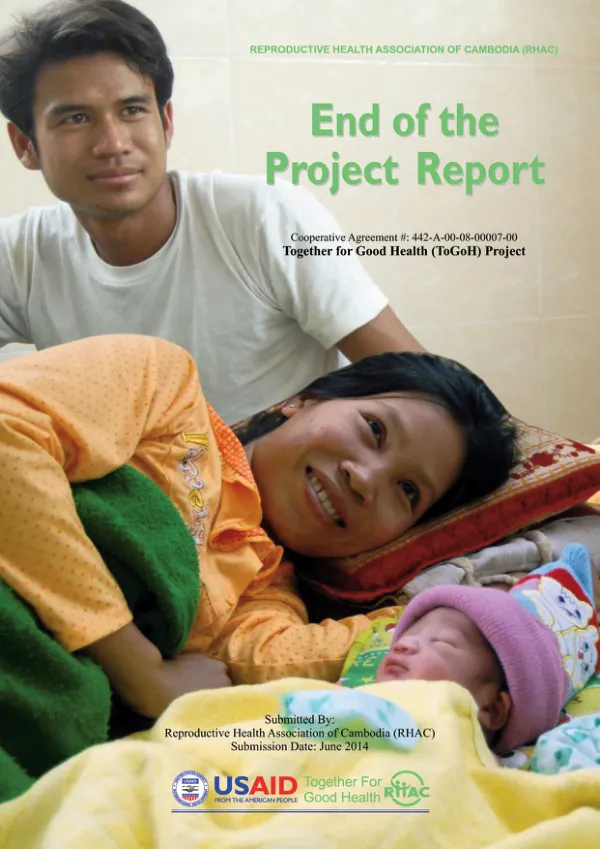
Increasing the Use of Dexamethasone in the Management of Preterm Birth in Cambodia
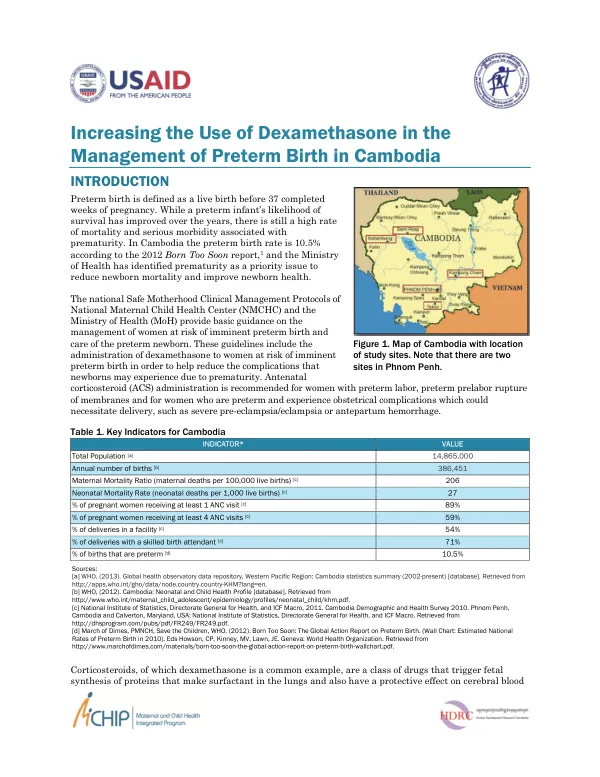
The preterm birth rate in Cambodia is 10.5%, according to the 2012 Born Too Soon report.
2014 · 8 pages
Sign in to readA free account is required to download.
Abstract
The Ministry of Health has identified prematurity as a priority issue to reduce newborn mortality and improve newborn health. The national Safe Motherhood Clinical Management Protocols provide basic guidance on the management of women at risk of imminent preterm birth and care of the preterm newborn. Corticosteroids, such as dexamethasone, are a class of drugs that trigger fetal synthesis of proteins that make surfactant in the lungs and have a protective effect on cerebral blood vessels and the intestines. A Cochrane review concluded that antenatal corticosteroid use before preterm birth was associated with a 34% reduction in respiratory distress syndrome, a 46% reduction in intracranial hemorrhage, a 54% reduction in necrotizing enterocolitis, and a 31% reduction in neonatal death. The study aimed to improve the quality of care provided to pregnant women at risk of imminent preterm birth by increasing the rate of administration of dexamethasone in Cambodia. The study was implemented under the direction of the National Maternal Child Health Center and the Ministry of Health, with technical guidance from the USAID-funded Maternal and Child Health Integrated Program. The study took place in six public facilities widely distributed across Cambodia, with facilities selected based on high delivery volume and representation of different levels of the Cambodian health system. The study was approved by the National Ethics Committee for Health Research of the Ministry of Health/Cambodia and the Institutional Review Board of The Johns Hopkins Bloomberg School of Public Health. A facility-level assessment was conducted at the beginning and end of the intervention, including a facility readiness review, commodity assessment, and barriers analysis. Knowledge and confidence of healthcare providers related to screening, management, and treatment pertaining to ACS administration were measured before and after the intervention at each facility. In-depth interviews of key informants were conducted to identify prevailing issues related to service provision for women with high probability of preterm birth. The study defined best practice in the management of women at risk of imminent preterm birth as follows: women with a condition that increased the probability of imminent preterm birth would be adequately identified by providers, gestational age would be assessed as accurately as possible, and women estimated to be between 24+0 and 36+6 weeks gestation would be given a course of dexamethasone for prevention of complications of prematurity among newborns born preterm.
Related documents