TETRA TECH ESI, INC.
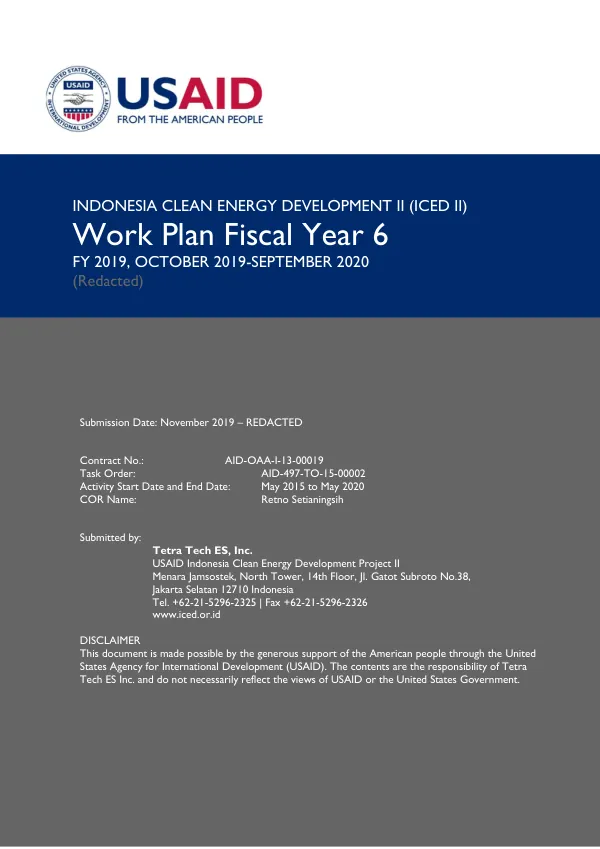
ICED2 Y6 Work Plan
The Indonesia Clean Energy Development II (ICED II) project is a USAID-funded initiative aimed at promoting the development and use of clean energy in Indonesia.
2019 · 100 pages
Sign in to readA free account is required to download.
Abstract
The project began in May 2015 and is scheduled to end in May 2020. ICED II is managed by Tetra Tech ES, Inc. and is implemented in collaboration with the Government of Indonesia (GOI) and other stakeholders. The project's geographic coverage includes the entire country, with a focus on the provinces of East Nusa Tenggara, West Nusa Tenggara, and South Sulawesi. ICED II's work plan for Fiscal Year 6 (October 2019-September 2020) is outlined in this document. The project's main objective is to improve the enabling environment for rapid co-investment in clean energy in Indonesia. To achieve this goal, ICED II will focus on three key components: improving the enabling environment for clean energy, increasing the capacity of the low emissions energy sector, and promoting the development and use of clean energy. Component 1: Improve Enabling Environment for Rapid Co-Investment in Clean Energy This component aims to create a favorable policy and regulatory environment for the development and use of clean energy in Indonesia. Task 1.1 focuses on increasing the capacity of the low emissions energy sector through training and technical assistance. This will involve providing training and technical assistance to government agencies, private sector companies, and civil society organizations to enhance their capacity to plan and implement low emissions energy projects. Task 1.2 focuses on policy and regulatory reform, with the aim of creating a more favorable policy and regulatory environment for the development and use of clean energy in Indonesia. This will involve working with government agencies to develop and implement policies and regulations that support the development and use of clean energy. The project will also work with the Government of Indonesia to develop and implement a national energy plan that prioritizes the development and use of clean energy. This will involve conducting a comprehensive analysis of Indonesia's energy sector and developing a plan that outlines the country's energy goals and objectives. Component 2: Increase Capacity of Low Emissions Energy Sector This component aims to increase the capacity of the low emissions energy sector in Indonesia through training and technical assistance. The project will provide training and technical assistance to government agencies, private sector companies, and civil society organizations to enhance their capacity to plan and implement low emissions energy projects. The project will also work with the Government of Indonesia to develop and implement a training program for energy sector professionals. This will involve developing a curriculum that outlines the skills and knowledge required for energy sector professionals to plan and implement low emissions energy projects. Component 3: Promote Development and Use of Clean Energy This component aims to promote the development and use of clean energy in Indonesia through a range of activities. The project will work with the Government of Indonesia to develop and implement a program to promote the use of clean energy in the country's energy sector. The project will also work with private sector companies to develop and implement clean energy projects in Indonesia. This will involve providing technical assistance and training to private sector companies to enhance their capacity to develop and implement clean energy projects. The project will also work with civil society organizations to promote the development and use of clean energy in Indonesia. This will involve providing technical assistance and training to civil society organizations to enhance their capacity to promote the development and use of clean energy. The project's work plan for Fiscal Year 6 (October 2019-September 2020) outlines the specific activities that will be undertaken to achieve the project's objectives. The work plan includes a range of activities, including training and technical assistance, policy and regulatory reform, and project development and implementation. Overall, the ICED II project aims to promote the development and use of clean energy in Indonesia through a range of activities. The project's work plan for Fiscal Year 6 (October 2019-September 2020) outlines the specific activities that will be undertaken to achieve the project's objectives.