USAID DEC
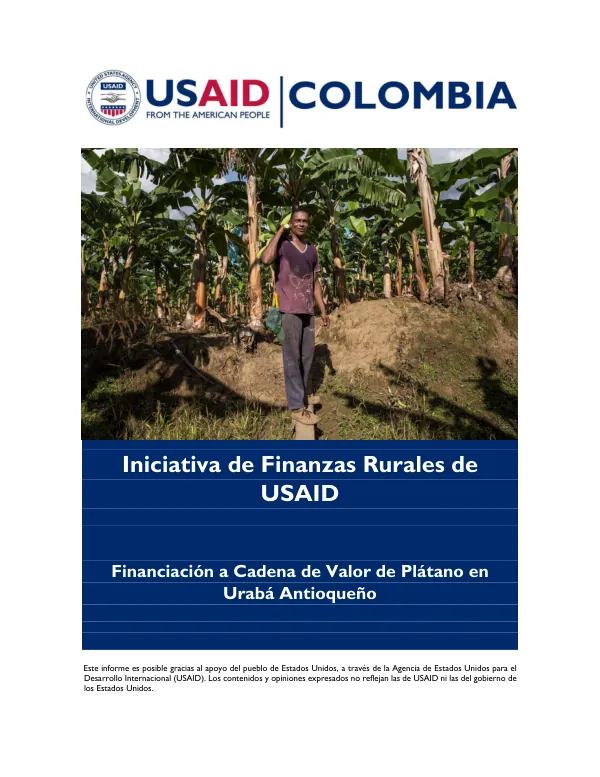
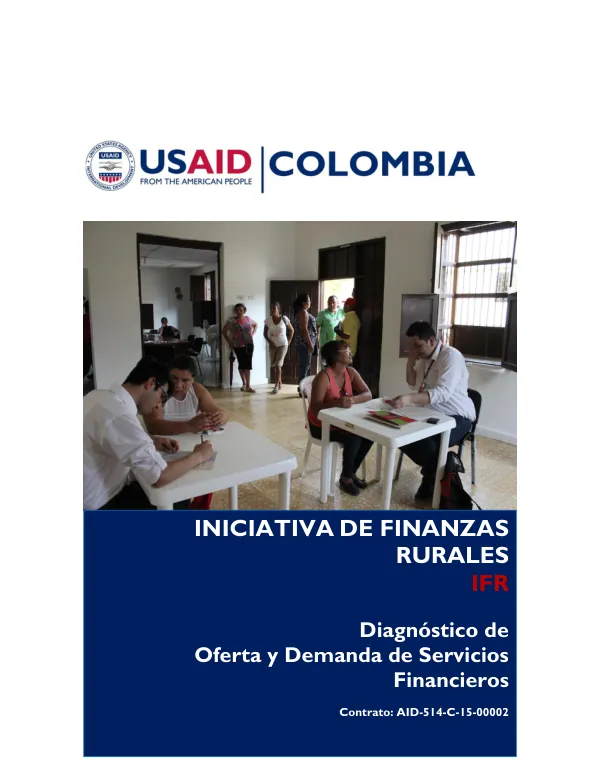
Iniciativa de Finanzas Rurales - Diagnóstico de Oferta y Demanda de Servicios Financieros
Sign inCHEMONICS
Iniciativa de Finanzas Rurales - Diagnóstico de Oferta y Demanda de Servicios Financieros
The Iniciativa de Finanzas Rurales (IFR) is a rural finance initiative implemented by Chemonics International under contract AID-514-C-15-00002 with the U.S.
2016 · 198 pages
Sign in to readA free account is required to download.
Abstract
Agency for International Development (USAID). The initiative aims to improve access to financial services for rural populations in Colombia. The IFR conducted a diagnostic study to assess the demand and supply of financial services in two rural corridors: the Corredor Montes de María and the Corredor Bajo Cauca Antioqueño – Sur de Córdoba. The study involved data collection and analysis to identify the sociodemographic characteristics, financial inclusion, and infrastructure conditions in these regions. The Corredor Montes de María has a total population of approximately 1.3 million people, with a significant proportion of the population living in poverty and lacking access to basic financial services. The region has a low level of financial inclusion, with only 20% of the population having a bank account. The majority of the population relies on informal financial services, such as GLACs (Grupos Locales de Ahorro y Crédito) and microfinance institutions. The Corredor Bajo Cauca Antioqueño – Sur de Córdoba has a similar demographic profile, with a total population of approximately 1.2 million people. The region has a slightly higher level of financial inclusion, with 25% of the population having a bank account. However, the region still faces significant challenges in terms of access to financial services, particularly in rural areas. The IFR diagnostic study identified several key findings, including: * A high demand for financial services, particularly among low-income households and small-scale farmers. * A limited supply of financial services, particularly in rural areas. * A lack of infrastructure, including roads, telecommunications, and financial institutions. * A need for financial education and literacy programs to improve financial inclusion. The study also identified several opportunities for improving financial inclusion in these regions, including: * Expanding the reach of microfinance institutions and other financial service providers. * Improving access to financial infrastructure, such as ATMs and mobile payment systems. * Developing financial education and literacy programs to improve financial inclusion. * Encouraging the use of digital financial services, such as mobile banking and online payment systems. Overall, the IFR diagnostic study provides a comprehensive understanding of the demand and supply of financial services in the Corredor Montes de María and the Corredor Bajo Cauca Antioqueño – Sur de Córdoba. The study's findings and recommendations can inform the development of effective strategies to improve financial inclusion in these regions and promote economic growth and development.