TEXAS A&M INTERNATIONAL UNIVERSITY
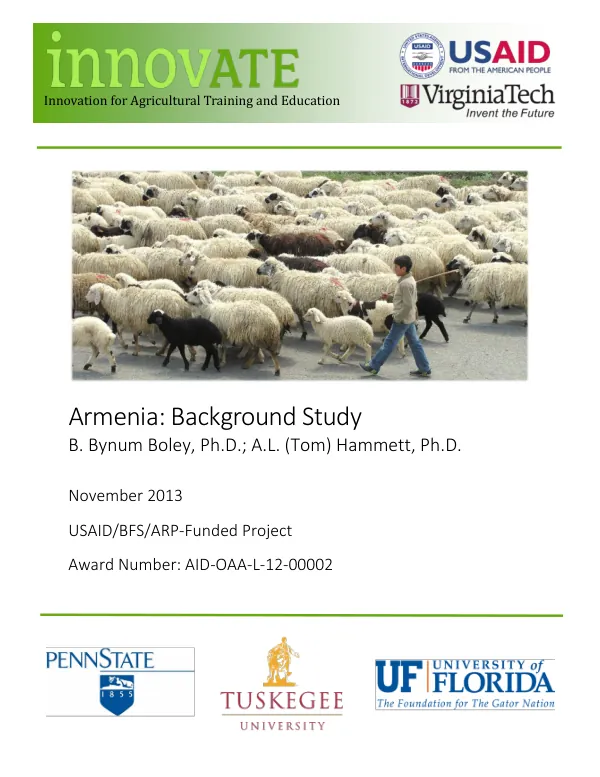
Innovation for Agricultural Training and Education: Armenia: Background Study
The agricultural sector in Armenia employs 39% of the population and constitutes 18% of the country's GDP.
2013 · 36 pages
Sign in to readA free account is required to download.
Abstract
The sector is crucial for reducing poverty and promoting economic development. The agricultural education and training (AET) system in Armenia is vital for meeting the current market demands and addressing the challenges faced by the agricultural industry. The AET system in Armenia is incorporated into the educational structure, which includes primary, secondary, and higher education. The primary education system in Armenia consists of 9 years of compulsory education, followed by 2 years of general education. The secondary education system includes middle school and secondary school, which provide students with a general education. The higher education system in Armenia includes universities and colleges that offer programs in agriculture, veterinary medicine, and other related fields. The agricultural industry in Armenia faces several challenges, including limited access to credit, lack of market information, and inadequate infrastructure. The industry is also affected by the country's geographical location, which has resulted in closed borders with Turkey and Azerbaijan. The borders have crippled Armenia's export potential, limiting the flow of goods to only the north and south. The labor market in Armenia is characterized by a shortage of skilled workers in the agricultural sector. The industry requires workers with specialized skills, such as knowledge of modern farming techniques and equipment operation. The current education system in Armenia does not provide students with the necessary skills to meet the demands of the agricultural industry. The report aims to identify the discrepancies between the supply and demand factors influencing agriculture and AET in Armenia. The supply-side section of the report focuses on the educational system in Armenia and how AET is incorporated into it. The demand-side section of the report identifies the present state of the agricultural industry and the current market demands. The report concludes that the AET system in Armenia needs to be improved to meet the current market demands and address the challenges faced by the agricultural industry. The report recommends increasing the availability of AET programs, improving the quality of education, and enhancing the relevance of the curriculum to meet the demands of the agricultural industry. The report also highlights the importance of addressing the labor market and employer needs in the agricultural sector. The industry requires workers with specialized skills, such as knowledge of modern farming techniques and equipment operation. The report recommends increasing the availability of vocational training programs and improving the quality of education to meet the demands of the agricultural industry. The report emphasizes the need for a comprehensive approach to address the challenges faced by the agricultural industry in Armenia. The approach should include improving the AET system, increasing the availability of vocational training programs, and enhancing the relevance of the curriculum to meet the demands of the agricultural industry.