USAID DEC
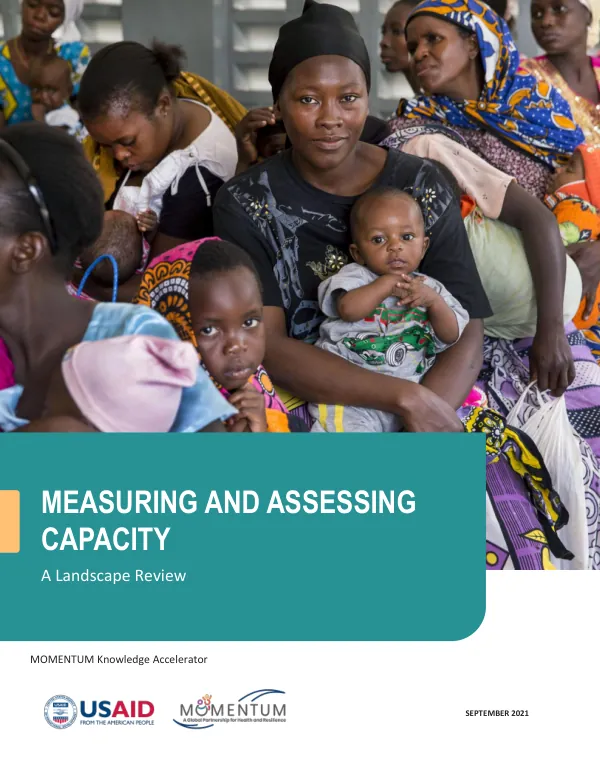
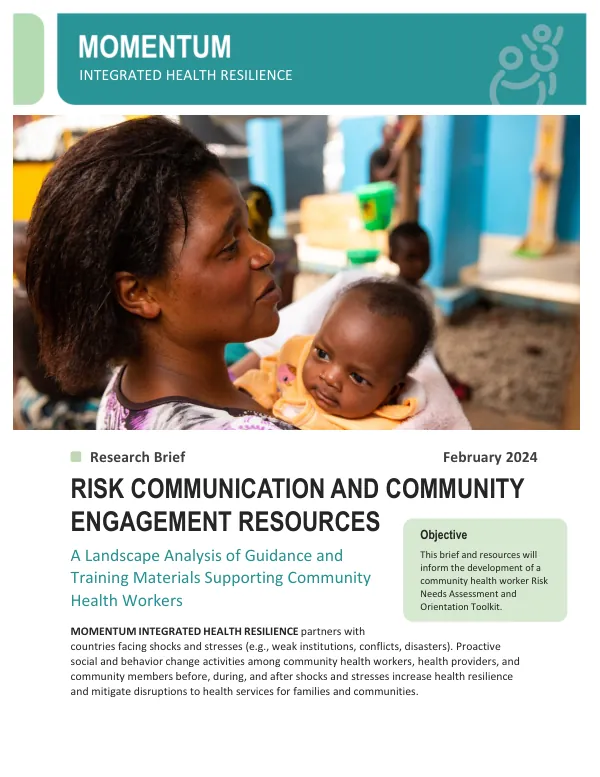
Integrated Health Resilience: A Landscape Analysis of Guidance and Training Materials Supporting Community Health Workers
Sign inINTERNATIONAL RESCUE COMMITTEE
Integrated Health Resilience: A Landscape Analysis of Guidance and Training Materials Supporting Community Health Workers
Risk communication and community engagement (RCCE) is a health strategy and response that is vital for individual, family, and community uptake of essential public health and biomedical interventions.
2024 · 11 pages
Sign in to readA free account is required to download.
Abstract
It works to prevent and control the spread of disease outbreaks, as well as cope with safety issues and the impact of climate change on health. By sharing scientifically verified public health information and guidance that is consistent across all levels, RCCE ensures participation and dialogue among all stakeholders and affected communities during preparedness, readiness, and response activities. It also prioritizes the health, safety, and security of at-risk populations. Community health workers (CHWs) are close to the populations they serve and are often a main force in implementing social and behavior change (SBC) and RCCE activities and communicating with households and community leaders. They play an important role in providing health services and can also be instrumental in sensitizing families and communities to anticipate and prepare for shocks through self-care and resilient practices while continuing to demand access to and uptake of family planning; maternal, newborn, and child health; nutrition; and immunization services—even in difficult times. A landscape analysis of guidance and training materials supporting CHWs was conducted to inform the development of a community health worker Risk Needs Assessment and Orientation Toolkit. The analysis included a review of literature and resources relevant to RCCE prepared for MOMENTUM Integrated Health Resilience (MIHR), a project funded by the United States Agency for International Development (USAID). The review found dozens of training guidelines, online courses, curricula, tools, and toolkits for RCCE for CHWs, as well as many CHW trainings that include diverse elements of RCCE. Key findings from the landscape review include the need for a clear differentiation between CHW RCCE training competencies for supervisors and/or trainers, and competencies for CHW RCCE. Different resources exist for different target audiences, and nearly all training manuals are purpose-built for context, audience, and a specific health context. The majority of resources identified had a clear and explicit focus on COVID-19, followed by HIV, general health outreach, and reproductive health. In disease-specific training contexts, RCCE training modules are focused on community-level behavior change and CHW risk mitigation in community milieus. A continuum of modules and thematic areas addressed in training resources was identified, with a lack of standardized approaches to RCCE core topics, including those pertaining to core community engagement standards, effective communication, and message development. The relevance of these resources was somewhat difficult to assess due to the wide qualitative variation in the modules. However, the highest-scoring reports had the most modules, but not necessarily the best modules. The landscape review also highlighted the importance of broadening search criteria to include a wider range of terms such as "social mobilization," "community health outreach," "participatory action for health," and others that might have been more current before 2016/2017 when the term RCCE began to gain traction. This is because the term "RCCE" came into common use just a year or two prior to the COVID-19 pandemic, resulting in the possible omission of related guidance and training using outdated language.