USAID DEC
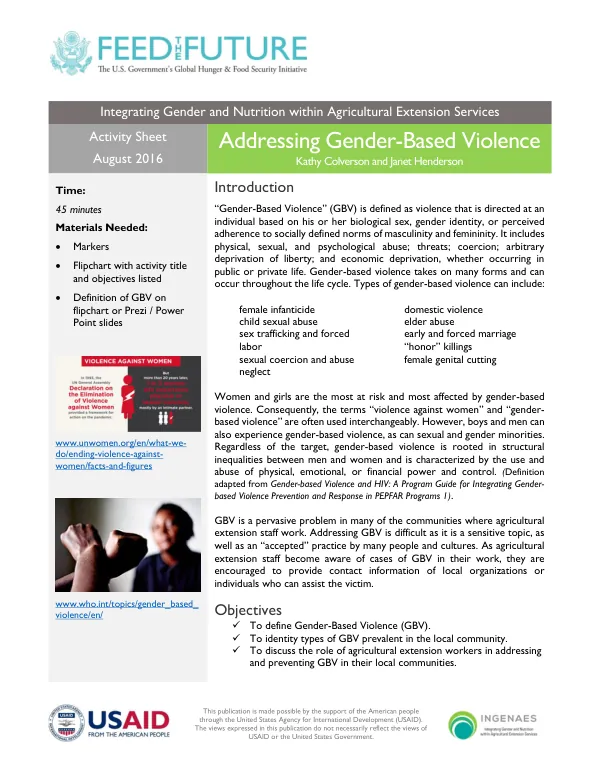
Integrating Gender and Nutrition within Agricultural Extension Services Activity Sheet
Sign inFLORIDA INTERNATIONAL UNIVERSITY
Integrating Gender and Nutrition within Agricultural Extension Services Activity Sheet
Gender-Based Violence (GBV) is a pervasive problem in many communities where agricultural extension staff work.
2016 · 2 pages
Sign in to readA free account is required to download.
Abstract
GBV is defined as violence directed at an individual based on their biological sex, gender identity, or perceived adherence to socially defined norms of masculinity and femininity. It includes physical, sexual, and psychological abuse, threats, coercion, arbitrary deprivation of liberty, and economic deprivation, occurring in public or private life. GBV takes on many forms and can occur throughout the life cycle, including female infanticide, child sexual abuse, sex trafficking and forced labor, sexual coercion and abuse, neglect, domestic violence, elder abuse, early and forced marriage, and "honor" killings. Women and girls are the most at-risk and most affected by GBV, but boys and men can also experience GBV, as can sexual and gender minorities. GBV is rooted in structural inequalities between men and women and is characterized by the use and abuse of physical, emotional, or financial power and control. Agricultural extension staff are encouraged to provide contact information of local organizations or individuals who can assist victims of GBV when they become aware of cases in their work. The objectives of addressing GBV in agricultural extension services include defining GBV, identifying types of GBV prevalent in the local community, and discussing the role of agricultural extension workers in addressing and preventing GBV in their local communities. A 45-minute activity sheet has been designed to facilitate this discussion, which includes reviewing the title of the activity, objectives, and brief introduction, and then engaging participants in a series of questions and discussions to raise awareness about GBV and its impact on communities. The activity involves reviewing the definition of GBV, discussing the types of GBV prevalent in the local community, and exploring the role of agricultural extension workers in addressing and preventing GBV. Participants are encouraged to share their experiences and ideas on how to adapt and adjust the exercise depending on a specific audience, such as discussing GBV in women-only and men-only groups or inviting a local professional to speak with and respond to questions from participants. References to relevant literature and resources are provided, including reports from USAID, the Food and Agriculture Organization, and the World Health Organization, which highlight the importance of addressing GBV in agricultural extension services and provide guidance on how to integrate GBV prevention and response into livelihood interventions.