JSI RESEARCH & TRAINING INSTITUTE, INC
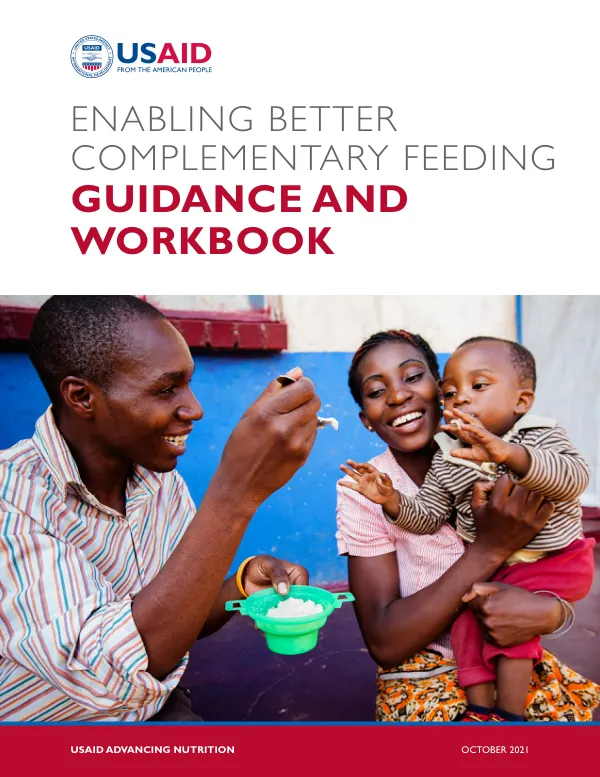
Enabling Better Complementary Feeding: Guidance and Workbook
The USAID Advancing Nutrition project is a multi-sectoral nutrition project led by JSI Research & Training Institute, Inc.
2021 · 107 pages
Sign in to readA free account is required to download.
Abstract
(JSI) and a diverse group of experienced partners. Launched in September 2018, the project implements nutrition interventions across sectors and disciplines for USAID and its partners. The project's multi-sectoral approach draws together global nutrition experience to design, implement, and evaluate programs that address the root causes of malnutrition. The project's goal is to sustain positive outcomes by building local capacity, supporting behavior change, and strengthening the enabling environment to save lives, improve health, build resilience, increase economic productivity, and advance development. The project focuses on enabling better complementary feeding, which is essential for the growth and development of children. Complementary feeding refers to the practice of providing children with foods in addition to breast milk, typically starting from six months of age. This practice is critical for ensuring that children receive the necessary nutrients for optimal growth and development. However, many children in developing countries do not receive adequate complementary feeding, leading to malnutrition and related health problems. The USAID Advancing Nutrition project aims to improve complementary feeding practices through a range of interventions, including training for healthcare workers, community-based programs, and policy development. The project also focuses on building the capacity of local partners and stakeholders to implement and sustain nutrition programs. The project's approach is based on a systems thinking framework, which recognizes that nutrition is influenced by a range of factors, including food systems, healthcare systems, and social and economic factors. The project works to address these factors through a range of interventions, including policy development, program implementation, and capacity building. The project's guidance and workbook provide a comprehensive framework for implementing complementary feeding programs. The workbook includes a range of modules, each focusing on a different aspect of program implementation, including prioritizing complementary feeding behaviors, planning and conducting formative research, designing a social and behavior change (SBC) strategy, and preparing implementation and monitoring plans. The project's approach is grounded in a range of evidence-based practices, including the use of formative research to inform program design, the development of SBC strategies to promote behavior change, and the use of monitoring and evaluation to track program progress and impact. Overall, the USAID Advancing Nutrition project is a critical initiative aimed at improving complementary feeding practices and reducing malnutrition in developing countries. The project's guidance and workbook provide a valuable resource for program implementers, policymakers, and other stakeholders working to address the root causes of malnutrition.
Related documents