JSI RESEARCH & TRAINING INSTITUTE, INC
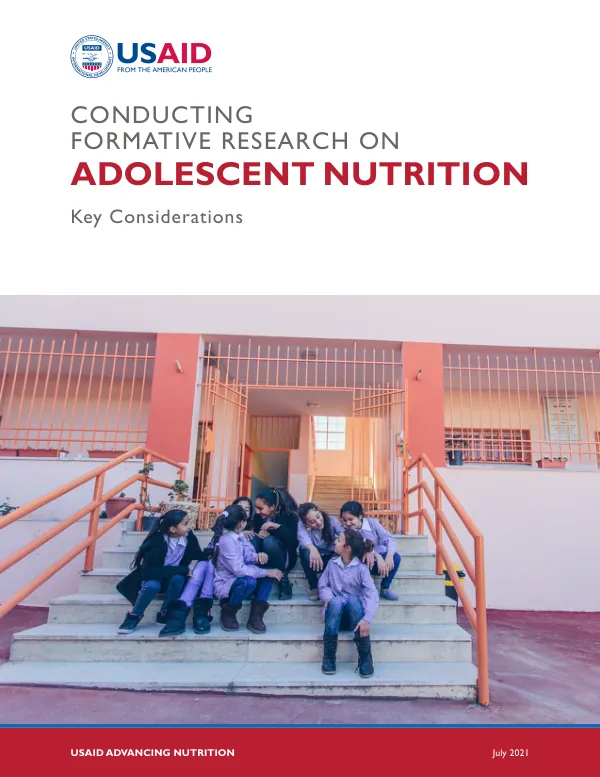
Conducting Formative Research on Adolescent Nutrition: Key Considerations
Adolescent nutrition is a critical period of developmental changes, both physiologically and psychosocially.
2021 · 34 pages
Sign in to readA free account is required to download.
Abstract
Adolescents experience rapid physical growth, puberty, and sexual maturation, which creates increased demand for nutrients and energy. In low- and middle-income countries, a significant proportion of adolescents are overweight or obese, while others suffer from underweight or anemia. The nutritional status of females before and during pregnancy is particularly critical for the health and survival of the mother and her baby. The World Health Organization defines adolescence as between 10-19 years of age, a period that can be further divided into early (10-14 years) and late (15-19 years) adolescence. Despite the unique needs and experiences of this age group, adolescents are often overlooked because late adolescence overlaps with the beginning of the reproductive period for women. Involving adolescents in designing programs and efforts to inform policy empowers them to make decisions about their own well-being and ensures the applicability of results in communities. USAID Advancing Nutrition developed this guidance outlining key considerations for conducting formative research on nutrition behaviors with adolescents. The guidance provides background on adolescent nutrition and the use of formative research to inform programs and policies. It outlines the purpose of the guidance document and summarizes the key considerations for conducting formative research on nutrition behaviors with adolescents. Determining formative research objectives is a critical step in conducting formative research on adolescent nutrition. This involves selecting a conceptual framework, determining information gaps, and developing research objectives and questions. The guidance provides a step-by-step approach to designing and conducting formative research, including prioritizing participant groups, choosing appropriate data collection methods, and planning for data collection. Considering ethics and confidentiality is also essential when conducting formative research on adolescent nutrition. This involves identifying rules for conducting research with minors, minimizing safety and security risks, and ensuring the confidentiality of participants' information. Analyzing data is a critical step in formative research, and the guidance provides a step-by-step approach to preparing data for analysis, collaboratively analyzing data, and validating findings. Disseminating and using findings is a critical step in formative research on adolescent nutrition. The guidance provides a step-by-step approach to using findings to inform design, disseminating findings to adolescents and stakeholders, and sharing findings creatively. The annex presents a list of participatory nutrition research methods and resources that describe the methods, and an example of how pretesting can generate useful information when time and resources do not allow for formative research. The guidance is intended to help programmers fill gaps in the evidence base on adolescent behaviors and needs, as well as how to tailor programming for targeting adolescents. By involving adolescents in designing programs and efforts to inform policy, the guidance aims to empower them to make decisions about their own well-being and ensure the applicability of results in communities.
Related documents