INGENAES
Integrating Gender and Nutrition within Agricultural Extension Services Info Sheet
Vitamin A deficiency is a significant public health concern, particularly among children and pregnant women.
2016 · 1 pages
Sign in to readA free account is required to download.
Abstract
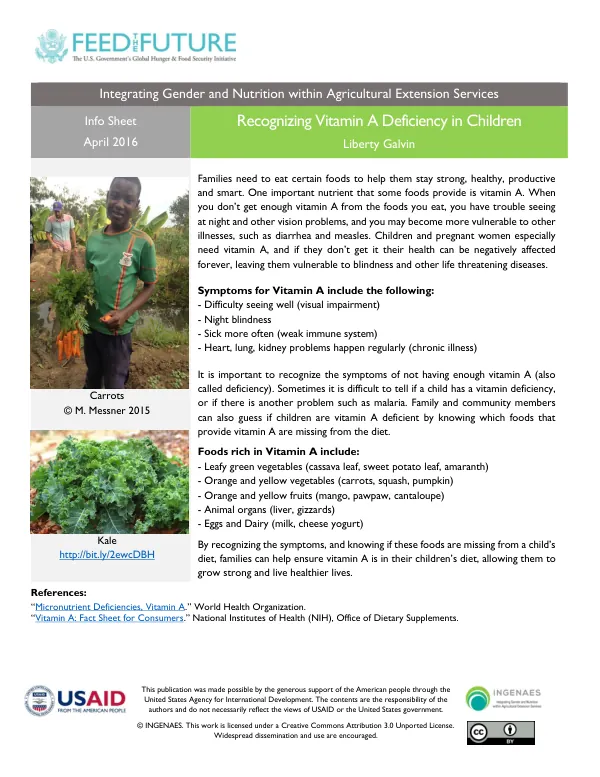
This deficiency can lead to severe health issues, including blindness, and can have a lasting impact on an individual's health. Symptoms of vitamin A deficiency include difficulty seeing, difficulty seeing at night, frequent illness, and chronic health problems. Foods rich in vitamin A are essential for maintaining adequate levels of this essential nutrient. Leafy green vegetables, such as cassava leaf, sweet potato leaf, and amaranth, are rich in vitamin A. Orange and yellow vegetables, including carrots, squash, and pumpkin, are also good sources. Orange and yellow fruits, such as mango, pawpaw, and cantaloupe, provide vitamin A. Animal organs, like liver and gizzards, are also rich in this nutrient. Eggs and dairy products, including milk, cheese, and cheese, are additional sources of vitamin A. Recognizing the symptoms of vitamin A deficiency is crucial for addressing this issue. Family and community members can identify potential vitamin A deficiency by knowing which foods are missing from a child's diet. By incorporating these foods into their diet, families can help ensure that children receive adequate vitamin A, allowing them to grow strong and healthy. The World Health Organization has identified micronutrient deficiencies, including vitamin A, as a significant public health concern. The National Institutes of Health (NIH) also emphasizes the importance of vitamin A for maintaining good health. Families can take steps to prevent vitamin A deficiency by providing children with a balanced diet that includes a variety of foods rich in this essential nutrient. Adequate vitamin A intake is critical for maintaining good health, particularly among children and pregnant women. Foods rich in vitamin A, such as leafy green vegetables, orange and yellow vegetables, and animal organs, are essential for preventing deficiency. Recognizing the symptoms of vitamin A deficiency and incorporating these foods into the diet can help prevent this condition and promote overall health. Families can take proactive steps to ensure that children receive adequate vitamin A. By providing a balanced diet that includes a variety of foods rich in this nutrient, families can help prevent vitamin A deficiency and promote overall health. This approach can also help prevent long-term health problems, including blindness and other life-threatening diseases.