USAID DEC
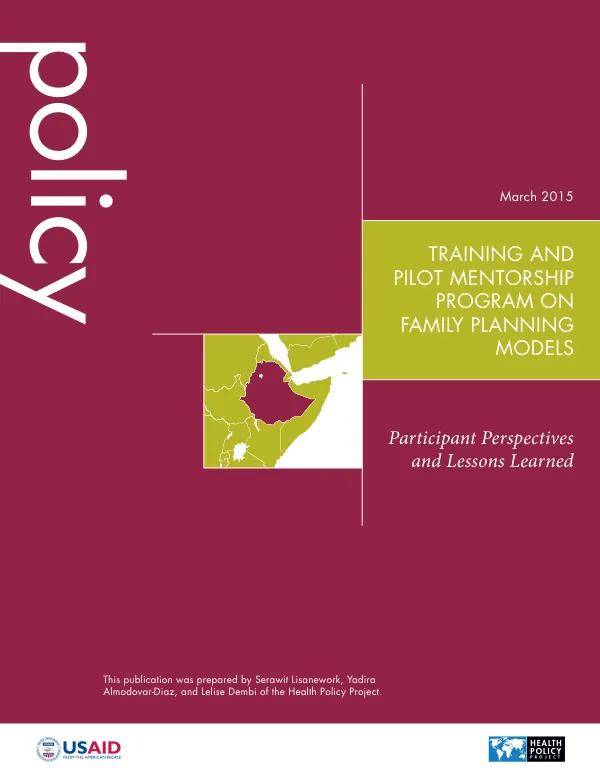
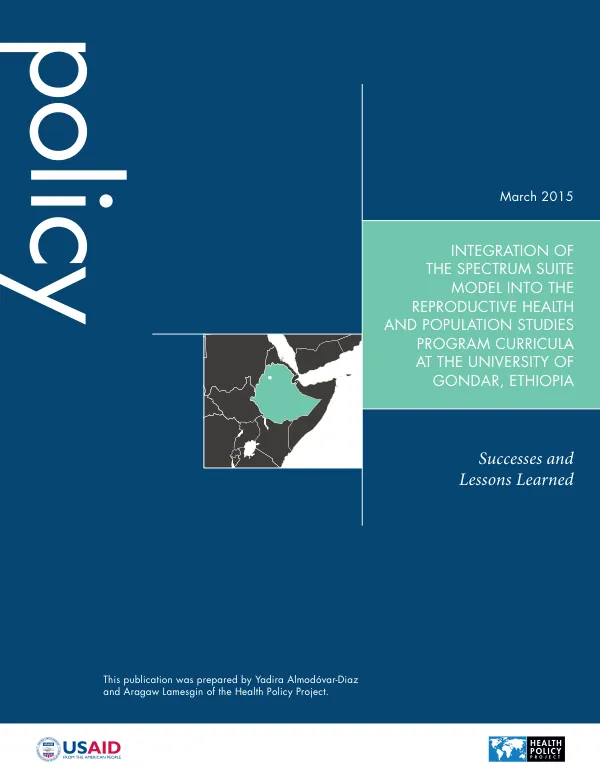
Integration of the Spectrum Suite Model into the Reproductive Health and Population Studies Program Curricula at the University of Gondar, Ethiopia
Sign inAVENIR HEALTH
Integration of the Spectrum Suite Model into the Reproductive Health and Population Studies Program Curricula at the University of Gondar, Ethiopia
The integration of the Spectrum Suite Model into the Reproductive Health and Population Studies Program curricula at the University of Gondar, Ethiopia, began in 2012 as part of the USAID-funded Health Policy Project.
2015 · 20 pages
Sign in to readA free account is required to download.
Abstract
The main objective was to increase local capacity for using modeling tools to project family planning, reproductive health, maternal and child health, and HIV-related service needs at the regional and national level. Through the evidence generated, policymakers, program managers, and subject-matter experts can inform policy and programmatic decisions to fill the identified gaps and unmet needs. Four faculty members from the Department of Reproductive Health at the College of Medicine and Health Sciences, the Department of Population Studies in the Faculty of Social Sciences, and the Institute of Public Health at the University of Gondar developed a proposal to integrate four Spectrum Model tools—DemProj, FamPlan, RAPID, and LIST—into the Master of Public Health (MPH) and Master of Science (MSc) curricula. Two courses were developed or updated: PuHe717: Family Planning and Population Studies (now titled PuRh8032: Family Planning Population Studies) and PORH 621: Population and Development: Theories and Integration. The courses include interactive lectures, small group assignments, and the application of Spectrum tools to a set of scenarios using the 2011 Demographic and Health Survey data and other resources. More than 68 students have taken these courses and developed critical modeling and data analysis skills, which will advance their careers as public health leaders. The integration of Spectrum tools into the academic curricula at the University of Gondar has been successful, with students demonstrating improved analytical skills and ability to translate data into policy and program recommendations. The courses have also been well-received by students, with many reporting that the training has been valuable in their academic and professional careers. The methodology used to collect and analyze the information presented in this report included semi-structured interviews with three professors and department heads from the University of Gondar, as well as individual interviews with three MPH alumni who took the courses between 2012 and 2013. The interviews were intended to document the experience of integrating Spectrum into the curricula, to identify key successes and lessons learned, and to draw useful recommendations for individuals and organizations interested in replicating this initiative. The materials designed and used in these courses were also analyzed, including the course syllabi, the adapted FamPlan, DemProj, and RAPID training modules, and the 11 scenarios students were given to generate and present their findings during their course work. The integration of Spectrum tools into the academic curricula at the University of Gondar has been a successful initiative, with many benefits for students and the broader public health community. The courses have provided students with critical modeling and data analysis skills, which will advance their careers as public health leaders. The initiative has also demonstrated the value of integrating modeling tools like Spectrum into public health curricula to expand students' analytical skills and ability to translate data into policy and program recommendations.