USAID
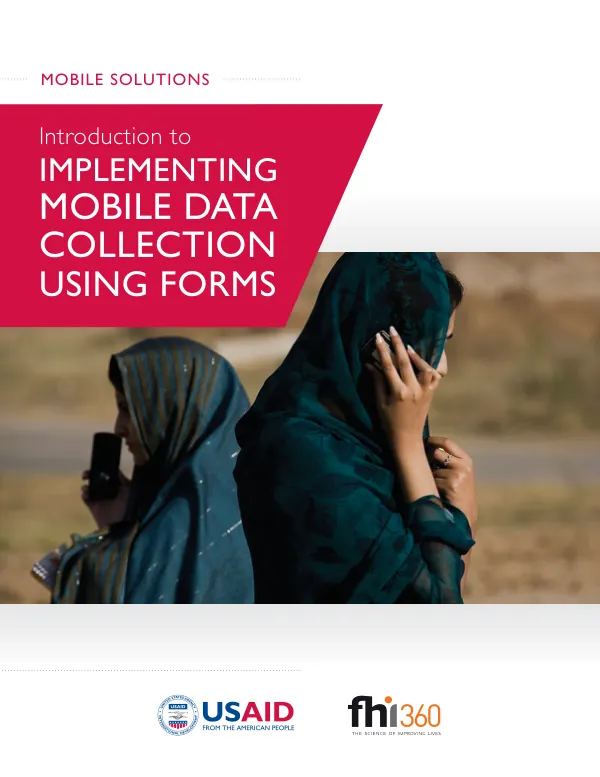
Introduction to Implementing Mobile Data Collection Using Forms
Mobile data collection using forms is a method of capturing data electronically through mobile devices, such as smartphones or tablets.
2013 · 7 pages
Sign in to readA free account is required to download.
Abstract
This approach involves designing electronic forms that can be completed on mobile devices, and then uploading the data to a database for analysis and visualization. The process of implementing mobile data collection using forms involves several key steps, including form design, programming the survey for the mobile data collection client, setting up data transfer to/from the server, equipment preparation, testing, developing protocols, training, fielding the survey, and wrap-up. Form design is a critical step in the process, as it involves creating a data collection instrument that is clear, concise, and easy to use. The form should be designed in a document, not in the survey design software, and should include the wording for the questions, as well as the order in which they should be posed. The form should also take advantage of the features offered by most electronic forms, such as skip logic, data type validation, and range checks. Skip logic allows the form to control which questions appear and in what order, based on the respondent's answers. For example, a section related to child-bearing and pregnancy spacing may appear only if the respondent answers "Yes" to being female. Data type validation allows the form to accept only certain types of entries in a particular field, such as integers or dates. Range checks allow the form to accept responses only within a predetermined range, such as 0 to 20. The form can also be designed to use the most appropriate type of question to ensure the most valid responses. Choices for question type include lists that allow the respondent to "choose one of many," questions that are "choose many of many," dates, multimedia questions, location questions, and text questions. Once the form is designed, it should be tested among representatives of both data collectors and respondents to be surveyed to ensure usability, reliability, and validity. This testing should be conducted prior to conversion to mobile format, as it is much more cost-effective to test and revise the form before incurring the expense of developing an electronic version. Programming the survey for the mobile data collection client involves developing the electronic data collection form using the application of choice. The process varies significantly depending on the software selected, and some tools have easy-to-use graphical user interfaces that do not require programming skills or experience with these types of tools. Setting up data transfer to/from the server involves configuring the server application(s), acquiring a fixed IP address, and testing data transfer and communication between the server, mobile devices, and any client desktop/computers that are part of the system. This process may require a significant investment of human resources and time, and may involve working with a vendor or local mobile network operator to ensure that the device is properly configured for the country. Equipment preparation involves purchasing and preparing mobile devices for deployment to end users. This may require purchasing credit for data transfer from Mobile Network Operator(s), ensuring that all devices are set up according to the manufacturer's user guide, testing that each device is working properly, deciding which installed applications to activate, loading the data collection application onto mobile devices, and configuring the phone so that the applications most important for use for the project are easily accessible. Testing is a critical step in the process, as it involves ensuring that the form is working properly and that the data is being collected and transferred correctly. This testing should be conducted prior to fielding the survey, and should involve testing the form among a small group of respondents to ensure that it is working as intended. Developing protocols involves creating a plan for how the survey will be administered, including how the data will be collected, how the respondents will be recruited, and how the data will be analyzed and reported. This plan should be developed in consultation with stakeholders, including the project team, the respondents, and any vendors or partners involved in the project. Training involves providing training to the data collectors and enumerators on how to use the form and how to collect the data. This training should be conducted prior to fielding the survey, and should involve hands-on training and practice with the form. Fielding the survey involves administering the survey to the respondents, collecting the data, and transferring it to the server for analysis and visualization. This process should be conducted in accordance with the protocols developed for the project, and should involve working with the data collectors and enumerators to ensure that the data is collected and transferred correctly. Wrap-up involves completing the project, including analyzing and reporting the data, and ensuring that the project is completed on time and within budget. This process should involve working with the project team, the respondents, and any vendors or partners involved in the project to ensure that the project is completed successfully.
Related documents