GOVERNMENT OF UGANDA
Investing in Human Capital to Eliminate Poverty in Kasese District, Uganda
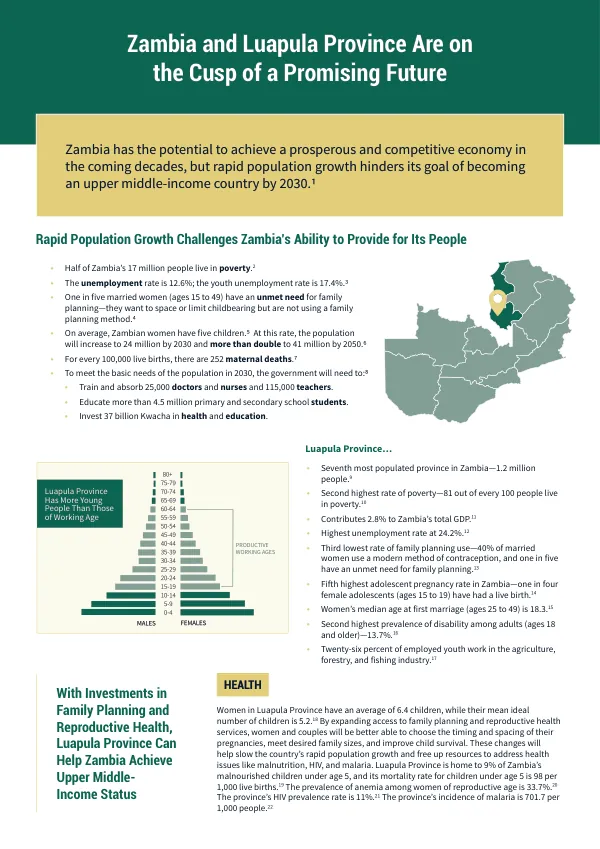
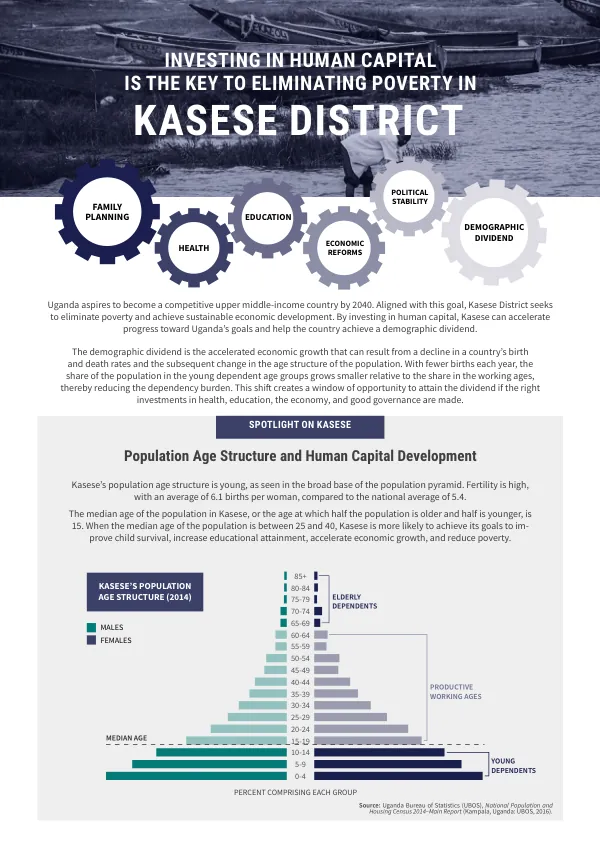
Kasese's population age structure is characterized by a broad base, indicating a young population.
2021 · 2 pages
Sign in to readA free account is required to download.
Abstract
The median age of the population is 15, which is below the age at which a country is likely to achieve its goals to improve child survival, increase educational attainment, accelerate economic growth, and reduce poverty. The average number of births per woman in Kasese is 6.1, higher than the national average of 5.4. The demographic dividend is a concept that refers to the accelerated economic growth that can result from a decline in a country's birth and death rates and the subsequent change in the age structure of the population. With fewer births each year, the share of the population in the young dependent age groups grows smaller relative to the share in the working ages, thereby reducing the dependency burden. This shift creates a window of opportunity to attain the dividend if the right investments in health, education, the economy, and good governance are made. Investments in family planning, education, and skills development are critical to help Uganda achieve a demographic dividend. Access to voluntary family planning can drive rapid improvements in maternal health and child survival by enabling healthy timing and spacing of pregnancy. With fewer children to support, couples are more likely to keep their children in school and are able to grow household wealth. In Kasese, access to family planning among women and couples remains limited, with 1 in 4 women who want to prevent pregnancy not using family planning. The Kasese District Local Government has identified key priority interventions outlined in Uganda's Demographic Dividend Roadmap to be adopted in the district development plan. These include improving access to and quality of affordable health, education, and agricultural extension services, communicating the benefits of family planning, advocating for more funding for family planning interventions, recruiting more health workers, and establishing policies that enable girls to complete schooling. By prioritizing family planning as a key human capital investment, Kasese can accelerate progress towards its five-year development goals. The demographic dividend can be harnessed to achieve sustainable development in Uganda. With a population that is expected to reach 100 million by 2040, Uganda aspires to become a competitive upper middle-income country. By investing in human capital, particularly in education and family planning, Kasese can contribute to the country's goal of achieving a demographic dividend. This requires a coordinated effort from the government, civil society, and the private sector to improve access to health, education, and economic opportunities, particularly for women and girls.
Related documents