USAID DEC
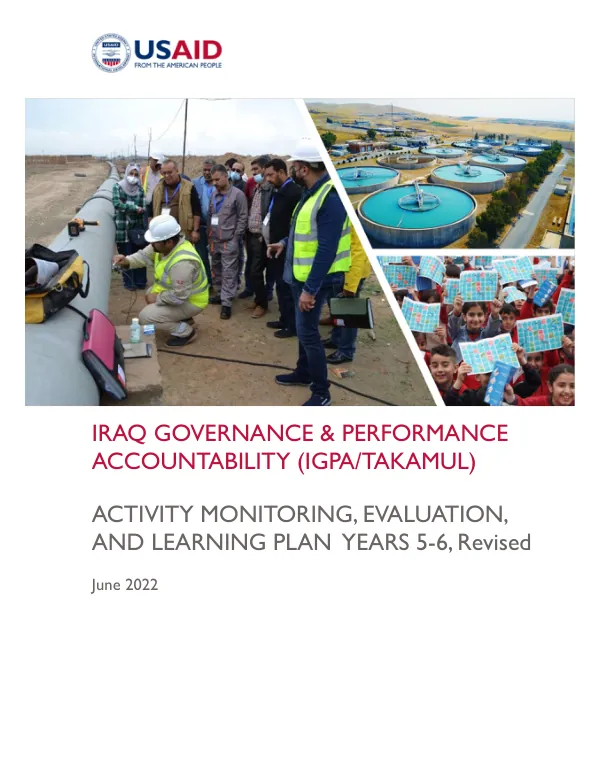
Iraq Governance and Performance Accountability Project Task Order 5: Anti-Domestic Violence Law Advocacy Training to Coalition Members – Religious and Tribal Leaders
Sign inLOCAL CIVIL SOCIETY ORGANIZATIONS
Iraq Governance and Performance Accountability Project Task Order 5: Anti-Domestic Violence Law Advocacy Training to Coalition Members – Religious and Tribal Leaders
The Iraq Governance and Performance Accountability Project Task Order 5: Anti-Domestic Violence Law focused on providing advocacy training to coalition members, including religious and tribal leaders.
2020 · 8 pages
Sign in to readA free account is required to download.
Abstract
The training aimed to equip these leaders with the necessary skills and knowledge to support the passage of the Anti-Domestic Violence (ADV) legislation. The training was conducted on February 9-10, 2020, at the Divan Hotel in Erbil, with 18 participants from religious and tribal leaders attending. The training included sessions on advocacy techniques, messaging, targeting, and delivery methods. Participants were also exposed to case studies, including the civil rights campaign of Dr. Martin Luther King Junior and the film Selma, which highlighted the importance of leadership and change management. Additionally, the training covered the role of stakeholders, leadership types, and team building skills. On the second day of the training, participants applied the knowledge and skills they had acquired by working in groups and discussing the ADV advocacy campaign. They also watched a short film called "Our Iceberg Is Melting," which conveyed a powerful message about the fear of change and how to motivate people to face the future and act. The training concluded with a discussion on the Coalition Coordination Group (CCG) roles and responsibilities, and the selection of CCG representatives from the religious and tribal leaders. The training resulted in increased knowledge among participants, with 100 percent showing improvement in their understanding of their role within the advocacy coalition, the key concepts of the anti-domestic violence law, and the role of messaging in implementing an advocacy campaign. The training also led to the creation of a WhatsApp group for the religious and tribal leaders to continue building support for the ADV campaign. The CCG, comprising representatives from various entities, including the Council of Representatives, the President's Office, and civil society organizations, was established to manage the advocacy coalition and support the ADV legislation. The CCG's roles and responsibilities included developing an advocacy mechanism, workplan, and evaluating achievements. The religious and tribal leaders chose representatives to attend CCG meetings and communicate with the rest of the group. The training was facilitated by Rana al-Ghazal, and the event materials, including the advocacy plan set by the CCG, were included as attachments. The agenda for the training sessions outlined the topics to be covered, including welcome and introduction, advocacy techniques, messaging, and CCG activities. The training was a crucial step in building support for the ADV legislation and ensuring its successful passage.