USAID DEC
Jewelry Maker Curriculum
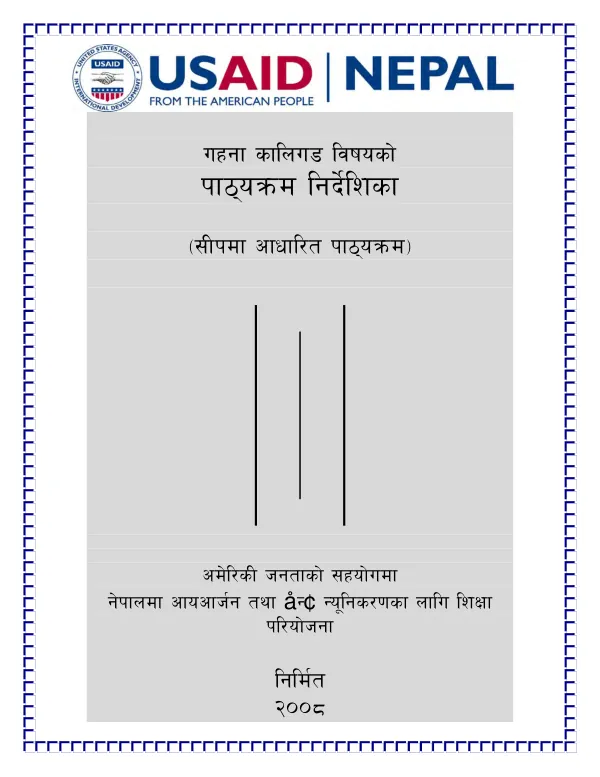
The EIGCM-Education for Income Generation and Conflict Mitigation in Nepal Project is a USAID-funded initiative aimed at promoting economic development and conflict mitigation in Nepal.
75 pages
Sign in to readA free account is required to download.
Abstract
The project focuses on the jewelry-making industry, with the goal of enhancing the skills and knowledge of local artisans. The curriculum for the jewelry-making program is designed to provide participants with a comprehensive understanding of the craft, including theoretical and practical aspects. The program is divided into several modules, each covering a specific aspect of jewelry making, such as design, materials, and techniques. The curriculum includes a task analysis, which identifies the key tasks and skills required for jewelry making. The tasks are categorized into several areas, including design, materials, and techniques, and are further broken down into specific skills and standards. The standards are designed to ensure that participants meet the required level of proficiency in each task. The program also includes a grading system, which assesses participants' performance based on their completion of tasks and demonstration of skills. The grading system is designed to provide a clear and transparent evaluation of participants' progress and to ensure that they meet the required standards. The curriculum also outlines the qualifications and requirements for trainers, including their educational background, experience, and training. The trainers are responsible for delivering the program and providing guidance and support to participants. The program is designed to be delivered through an apprenticeship model, where participants work under the guidance of experienced trainers and learn through hands-on experience. The program is expected to be completed within a specified timeframe, and participants are required to meet specific attendance and participation requirements. The curriculum also includes a focus on conflict mitigation and income generation, with the goal of promoting economic development and reducing conflict in the region. The program is designed to be flexible and adaptable to the needs of participants, and is expected to be delivered in a variety of settings, including community centers and training facilities. The program is expected to benefit local artisans and communities by providing them with the skills and knowledge necessary to participate in the jewelry-making industry. The program is also expected to contribute to the economic development of the region by promoting income generation and reducing poverty. The curriculum is designed to be implemented in a variety of settings, including community centers and training facilities. The program is expected to be delivered by trained trainers who have the necessary qualifications and experience to deliver the program. The program is expected to have a positive impact on the local community, by providing them with the skills and knowledge necessary to participate in the jewelry-making industry. The program is also expected to contribute to the economic development of the region by promoting income generation and reducing poverty. The curriculum includes a detailed outline of the program's objectives, including the development of skills and knowledge, the promotion of income generation, and the reduction of conflict. The program is designed to be implemented in a variety of settings, including community centers and training facilities. The curriculum is designed to be implemented in a variety of settings, including
Related documents