FANTA
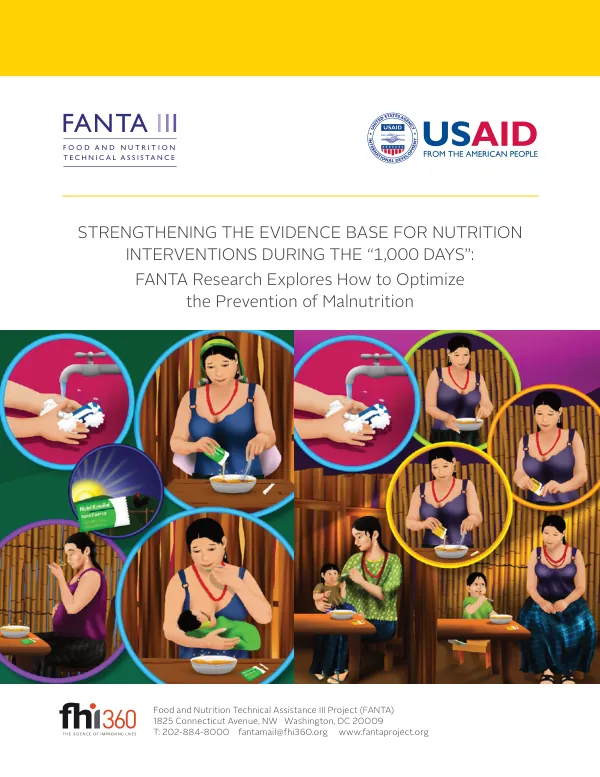
STRENGTHENING THE EVIDENCE BASE FOR NUTRITION INTERVENTIONS DURING THE “1,000 DAYS”
The first 1,000 days of life, from conception to a child's second birthday, is a critical window of opportunity for optimizing nutritional, health, and development outcomes.
2018 · 20 pages
Sign in to readA free account is required to download.
Abstract
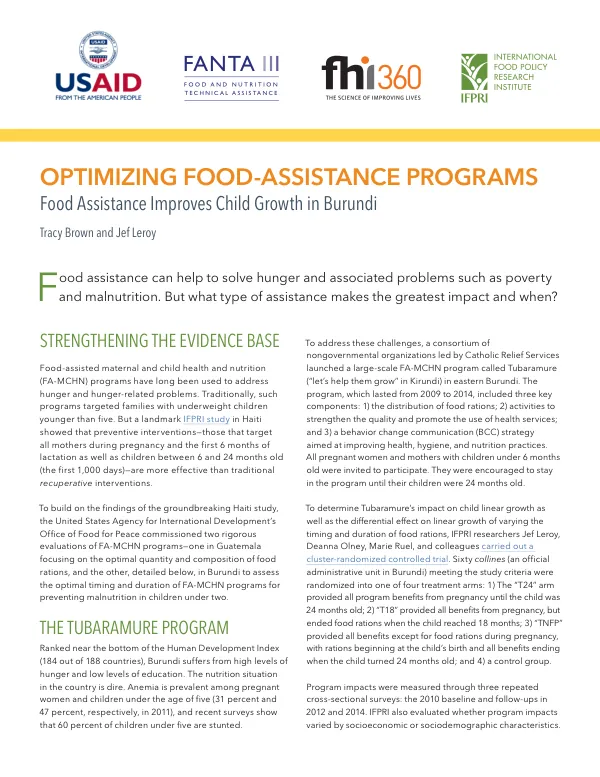
The nutritional status of a woman at conception and during pregnancy, along with nutrition during the child's first 2 years of life, affects the short- and long-term health of her offspring, including long-term chronic disease outcomes such as obesity and diabetes. Children have high nutritional needs for the first 2 years of life due to rapid physical growth and cognitive development, making them vulnerable to undernutrition if suboptimal infant feeding practices and frequent infections occur. A preventive approach to malnutrition during the first 1,000 days has been promoted by global movements and adopted by development agencies. This approach focuses on increasing availability of staple foods and intake of micronutrient-rich foods, motivating participation in program activities, improving dietary diversity and quality, and increasing adoption of optimal nutrition, health, hygiene, and curative/preventive health practices. The primary components of this approach include conditional food rations, preventive and curative health and nutrition services, and behavior change communication. The Food and Nutrition Technical Assistance III Project (FANTA) has implemented four large research studies to improve the understanding and implementation of interventions focused on the first 1,000 days. Two of the studies, in Guatemala and Burundi, were conducted in the context of a U.S. Agency for International Development (USAID) Office of Food for Peace (FFP) development food security activity implementing the preventing malnutrition in children under 2 approach (PM2A). These studies aimed to build the evidence around PM2A, including how the approach could be best implemented in terms of optimal ration size, composition, and duration of assistance. The other two studies were focused primarily on evaluating nutritional supplements, including micronutrient powders (MNP) and small-quantity lipid-based nutrient supplements (SQ-LNS), to improve nutritional outcomes among pregnant women and children. One study, in Bangladesh, was conducted in the context of a community health and development program run by a local nongovernmental organization (NGO), while the second study, in Malawi, was an intervention evaluating SQ-LNS and its effects on birth outcomes. The Guatemala PM2A study also evaluated SQ-LNS and MNP in the context of a FFP development food security activity. The studies assessed the cost and cost-effectiveness of the interventions, as well as their impact on nutritional outcomes, including stunting, wasting, and underweight. The results of these studies are expected to inform effective policies and programs that low- and middle-income countries can implement in their specific contexts to prevent undernutrition during the first 1,000 days. The findings of these studies will also contribute to the development of evidence-based guidelines for the implementation of PM2A and other preventive approaches to malnutrition. The research studies were conducted in a variety of geographic settings with differing nutrition and food security profiles. The studies aimed to build the evidence around PM2A and other preventive approaches to malnutrition, including the optimal ration size, composition, and duration of assistance. The results of these studies will be used to inform the development of effective policies and programs that can be implemented in low- and middle-income countries to prevent undernutrition during the first 1,000 days.
Related documents