MINISTRY OF HEALTH
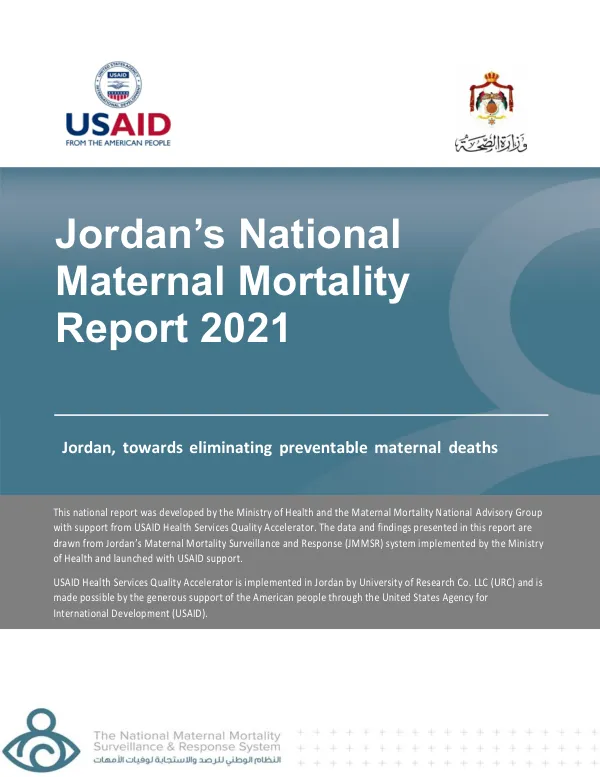
Jordan's National Maternal Mortality Report 2021
Jordan's Maternal Mortality Ratio has been a persistent concern, with significant disparities in maternal health outcomes across various regions and populations.
2021 · 64 pages
Sign in to readA free account is required to download.
Abstract
The Maternal Mortality Ratio (MMR) is a key indicator of the quality of maternal healthcare services, with a higher MMR indicating a greater risk of maternal mortality. In Jordan, the MMR has been steadily increasing, with a notable spike in 2020 due to the COVID-19 pandemic. According to the data collected through the Jordan's Maternal Mortality Surveillance and Response (JMMSR) system, the MMR for Jordanians only has been steadily increasing, with a notable spike in 2020. The MMR for non-Jordanians has also been increasing, with a higher MMR observed in this group compared to Jordanians. The data also reveals significant disparities in maternal health outcomes across various regions, with the Amman Governorate experiencing a higher MMR compared to other governorates. The demographic characteristics of maternal deaths in Jordan reveal that the majority of maternal deaths occur among women aged 20-34 years, with a higher proportion of deaths occurring among women with a higher parity. The data also shows that the majority of maternal deaths occur among women who have received antenatal care, with a higher proportion of deaths occurring among women who have received inadequate antenatal care. The clinical characteristics of maternal deaths reveal that the majority of maternal deaths are due to direct obstetric causes, with a higher proportion of deaths occurring among women who have experienced complications during delivery. The underlying causes of maternal death in Jordan are multifaceted, with a range of factors contributing to maternal mortality. The data reveals that the majority of maternal deaths are due to direct obstetric causes, with a higher proportion of deaths occurring among women who have experienced complications during delivery. The contributing factors to maternal death include inadequate antenatal care, inadequate emergency obstetric care, and a lack of access to skilled birth attendants. The data also reveals that the COVID-19 pandemic has had a significant impact on maternal health outcomes in Jordan, with a notable spike in maternal mortality observed in 2020. The Maternal Mortality Response in Jordan is a critical component of the country's efforts to reduce maternal mortality. The National Strategies toward Ending Preventable Maternal Mortality aim to improve access to quality maternal healthcare services, increase the availability of skilled birth attendants, and enhance the capacity of healthcare providers to manage obstetric emergencies. The report highlights the importance of strengthening the JMMSR system, improving data collection and analysis, and enhancing the capacity of healthcare providers to manage obstetric emergencies. The report also emphasizes the need for a comprehensive approach to reducing maternal mortality, one that addresses the social, economic, and cultural determinants of health. This includes improving access to education and economic opportunities for women, enhancing the capacity of healthcare providers to manage obstetric emergencies, and strengthening the healthcare system to provide quality maternal healthcare services. The report concludes by highlighting the importance of continued efforts to reduce maternal mortality in Jordan, and the need for a sustained commitment to improving maternal health outcomes.
Related documents