UNIVERSITY RESEARCH CORPORATION CO., LLC
USAID Primary Health Care Project in Iraq: Final Report
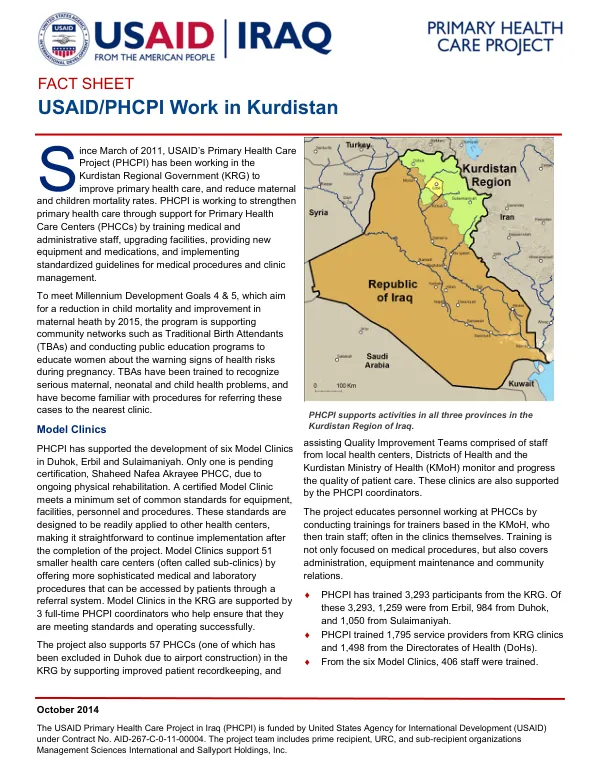
The USAID Primary Health Care Project in Iraq (PHCPI) has been working in the Kurdistan Regional Government (KRG) since March 2011 to improve primary health care and reduce maternal and children mortality rates.
2014 · 3 pages
Sign in to readA free account is required to download.
Abstract
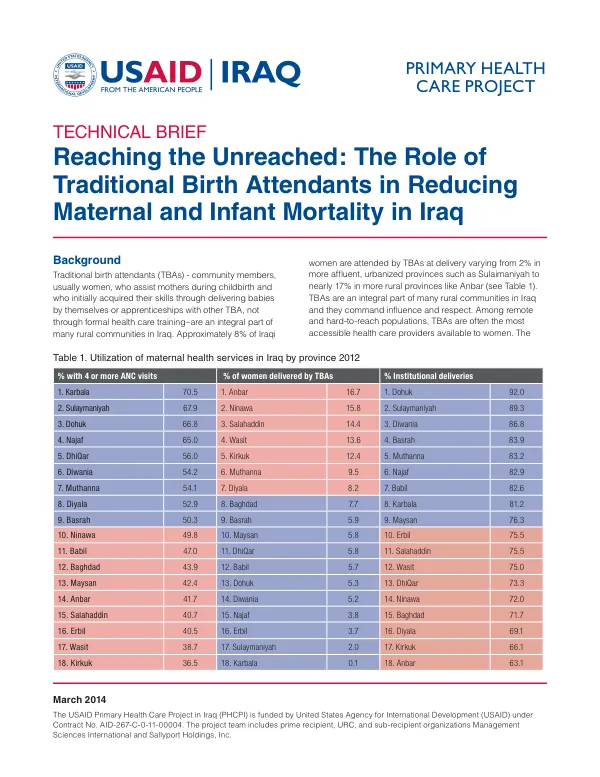
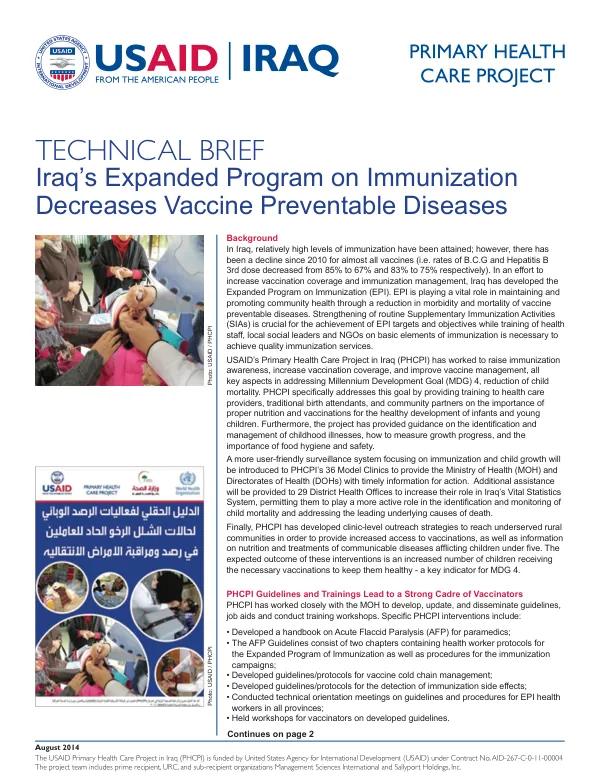
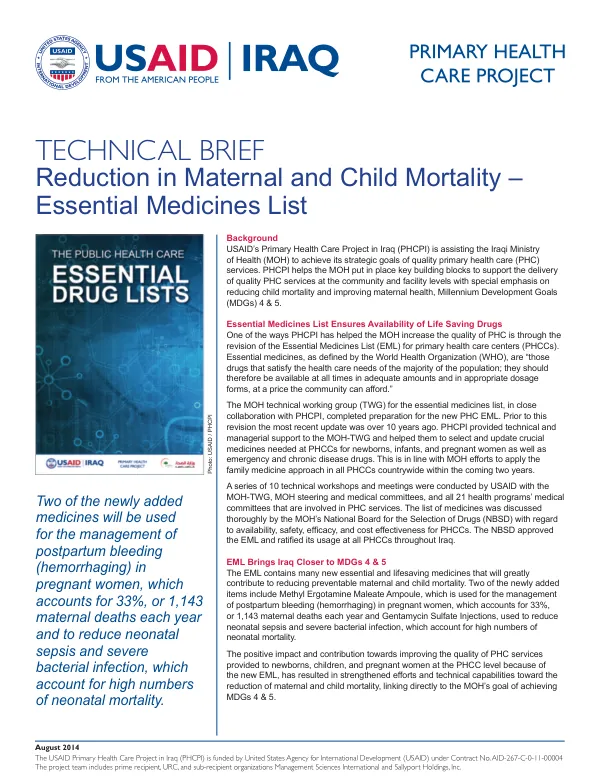
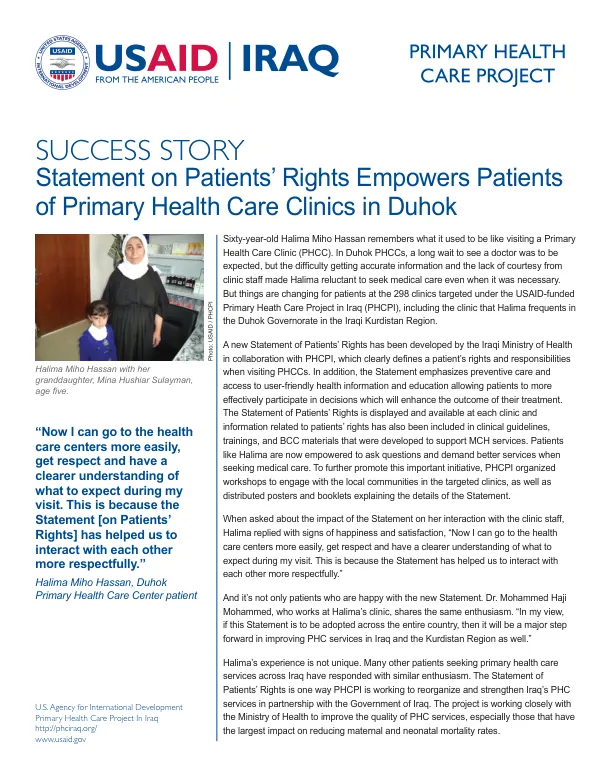
The project is focused on strengthening primary health care through support for Primary Health Care Centers (PHCCs) by training medical and administrative staff, upgrading facilities, providing new equipment and medications, and implementing standardized guidelines for medical procedures and clinic management. To meet Millennium Development Goals 4 and 5, which aim for a reduction in child mortality and improvement in maternal health by 2015, the program is supporting community networks such as Traditional Birth Attendants (TBAs) and conducting public education programs to educate women about the warning signs of health risks during pregnancy. TBAs have been trained to recognize serious maternal, neonatal, and child health problems, and have become familiar with procedures for referring these cases to the nearest clinic. PHCPI has supported the development of six Model Clinics in Duhok, Erbil, and Sulaimaniyah. A certified Model Clinic meets a minimum set of common standards for equipment, facilities, personnel, and procedures. These standards are designed to be readily applied to other health centers, making it straightforward to continue implementation after the completion of the project. Model Clinics support 51 smaller health care centers by offering more sophisticated medical and laboratory procedures that can be accessed by patients through a referral system. The project has trained 3,293 participants from the KRG, including 1,259 from Erbil, 984 from Duhok, and 1,050 from Sulaimaniyah. PHCPI has also trained 1,795 service providers from KRG clinics and 1,498 from the Directorates of Health (DoHs). From the six Model Clinics, 406 staff were trained. The project has also supported 57 PHCCs in the KRG by providing improved patient recordkeeping and assisting Quality Improvement Teams comprised of staff from local health centers, Districts of Health, and the Kurdistan Ministry of Health (KMoH) to monitor and progress the quality of patient care. PHCPI has conducted 179 training events in KRG, including 95 in Erbil, 38 in Duhok, and 46 in Sulaimaniyah. The project has also conducted 42 on-the-job training activities within KRG clinics. A total of 255 participants were trained as Trainers of Trainers in order to provide continued training and ensure sustainability. PHCPI has also provided essential equipment and continued staff education to six Model Clinics to help them meet the required standards. The project has developed 36 PHC clinical guidelines and associated curricula and provided training in subjects such as Emergency Obstetrics and Newborn Care, Antenatal Care Guidelines, Integrated Management of Childhood Illnesses for Nurses and for Physicians, Communicable Diseases and Control, Infection Prevention and Waste Management, and Poly Trauma, among others. PHCPI has also established 56 Local Health Committees (LHCs) in cooperation with city officials and health authorities in Erbil, Duhok, and Sulaimaniyah. The project has finalized the printing and production of Essential Drugs List guidelines and initiated training for use by PHCCs. PHCPI has also facilitated the adoption of an updated medical record system in 56 PHCCs. The K-MOH is in the process of printing and adopting this system at all KRG clinics. The project has established Quality Improvement (QI) teams in 56 PHCCs and trained staff on QI and supportive supervision techniques. PHCPI has conducted rollout and on-the-job training courses for 1,795 service providers from KRG clinics and 1,498 from the DoHs on Community Health Partnership (CHP), Standard Operating Procedures (SOP), the Management Handbook, Medical Records, Referral System, Supportive Supervision, and other clinical guidelines. The project has established 255 trainers, 108 in Erbil, 67 in Duhok, and 80 in Sulaimaniyah, who will continue PHCPI training activities for improved health systems management and for a wide range of continuing medical education. The project has provided a package containing 73-75 medical guidelines that were prepared and printed by PHCPI and approved by the KMoH. Erbil received 1,225 copies, Sulaimaniyah 1,275 copies, and Duhok 876 copies. The package contains both hard and soft copies of all materials as well as availability in three languages – English, Arabic, and Kurdish. The KMoH has recognized PHCPI's continued efforts to reduce maternal, neonatal, and infant mortality through implementation of a BCC and community mobilization campaign in August 2014, to reach women of reproductive age and vulnerable groups in IDP camps to emphasize the importance of early vaccinations, breast feeding, and good nutrition to ensure healthy mothers and babies. The project is working to ensure the sustainability of activities
Related documents