MANAGEMENT SCIENCES FOR HEALTH
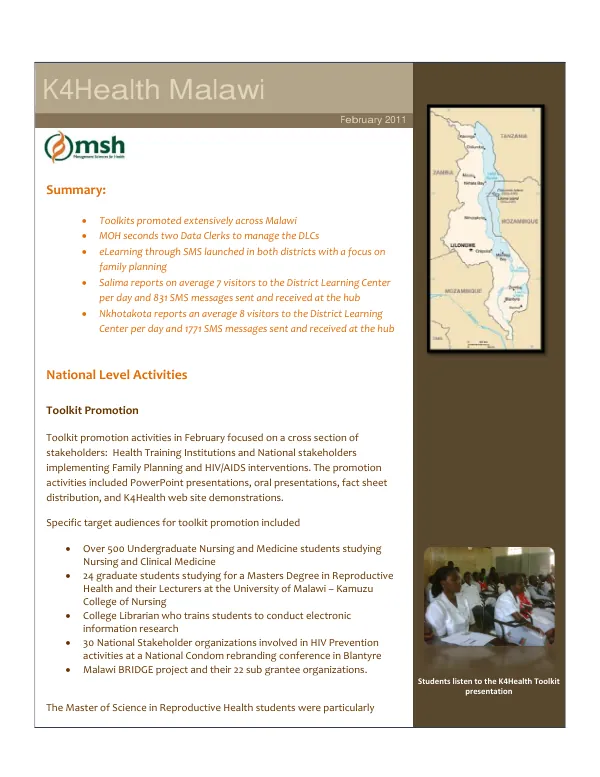
K4Health Malawi February 2011
The K4Health Malawi initiative began promoting toolkits extensively across Malawi in February 2011.
2011 · 5 pages
Sign in to readA free account is required to download.
Abstract
The Ministry of Health seconded two Data Clerks to manage the District Learning Centers (DLCs). The eLearning through SMS initiative was launched in both Salima and Nkhotakota districts, focusing on family planning. In Salima, the District Learning Center reported an average of 7 visitors per day, with 831 SMS messages sent and received at the hub. In Nkhotakota, the DLC reported an average of 8 visitors per day, with 1,771 SMS messages sent and received at the hub. The majority of messages in Nkhotakota were notifications, with 226 received and 1,546 sent from the hub. The K4Health team developed a set of family planning questions for piloting eLearning exercises in both districts. Questions were sent to 62 Health Surveillance Assistants (HSAs) and Community-Based Distribution Agents (CBDAs) in Nkhotakota and 181 HSAs and CBDAs in Salima. Twenty CHWs responded to the questions administered through eLearning by the end of February. Analysis of Frontline SMS data through SPSS in Nkhotakota showed that 226 messages were received at the hub and 1,546 messages were sent from the hub. The breakdown of messages in Nkhotakota included notifications, stockouts, technical inquiries, reports, and eLearning questions and answers. Salima registered a total of 831 messages sent and received from the hub, with 364 messages on notifications, 20 on stockouts, 181 on eLearning questions, and 12 on eLearning answers. Some examples of messages sent to the hub in Salima and Nkhotakota included queries about family planning methods, stockouts of medicine, and technical inquiries. The K4Health team responded to these messages, providing guidance and support to the CHWs and HSAs. Despite the progress made, challenges were experienced in Salima, including internet connectivity problems due to unreliability of the service provider. The District Health Management Team engaged another service provider, but local networking had not yet been finalized, and the DLC was still facing internet connectivity challenges. There was also a need to follow up with HSAs who were sending mass messages to the hub even when not necessary, and to identify CHWs facing technical challenges and provide technical backstopping. Upcoming activities for February included continuing eLearning to targeted community health workers, documenting best practices for the project, hosting a team from the USAID Mission to the field, and planning for an end-line study.