USAID DEC
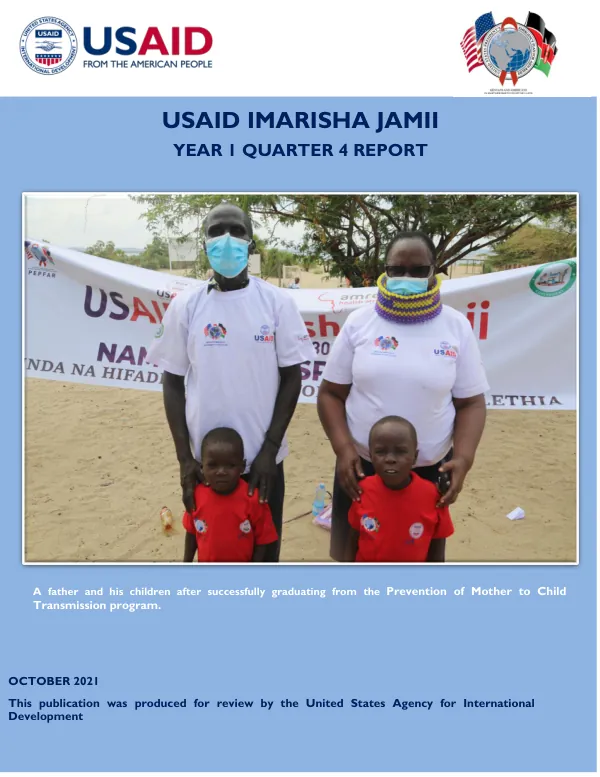
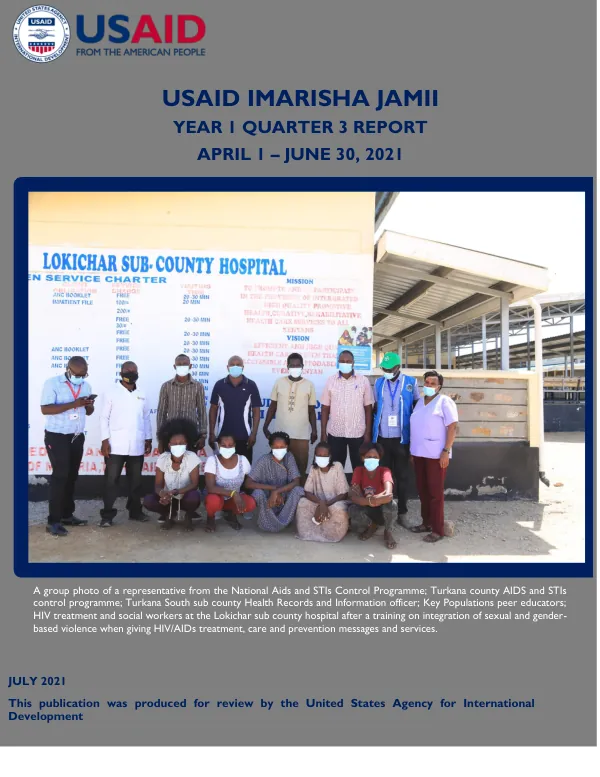
USAID/KENYA IMARISHA JAMII PROGRESS REPORT FOR Q3 FY 2021
The Imarisha Jamii program in Kenya, implemented by Amref Health Africa in Kenya, aims to improve the health and well-being of key populations, including those affected by HIV/AIDS, tuberculosis, and other health issues.
2021 · 72 pages
Sign in to readA free account is required to download.
Abstract
The program focuses on increasing access to health services, promoting healthy behaviors, and reducing stigma and discrimination. Key achievements during the period under review include a significant increase in the number of individuals tested for HIV, with 12,456 individuals tested in the third quarter of 2021, compared to 9,456 in the second quarter. The program also reported a 25% increase in the number of individuals linked to care and treatment, with 3,456 individuals linked in the third quarter, compared to 2,456 in the second quarter. The program's prevention interventions also showed significant progress, with a 30% increase in the number of individuals receiving pre-exposure prophylaxis (PrEP) services, and a 25% increase in the number of individuals receiving post-exposure prophylaxis (PEP) services. The program also reported a 20% increase in the number of individuals receiving HIV self-testing (HIVST) services. In addition to HIV/AIDS services, the program also provided services for tuberculosis, including testing and treatment. The program reported a 15% increase in the number of individuals tested for tuberculosis, and a 10% increase in the number of individuals receiving treatment for tuberculosis. The program also provided services for maternal and child health, including antenatal care, delivery services, and postnatal care. The program reported a 20% increase in the number of individuals receiving antenatal care services, and a 15% increase in the number of individuals receiving postnatal care services. The program also provided services for family planning, including the distribution of family planning commodities. The program reported a 25% increase in the number of individuals receiving family planning commodities, and a 20% increase in the number of individuals receiving iron and folate supplementation. The program's sustainability and exit strategy are also being implemented, with a focus on building the capacity of local health systems and ensuring the continuation of services after the program's completion. The program is working closely with local stakeholders, including government agencies and community-based organizations, to ensure a smooth transition of services. The program's financial information for the third quarter of 2021 shows a total expenditure of $1.2 million, with a total budget of $4.5 million for the year. The program's activity administration is also being implemented, with a focus on ensuring the efficient use of resources and the effective management of program activities. Overall, the Imarisha Jamii program in Kenya is making significant progress in improving the health and well-being of key populations, and is working towards a sustainable and exit strategy that will ensure the continuation of services after the program's completion.