USAID DEC
Keeping Children in Healthy and Protective Families Operational Research Project in Cambodia, Rwanda and Uganda
Sign inCATHOLIC RELIEF SERVICES ORGANIZATION
Keeping Children in Healthy and Protective Families Operational Research Project in Cambodia, Rwanda and Uganda
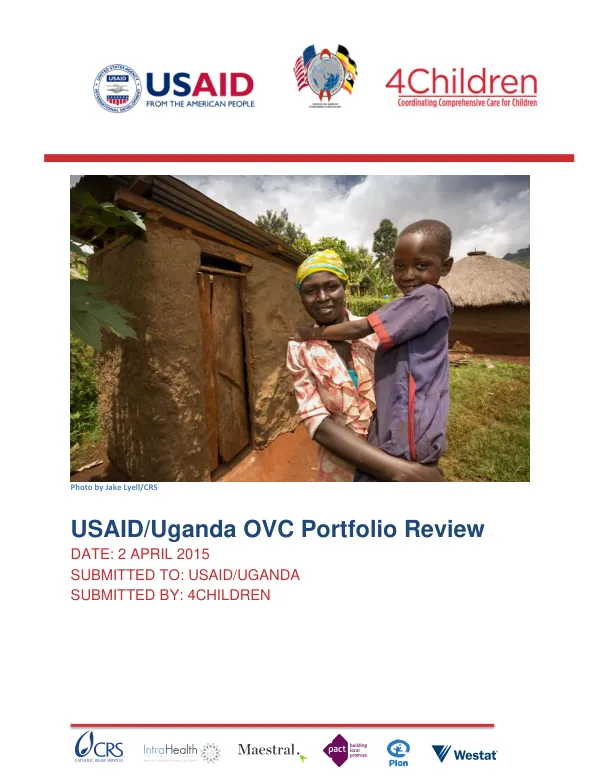
The Keeping Children in Healthy and Protective Families (KCHPF) project is a five-year operational research project initiated in September 2014 by 4Children, a consortium of organizations led by Catholic Relief Services.
2015 · 2 pages
Sign in to readA free account is required to download.
Abstract
The project aims to strengthen and build the evidence base for effective orphans and vulnerable children (OVC) programming through research and evaluation. KCHPF focuses on strengthening family care among households at high risk of children separating or where children can be reintegrated after being placed in residential care. The project will be implemented in Cambodia, Rwanda, and Uganda, priority countries for the United States Government Action Plan for Children in Adversity. KCHPF aims to build the evidence base around what works to keep children in healthy and protective families, especially in contexts that render families and children vulnerable to a wide range of adversities. The project places great emphasis on ensuring relevant global and local evidence has been reviewed and that respected practitioners and academics with expertise in the sector contribute to project and research design. KCHPF will adopt, adapt, or develop a local case management model and train cadres of workers at different levels to carry out family reintegration case work according to harmonized standards. All KCHPF local partners will be trained to better understand the importance of family-based care and continuum of care options according to the 2009 Guidelines for the Alternative Care of Children. Identified partners will be trained to deliver services prioritized by KCHPF, which may include parenting programs and household economic strengthening initiatives. The project is committed to involving children, families, and communities to the furthest extent possible during the life of the project. While adhering to strict ethical and safeguarding standards, the project will strive to promote local understanding and ownership of its activities by transparently sharing information and establishing beneficiary consultative and feedback mechanisms. The involvement of local authorities and community-based organizations will be critical to the sustainability of KCHPF efforts. KCHPF will aim to answer research questions that are relevant to each context by testing different family strengthening interventions and measuring their impact on child wellbeing as well as their effectiveness in keeping families together. Decisions about which interventions should be tested and how these should be delivered will be made in close dialogue with local stakeholders. Research design will be a strong consideration during this process and will influence how the project will be ultimately implemented. Consequently, KCHPF will look different in each country, but in each country, the activities will contribute to building a national evidence base. The project timeline indicates that from November 2015 to June 2016, KCHPF will work closely with partners in each country to identify project sites, design the project and research protocols, finalize the ethical review process, initiate a capacity-building program for key staff engaged in the project, and begin baseline data collection. Implementation will be for approximately three years, with final data collection and closure in 2019.
Related documents