PALLADIUM INTERNATIONAL, LLC
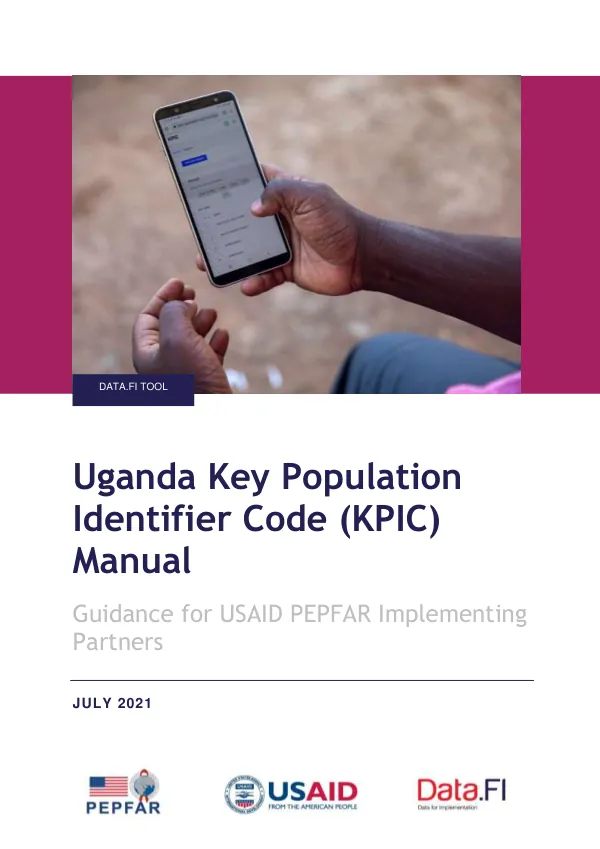
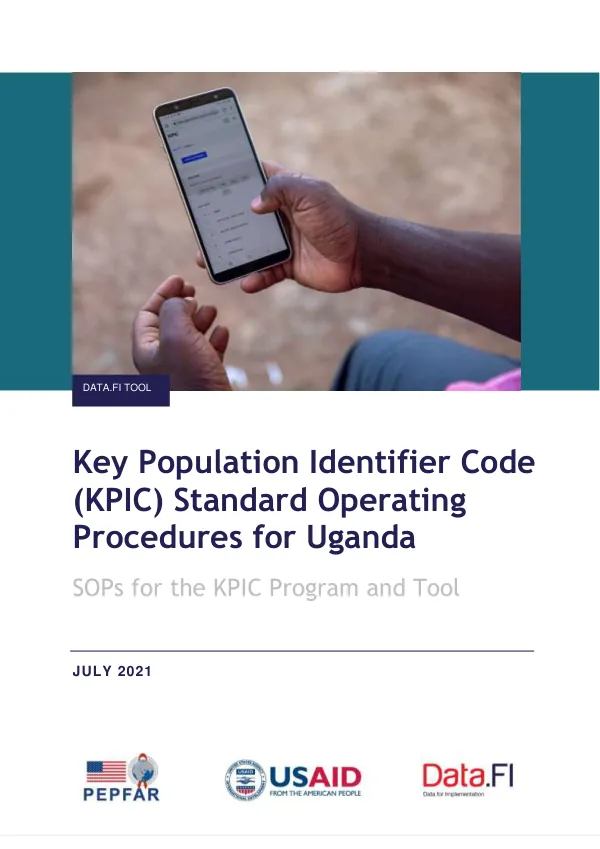
Key Population Identifier Code (KPIC) Standard Operating Procedures for Uganda
The Key Population Identifier Code (KPIC) Standard Operating Procedures for Uganda outlines the guidelines for implementing the KPIC program and tool in Uganda.
2021 · 31 pages
Sign in to readA free account is required to download.
Abstract
The document was developed by Data.FI, IMC Worldwide, and other stakeholders, with funding from the United States Agency for International Development (USAID). The KPIC program aims to facilitate safe access to HIV services for key populations in Uganda. The KPIC program involves several key stakeholders, including USAID IPs, regional partners, SITES, and IPs. The planning and design of KPIC interventions require the identification of stakeholders, participatory planning, and engagement with key populations. A planning protocol is established to inform the Uganda USAID mission, conduct a planning meeting, and communicate with region and other stakeholders. Budgeting and ensuring adequate resources are critical components of the KPIC program. Staffing needs, business expenses, travel costs, workshops/trainings/meetings, and COVID-19-specific costs must be considered. The program also requires human resource (HR) and capacity building, including identifying HR requirements, developing a capacity-building plan, and supporting supervision and mentoring. The KPIC program involves the generation and use of the KPIC, which requires a procedure for KPIC generation with a client present and without a client present. The program also includes reports, data confidentiality, protection, and security, matching of pre-existing health records, developing a feedback mechanism, and quality assurance and quality improvement (QA/QI) in UIC generation. The KPIC program is designed to improve the delivery of HIV services to key populations in Uganda. The program aims to increase access to HIV services, improve health outcomes, and reduce stigma and discrimination against key populations. The program's success depends on the effective implementation of the KPIC program and tool, which requires careful planning, budgeting, and resource allocation. The KPIC program has several key components, including the KPIC tool, which is a mobile and web-based application that facilitates the safe access of key populations to HIV services. The program also involves the establishment of a quality assurance and improvement team (QAIT) to ensure the quality of UIC generation. The program's reports are critical in providing feedback and recommendations for improving the delivery of HIV services to key populations. The KPIC program is implemented in several regions in Uganda, including Eastern, Southwestern, East-Central, Lango, and Acholi. The program's success is dependent on the effective collaboration and coordination among stakeholders, including USAID IPs, regional partners, SITES, and IPs. The program's impact is expected to be significant, with improved health outcomes, increased access to HIV services, and reduced stigma and discrimination against key populations. The KPIC program's implementation is expected to take place over several months, with regular monitoring and evaluation to ensure the program's effectiveness. The program's success will depend on the effective implementation of the KPIC program and tool, careful planning, budgeting, and resource allocation, and the effective collaboration and coordination among stakeholders.
Related documents