USAID
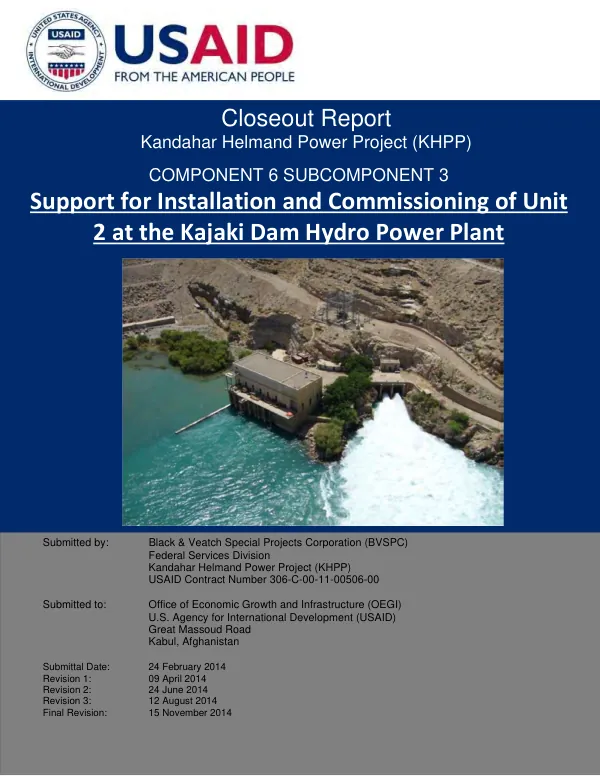
KHPP Subcomponent 1.5 – KDEG Closeout Report
The Kandahar Helmand Power Project (KHPP) is a USAID-funded initiative aimed at improving the power supply in southern Afghanistan.
2015 · 45 pages
Sign in to readA free account is required to download.
Abstract
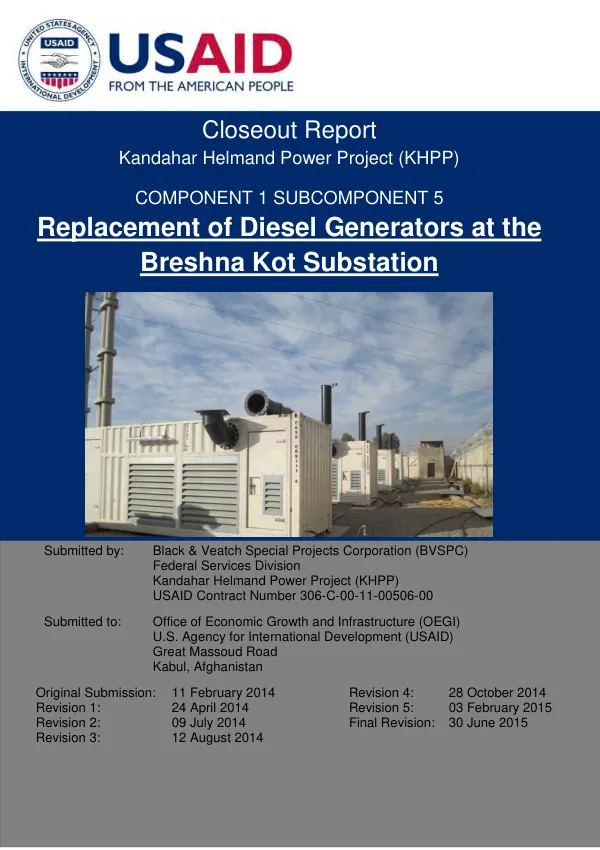
The project's primary objective is to increase the availability and reliability of electricity in the region, thereby supporting economic growth and development. The KHPP is a comprehensive project that involves the replacement of diesel generators at the Breshna Kot Substation, a key component of the project's scope of work. The replacement of these generators is expected to increase the power supply capacity of the substation, thereby reducing the reliance on diesel fuel and decreasing the environmental impact of the project. The project's implementation plan, as outlined in the contract, involves several key activities, including the replacement of the diesel generators, the installation of new electrical infrastructure, and the provision of training to local personnel on the operation and maintenance of the new equipment. The project's execution plan, as detailed in the contract, outlines the specific tasks and timelines for the completion of these activities. The project's organizational structure and management details are outlined in the contract, with Black & Veatch Special Projects Corporation (BVSPC) serving as the prime contractor and the Afghan Ministry of Energy and Water (MEW) serving as the client. The project's implementation is overseen by a project management team, which is responsible for ensuring that the project is completed on time, within budget, and to the required quality standards. The project's physical completion is documented in the completion report, which provides a detailed account of the work completed, including the installation of new electrical infrastructure, the replacement of the diesel generators, and the provision of training to local personnel. The report also includes photographs and as-built drawings of the completed work. The project's sustainability is ensured through the provision of training to local personnel on the operation and maintenance of the new equipment, as well as the development of a maintenance sustainment plan. The plan outlines the specific tasks and timelines for the maintenance of the equipment, as well as the resources required to support the maintenance activities. The project's safety and health program and plan are outlined in the contract, with a focus on ensuring the safety of personnel working on the project. The plan includes procedures for reporting incidents, conducting safety inspections, and providing training to personnel on safety procedures. The project's quality control program and plan are also outlined in the contract, with a focus on ensuring that the work completed meets the required quality standards. The plan includes procedures for conducting quality inspections, testing, and commissioning of the equipment. The project's environmental control plan is outlined in the contract, with a focus on minimizing the environmental impact of the project. The plan includes procedures for managing waste, reducing energy consumption, and minimizing the use of hazardous materials. The project's closeout report provides a comprehensive account of the project's completion, including the physical completion of the work, the provision of training to local personnel, and the development of a maintenance sustainment plan. The report also includes photographs and as-built drawings of the completed work, as well as a summary of the lessons learned during the project's implementation. The project's impact assessment is outlined in the closeout report, with a focus on evaluating the project's effectiveness in achieving its objectives. The assessment includes an evaluation of the project's outcomes, including the increase in power supply capacity, the reduction in diesel fuel consumption, and the improvement in the reliability of the power supply. The project's development experience clearinghouse (DEC) report provides a summary of the project's experience and lessons learned, as well as recommendations for future projects. The report includes an evaluation of the project's strengths and weaknesses, as well as suggestions for improving the project's implementation and management.