CHEMONICS
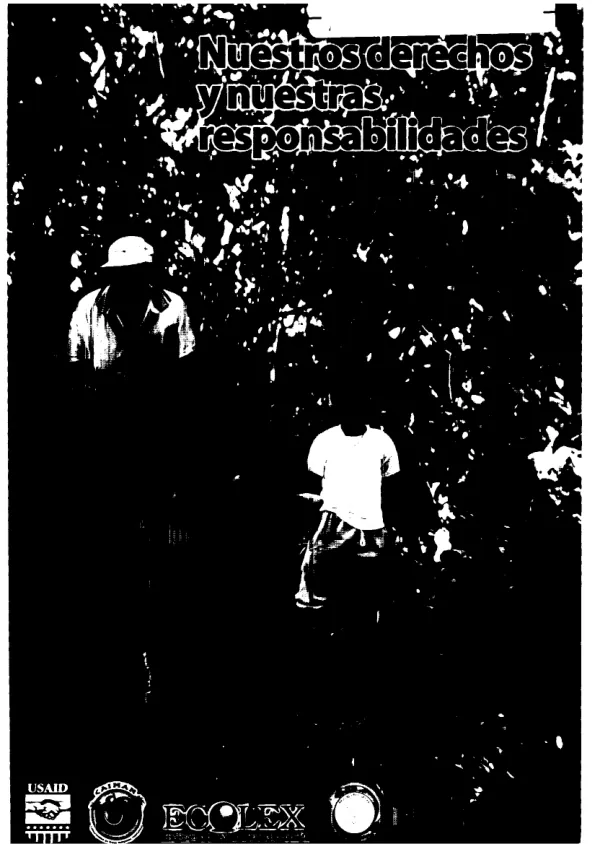
La relación de los indígenas con su territorio
The relationship between indigenous peoples and their territory is a fundamental aspect of their lives, as are the natural resources that exist within their lands.
2014 · 82 pages
Sign in to readA free account is required to download.
Abstract
Since their ancestors, indigenous peoples have cared for their territory, organized themselves communally, and established their own laws and regulations. However, they cannot be oblivious to the rights and responsibilities they have as citizens of this country and as members of a collectivity, as stipulated by our legislation and international conventions. The "Conservation in Indigenous Managed Areas" (CAIMAN) project, executed under a contract between USAID and Chemonics International Inc., aims to work on territorial consolidation, institutional capacity strengthening, and seeking financial sustainability for three indigenous nationalities: Cofán, Awá, and Huaorani. To execute the territorial consolidation component, the project involves the direct participation of the Corporación de Gestión y Derecho Ambiental ECOLEX, which, in coordination with the federations of the aforementioned nationalities, develops experiences in matters of land tenure, collective rights, community mediation, territoriality, and indigenous territory, as well as training programs for community paralegals. The purpose of this guide is to provide indigenous communities with greater knowledge in the field of law, through topics related to the environment, natural resources, territory, biodiversity, and others, in order to optimize their capacities in the various activities related to these topics that directly affect them. By knowing better the rights and responsibilities that each one has, as an individual, as a member of a community, as part of an indigenous nationality, as a country inhabitant, and as a landowner, we can act in accordance with the laws, we can make our rights respected, both collective and individual, and fulfill the responsibilities that the laws stipulate. Indigenous peoples have their own laws and regulations, which are not written but are known and respected by all. In a community, in a country, every person has rights and responsibilities. The law is for everyone, and it is the same for adults, young people, the rich, the poor, the peasants, the merchants, the artisans, the indigenous peoples, the mestizos, or the whites. Before the law, everyone is equal. A country has laws, which are called laws. The laws of a country, which are written in the Constitution, are for everyone, and everyone must respect them. Everyone is equal before the law. The Constitution is the law that is above all others, and no other law of the country can say things contrary to what the Constitution says. The rights and responsibilities of indigenous nationalities are recognized in the Constitution of Ecuador. The Constitution is the law that is above all others, and no other law of the country can say things contrary to what the Constitution says. There are two types of rights: individual rights and collective rights. Individual rights are different from collective rights. When we talk about a collective right, we are talking about a community right. Collective rights are rights of a collectivity, of a nationality, which has organized itself according to the needs of its members. Everyone needs to know the collective rights and vigilantly ensure that they are fulfilled, in order to defend ourselves, to support each other, and not to let anyone commit abuses. The Convention 169 of the International Labor Organization (ILO) is a fundamental instrument for the recognition and protection of the rights of indigenous peoples.