NEAR EAST FOUNDATION
Learning Paper: Advancing Agricultural Markets in Syria (AAMS)
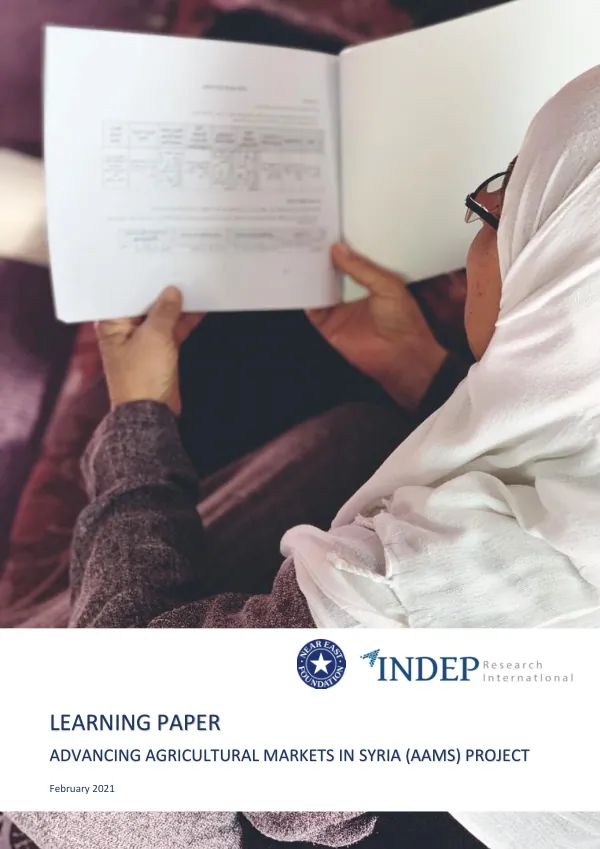
The agricultural development initiative in Syria, known as the Advancing Agricultural Markets in Syria (AAMS) project, was implemented by the Near East Foundation (NEF) in 2017 with funding from the United States Agency for International Development (USAID).
2021 · 40 pages
Sign in to readA free account is required to download.
Abstract
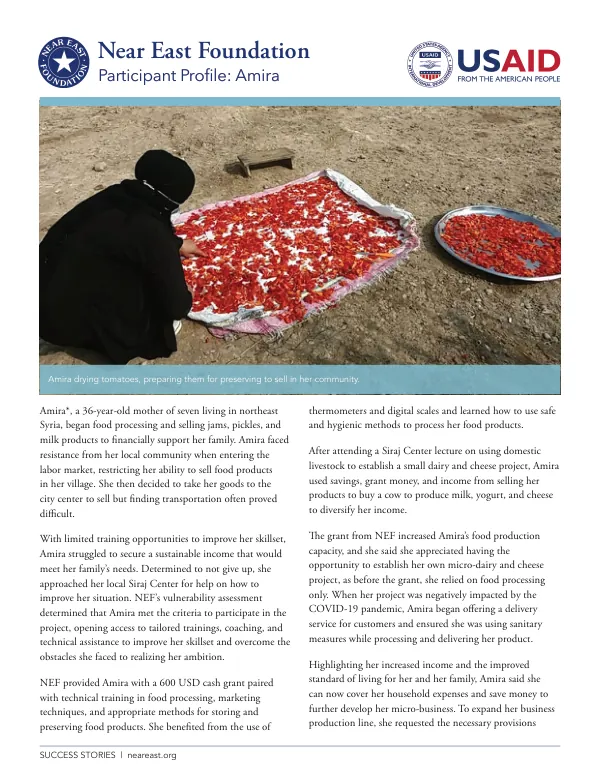
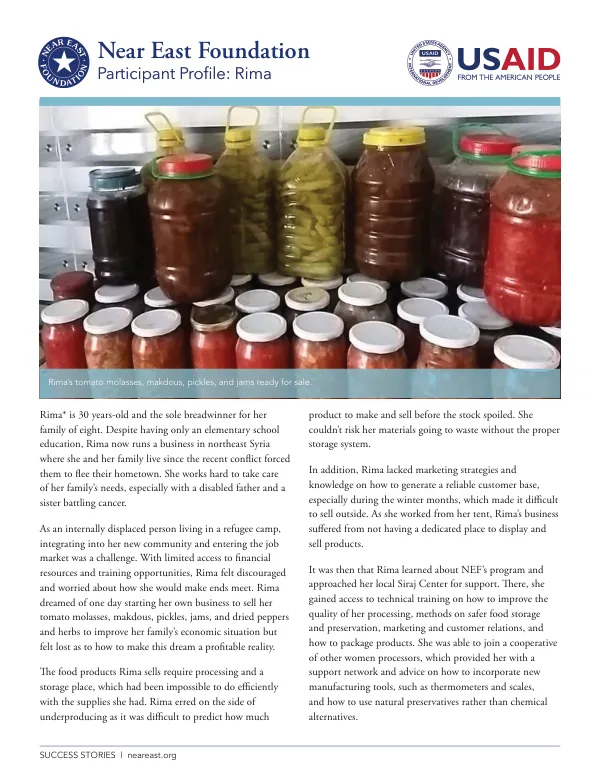
Initially, the project was located in non-regime-held areas of Dara'a, but it was forced to relocate to Northeast Syria in 2018 due to Syrian government offensives. Through AAMS, NEF worked with over 2,000 farmers and 500 food processors at eight community livelihoods hubs, known as Siraj centers, in conflict-affected areas. The project aimed to strengthen the relationships and access to sales channels for farmers and processors, while improving the quality and value of their products to sustainably impact value chains and market demand. The ultimate goal of AAMS was to achieve higher productivity and income, improved food security, greater understanding and mutual trust, and enduring household and community resilience in the face of shocks and setbacks. The research study on AAMS was developed by INDEP Research International (INDEP) and adopted a Qualitative Systematic Analysis model as its key research framework. The study exploited a wide range of secondary and primary data using both qualitative and quantitative data collection methods. The findings of the study indicate that the AAMS project has had a significant impact on the lives of beneficiaries, particularly in terms of production, sales, and food security. Increased production volumes, improved market access and linkages, and the revival of the local economy and related activities have created economic opportunities for vulnerable men and women. The project has also improved living conditions, increased incomes, and reduced household debt, thereby strengthening short- and medium-term food security for the majority of beneficiaries. Additionally, the linkages created by the project between beneficiaries and project actors are expected to continue due to improved trust and capacity to interact with the market. The project's success can be attributed to its focus on building relationships and access to sales channels for farmers and processors, as well as its efforts to improve the quality and value of their products. The project's impact on the local economy and the lives of beneficiaries is a testament to the effectiveness of the AAMS initiative in addressing the challenges faced by small producers and processors in Syria. The AAMS project has also had a positive impact on the social cohesion and stabilization of the communities involved. The project's focus on building trust and mutual understanding among beneficiaries has helped to create a sense of community and cooperation, which is essential for long-term resilience and stability. Furthermore, the project's emphasis on capacity building and climate adaptation has helped to prepare beneficiaries for future shocks and setbacks, thereby enhancing their ability to respond to and recover from crises. Overall, the AAMS project has demonstrated the potential of agricultural development initiatives to address the challenges faced by small producers and processors in conflict-affected areas. The project's success highlights the importance of building relationships and access to sales channels, improving the quality and value of products, and focusing on capacity building and climate adaptation.