INTERNATIONAL ORGANIZATION FOR MIGRATION
Lecciones 1er info 2019 parte1
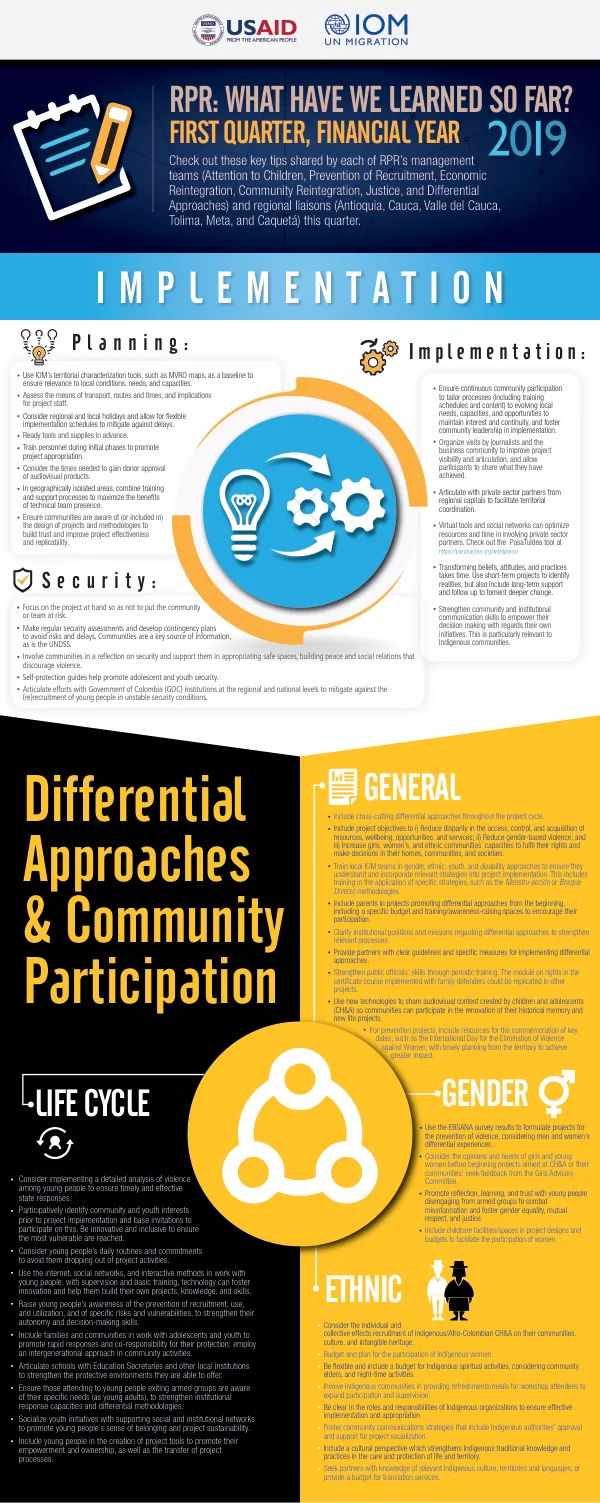
The prevention of violence among children and adolescents in Colombia is a critical issue that requires a multifaceted approach.
2019 · 1 pages
Sign in to readA free account is required to download.
Abstract
Differential approaches, which take into account the unique experiences and needs of girls and young women, are essential in preventing violence and promoting gender equality. The EBSANA survey results highlight the importance of considering men and women's differential experiences in the prevention of violence. Community participation is a key component of successful projects aimed at preventing violence. The Girls Advisory Committee plays a crucial role in seeking feedback from girls and young women before beginning projects aimed at CH&A or their communities. Promoting reflection, learning, and trust with young people disengaging from armed groups is also essential in combating misinformation and fostering gender equality, mutual respect, and justice. Incorporating childcare facilities and spaces in project designs and budgets is vital in facilitating the participation of women. This approach recognizes the importance of women's roles in preventing violence and promoting community well-being. The individual and collective effects of the recruitment of Indigenous/Afro-Colombian CH&A on their communities, culture, and intangible heritage must also be considered. Budgeting and planning for the participation of Indigenous women is essential in ensuring that their voices are heard and their needs are addressed. Flexibility and a budget for Indigenous spiritual activities, considering community elders and night-time activities, are also necessary in respecting the cultural practices and traditions of Indigenous communities. Community communications strategies that include Indigenous authorities' approval and support for project socialization are critical in promoting effective implementation and appropriation. A cultural perspective that strengthens Indigenous traditional knowledge and practices in the care and protection of life and territory is also essential in promoting community well-being and preventing violence. Participatory identification of community and youth interests prior to project implementation is vital in ensuring that the most vulnerable are reached. Considering young people's daily routines and commitments is also essential in avoiding them dropping out of project activities. The use of internet, social networks, and interactive methods in work with young people can foster innovation and help them build their own projects, knowledge, and skills. Raising young people's awareness of the prevention of recruitment, use, and utilization, and of specific risks and vulnerabilities, is essential in strengthening their autonomy and decision-making skills. Including families and communities in work with adolescents and youth is also crucial in promoting rapid responses and co-responsibility for their protection. Articulating schools with Education Secretaries and other local institutions is vital in strengthening the protective environments they offer. Ensuring that those attending to young people exiting armed groups are aware of their specific needs is also essential in strengthening institutional response capacities and differential methodologies. Socializing youth initiatives with supporting social and institutional networks is critical in promoting young people's sense of belonging and project sustainability. Including young people in the creation of project tools is also essential in promoting their empowerment and ownership, as well as the transfer of project processes. In terms of implementation, ensuring continuous community participation is vital in tailoring processes to evolving local needs, capacities, and opportunities. Organizing visits by journalists and the business community can improve project visibility and articulation, and allow participants to share what they have achieved. Articulating with private sector partners from regional capitals can facilitate territorial coordination, while virtual tools and social networks can optimize resources and time in involving private sector partners. Transforming beliefs, attitudes, and practices takes time, and using short-term projects to identify realities, but also including long-term support and follow-up, can foment deeper change. Strengthening community and institutional communication skills is essential in empowering their decision-making with regards their own initiatives. This is particularly relevant to Indigenous communities. Using IOM's territorial characterization tools, such as MVRO maps, as a baseline can ensure relevance to local conditions, needs, and capacities. Assessing the means of transport, routes, and times, and implications for project staff, is also essential in ensuring effective project implementation. Considering regional and local holidays and allowing for flexible implementation schedules can mitigate against delays. Ready tools and supplies in advance, and train personnel during initial phases to promote project appropriation. In geographically isolated areas, combining training and support processes can maximize the benefits of technical team presence. Ensuring communities are aware of (or included in) the design of projects and methodologies can build trust and improve project effectiveness and replicability. Focus on the project at hand to avoid putting the community or team at risk. Make regular security assessments and develop contingency plans to avoid risks and delays. Communities are a key source of information, as is the UNDSS. Involve communities in a reflection on security and support them in appropriating safe spaces, building peace and social relations that discourage violence. Self-protection guides can help promote adolescent and youth security. Articulate efforts with Government of Colombia (GOC) institutions at the regional and national levels to mitigate against the (re)recruitment of young people in unstable security conditions. Include cross-cutting differential approaches throughout the project cycle. Include project objectives to reduce disparity in the access, control, and acquisition of resources, wellbeing, opportunities, and services; reduce gender-based violence; and increase girls