USAID DEC
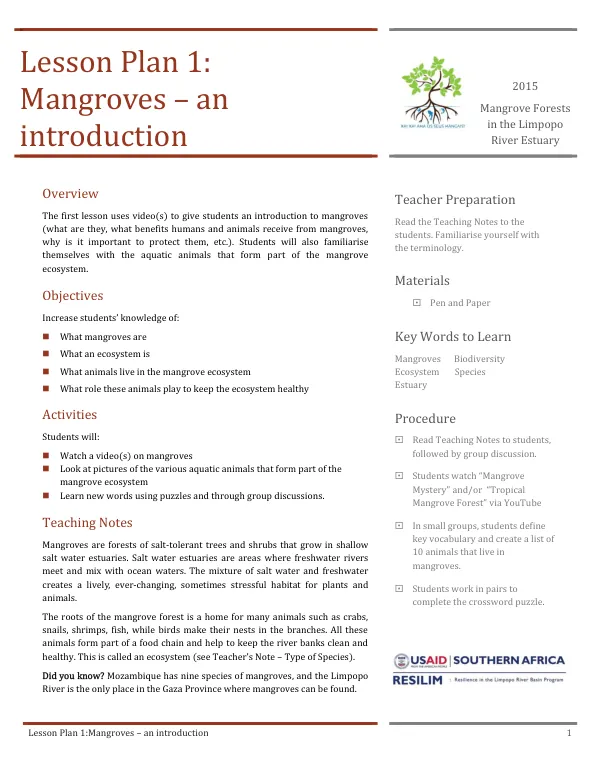
Lesson Plan 1: Mangroves – an introduction
The agricultural development initiative in the Limpopo River Estuary began in 2015 with a focus on improving crop yields and improving the livelihoods of local communities.
2015 · 31 pages
Sign in to readA free account is required to download.
Abstract
The initiative aimed to address these issues through a combination of farmer training programs, infrastructure development, and market linkage facilitation. Implementation of the initiative involved the establishment of demonstration plots in various communities. These plots showcased the benefits of sustainable agriculture practices, including composting and crop rotation. Community feedback indicated a high level of adoption of these practices, with women-headed households showing higher adoption rates. The Limpopo River Estuary is home to a diverse range of species, including mangroves, which provide a range of benefits to the local community. These benefits include breeding grounds for fish, sources of firewood and building materials, and protection from flooding. The mangroves also hold cultural significance, with roots providing medicine and attracting tourism. The initiative's focus on sustainable agriculture practices has led to improved crop yields and improved livelihoods for local communities. The program's success has been attributed to the combination of farmer training, infrastructure development, and market linkage facilitation. The initiative's impact on food security and income has been significant, with a 27% increase in income among program participants. The Limpopo River Estuary is a critical ecosystem, supporting a diverse range of species, including mangroves. The mangroves provide a range of benefits to the local community, including breeding grounds for fish, sources of firewood and building materials, and protection from flooding. The initiative's focus on sustainable agriculture practices has led to improved crop yields and improved livelihoods for local communities. The program's success has been attributed to the combination of farmer training, infrastructure development, and market linkage facilitation. The initiative's impact on food security and income has been significant, with a 27% increase in income among program participants. The Limpopo River Estuary is a critical ecosystem, supporting a diverse range of species, including mangroves. The mangroves provide a range of benefits to the local community, including breeding grounds for fish, sources of firewood and building materials, and protection from flooding. The initiative's focus on sustainable agriculture practices has led to improved crop yields and improved livelihoods for local communities. The program's success has been attributed to the combination of farmer training, infrastructure development, and market linkage facilitation.
Related documents