USAID DEC
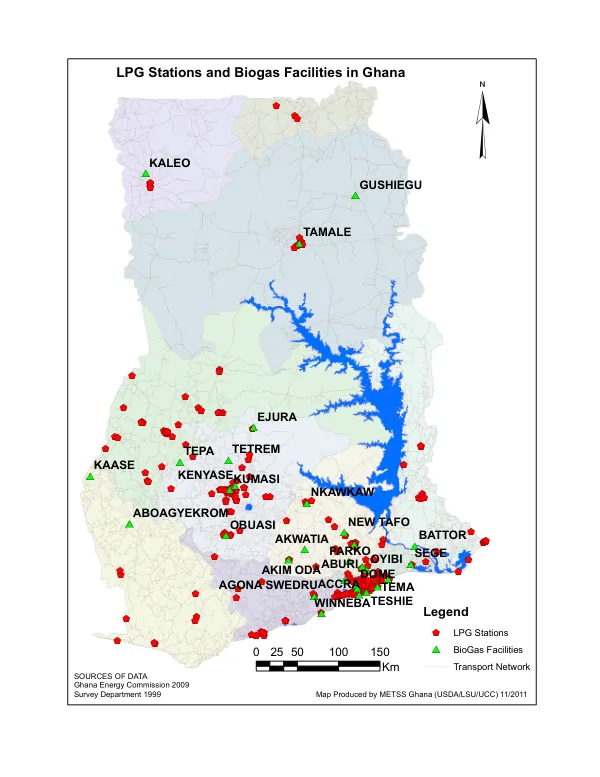
LPG Stations and BioGas Facilities in Ghana
Ghana's energy landscape is characterized by a mix of traditional and modern energy sources.
1 pages
Sign in to readA free account is required to download.
Abstract
The country's transportation network is a critical component of its energy infrastructure, with a focus on road connectivity. The network spans over 64,000 kilometers, with major highways connecting major cities such as Accra, Kumasi, and Tamale. The transportation network is supported by a network of LPG stations and biogas facilities. According to data from the Ghana Energy Commission in 2009, there are numerous LPG stations scattered throughout the country. These stations provide a vital service to households and businesses, offering a cleaner and more efficient alternative to traditional cooking fuels. The distribution of LPG stations and biogas facilities is not uniform, with some regions having a higher concentration of these facilities than others. For example, the Greater Accra Region has a higher number of LPG stations compared to other regions. This is likely due to the region's high population density and urbanization. The data on LPG stations and biogas facilities in Ghana was sourced from various institutions, including the Ghana Energy Commission, the Survey Department, and METSS Ghana. The map produced by METSS Ghana in 2011 provides a visual representation of the distribution of these facilities across the country. The map highlights the regions with the highest concentration of LPG stations and biogas facilities, providing valuable insights for policymakers and energy planners. The transportation network and energy infrastructure in Ghana are critical components of the country's economic development. The availability of modern energy sources such as LPG and biogas has the potential to improve energy access and reduce greenhouse gas emissions. However, the uneven distribution of these facilities highlights the need for targeted investments in energy infrastructure to ensure that all regions of the country have access to modern energy sources.