USAID DEC
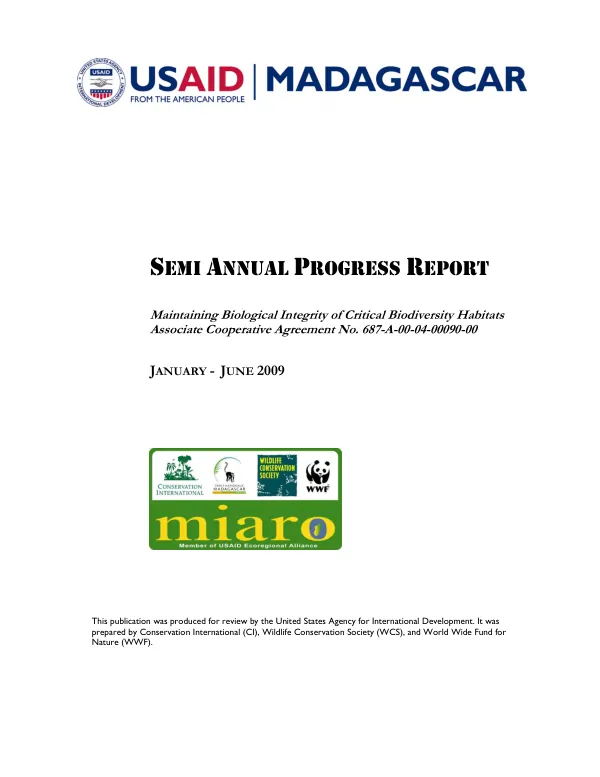
Maintaining Biodiversity Habitats: Report for the Period January 1 - December 31, 2009
Sign inUSAID
Maintaining Biodiversity Habitats: Report for the Period January 1 - December 31, 2009
The agricultural development initiative in Eastern Province, Kenya, was launched in 2009 under the USAID Project.
2009 · 53 pages
Sign in to readA free account is required to download.
Abstract
The project aimed to maintain biological integrity of biodiversity habitats. The project period was from January 1 to June 30, 2009. The project focused on three key modules: ecological linkages, protected areas, and sustainable financing mechanisms. Module 1 established and maintained ecological linkages, while Module 2 improved management for protected areas. Module 4 mobilized and operationalized sustainable financing mechanisms. During the project period, several challenges were encountered, including limited resources and inadequate infrastructure. The project team faced difficulties in implementing sustainable financing mechanisms due to funding constraints. The project recommended solutions to address the challenges, including securing additional funding and improving project management. The project also identified areas where objectives were not achieved, including the limited adoption of sustainable practices among farmers. The project achieved several outcomes, including the establishment of ecological linkages and improved management for protected areas. The project also mobilized and operationalized sustainable financing mechanisms, which will help to ensure the long-term sustainability of the project's outcomes. The project's success was due to the collaborative efforts of the project team, local communities, and other stakeholders. The project's outcomes will have a lasting impact on the environment and the local community. The project's geographic focus was on Eastern Province, Kenya. The project's timeframes were from January 1 to June 30, 2009. The project's recommendations include securing additional funding and improving project management to ensure the long-term sustainability of the project's outcomes. The project's achievements are documented in the project's report, which provides a detailed account of the project's activities, challenges, and outcomes. The report highlights the project's successes and identifies areas for improvement. The project's recommendations are intended to help ensure the long-term sustainability of the project's outcomes. The project's outcomes will have a lasting impact on the environment and the local community. The project's success demonstrates the importance of collaborative efforts among project team members, local communities, and other stakeholders.