ICF
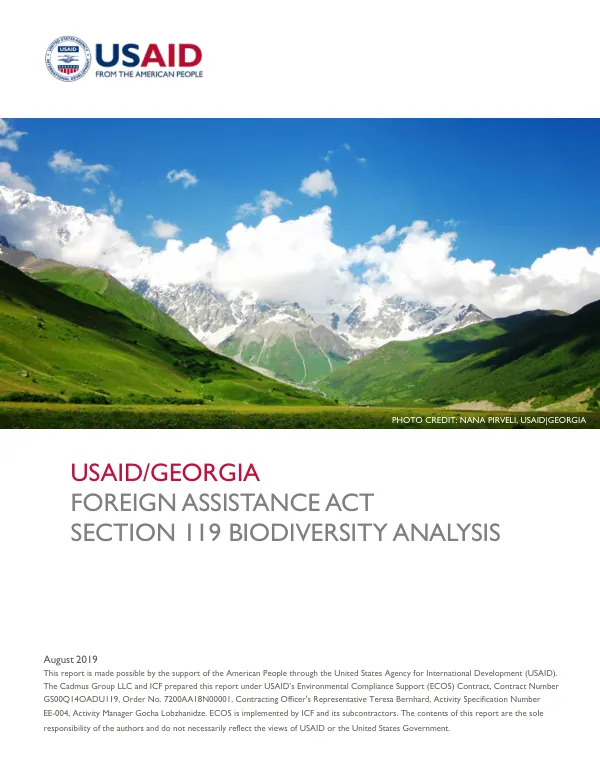
USAID/GEORGIA FOREIGN ASSISTANCE ACT SECTION 119 BIODIVERSITY ANALYSIS
Georgia's biodiversity is characterized by a range of ecosystems, including forests, freshwater, and marine environments, as well as other unique habitats such as alpine meadows and wetlands.
2019 · 111 pages
Sign in to readA free account is required to download.
Abstract
The country's biodiversity is influenced by its geographical location, with the Caucasus Mountains and the Black Sea bordering the country. Georgia's forests cover approximately 38% of the country's territory, with the majority being coniferous forests. The country's freshwater ecosystems are home to a variety of fish species, including the endangered sturgeon and the critically endangered beluga whale. Georgia's biodiversity is also home to a range of plant species, including the Caucasian beech and the Georgian oak. The country's alpine meadows are home to a variety of wildflowers, including the rare and endangered Edelweiss. Georgia's wetlands are an important habitat for migratory birds, including the critically endangered Dalmatian pelican. The country's biodiversity is under threat from a range of factors, including deforestation, habitat fragmentation, and climate change. The country's forests are being cleared for agriculture and urban development, leading to habitat loss and fragmentation. Climate change is also affecting the country's biodiversity, with rising temperatures and changing precipitation patterns altering the distribution and abundance of plant and animal species. The Georgian government has established a number of protected areas, including national parks and nature reserves, to conserve the country's biodiversity. These protected areas cover approximately 10% of the country's territory and provide a safe haven for endangered species. However, the effectiveness of these protected areas is limited by a lack of resources and inadequate management. The USAID program in Georgia aims to conserve the country's biodiversity by supporting the development of a national biodiversity strategy and action plan. The program also provides technical assistance to the Georgian government to improve the management of protected areas and to develop sustainable land-use planning practices. Additionally, the program supports the development of community-based conservation initiatives, including the establishment of community-managed protected areas. The program's methodology includes a range of activities, including stakeholder engagement, data collection and analysis, and analysis of the effectiveness of existing conservation efforts. The program also includes a midterm evaluation to assess the progress of the program and to identify areas for improvement. The value of Georgia's biodiversity is significant, with the country's ecosystems providing a range of ecosystem services, including provisioning services, cultural services, and regulating services. The country's forests provide timber, fuelwood, and other forest products, while its freshwater ecosystems support commercial fisheries and provide drinking water for human consumption. The country's biodiversity also has significant cultural and spiritual value, with many plant and animal species being used in traditional medicine and having spiritual significance. The legal framework affecting conservation in Georgia includes the National Biodiversity Strategy and Action Plan, which outlines the country's goals and objectives for conserving its biodiversity. The plan includes a range of measures to conserve the country's biodiversity, including the establishment of protected areas, the development of sustainable land-use planning practices, and the promotion of community-based conservation initiatives. The Georgian government has also ratified a number of international agreements related to biodiversity conservation, including the Convention on International Trade in Endangered Species of Wild Fauna and Flora (CITES) and the Convention on Biological Diversity (CBD). These agreements provide a framework for the country's biodiversity conservation efforts and require the country to take measures to conserve its biodiversity. The USAID program in Georgia has contributed to the conservation of the country's biodiversity by supporting the development of a national biodiversity strategy and action plan. The program has also provided technical assistance to the Georgian government to improve the management of protected areas and to develop sustainable land-use planning practices. Additionally, the program has supported the development of community-based conservation initiatives, including the establishment of community-managed protected areas. The program's recommendations include the development of a national biodiversity strategy and action plan, the establishment of community-managed protected areas, and the promotion of sustainable land-use planning practices. The program also recommends the development of a national monitoring and evaluation system to track the effectiveness of conservation efforts and to identify areas for improvement.
Related documents