IMPERIAL COLLEGE LONDON
Maintaining Water Security in Peru Through Green Infrastructure
In Peru, climate change has led to droughts, floods, landslides, and the retreat of mountain glaciers.
2018 · 4 pages
Sign in to readA free account is required to download.
Abstract
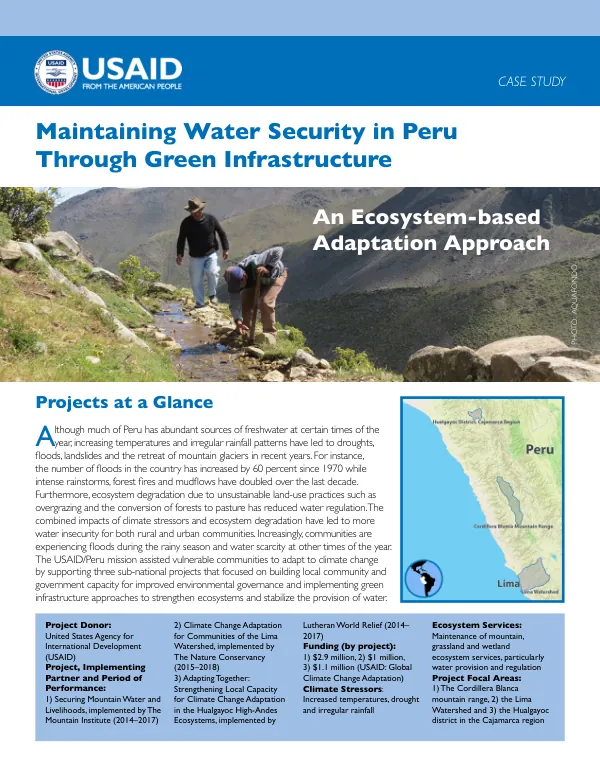
The combined impacts of climate stressors and ecosystem degradation have resulted in water insecurity for both rural and urban communities. Increasingly, communities are experiencing floods during the rainy season and water scarcity at other times of the year. The USAID/Peru mission assisted vulnerable communities to adapt to climate change by supporting three sub-national projects that focused on building local community and government capacity for improved environmental governance and implementing green infrastructure approaches to strengthen ecosystems and stabilize the provision of water. The three green infrastructure projects were: Securing Mountain Water and Livelihoods, implemented by The Mountain Institute; Climate Change Adaptation for Communities of the Lima Watershed, implemented by The Nature Conservancy; and Adapting Together: Strengthening Local Capacity for Climate Change Adaptation in the Hualgayoc High-Andes Ecosystems, implemented by Lutheran World Relief. Over the course of five years, these three projects piloted a range of ecosystem-based adaptation and hybrid adaptation activities, generated notable results, and contributed valuable lessons learned in the design and implementation of ecosystem-based adaptation approaches. Key ecosystem-based adaptation activities included implementing reforestation measures with indigenous drought-resistant tree species, planting live fences using native species, sponsoring field trips for community members to learn about ecosystem-based adaptation practices, building capacity among communities for hydrological monitoring, and providing training for local communities and government officials on ecosystem-based adaptation measures. Key hybrid adaptation activities included restoring traditional water conservation systems, building small holding walls for lakes, and supporting the development and piloting of bioremediation technologies. Strategies to support and sustain ecosystem-based adaptation included facilitating cooperation between information providers in the region, coordinating project activities with other adaptation efforts, implementing non-ecosystem-based adaptation approaches that complement ecosystem-based adaptation approaches, and collecting and using accurate and up-to-date biophysical data to inform ecosystem-based adaptation strategies.