USAID
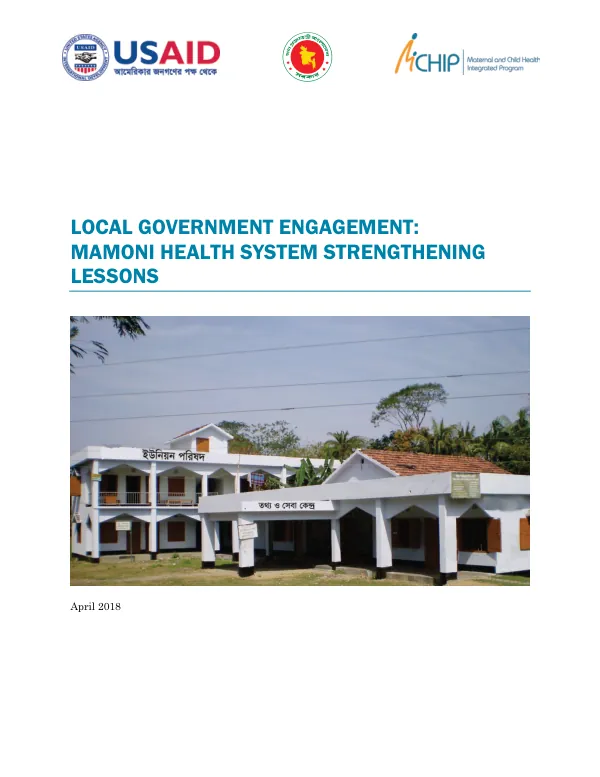
MaMoni Health System Strengthening Lessons
The MaMoni Health System Strengthening (MaMoni HSS) project works in six districts of Barisal, Chattagram, and Sylhet divisions to increase the use of integrated maternal, newborn, child health, family planning, and nutrition (MNCHFPN) services through the Health and FP departments of Bangladesh.
2018 · 34 pages
Sign in to readA free account is required to download.
Abstract
Strengthening the local government planning and engagement in health service provision is also a priority area of this project. During the MaMoni HSS project initiation, different local government committees worked on the issues of safe motherhood in the project area, but they were neither aware of any safe motherhood policy within their area nor about their role in improving safe motherhood. The union parishad, a frontline local government organization closest to the community, has members consisting of community-elected representatives. The union parishad ensures and coordinates the delivery of public services by the extension workers under different ministries and implements development projects for the welfare of rural people. Specifically, the union parishads have HFP-related statutory functions that include implementation of HFP-related programs, operating necessary programs for epidemic control and disaster management, implementation of an immunization program, registration of birth and deaths, and management of primary health care, etc. The MaMoni HSS project seeks to engage the local government to ensure effective participation of the community, improve service delivery, and create a people-centered development approach, which is sustainable and a better use of resources. The project's goal and objectives were shared with union parishads through union level advocacy meetings. However, most of the union parishad members were not concerned about their role/mandate towards HFP activities at the field, showing non-cooperation and even sometimes refusing to participate in project activities. The project took different initiatives for engaging the local government in HFP activities. Initially, the district and upazila level administration were communicated as the union parishads are linked and guided by Deputy Director-Local Government (DDLG) and Upazila Nirbahi Officers (UNOs). The project facilitated training/orientation for local government to enhance their knowledge, capacity, and awareness about the union health service system. The project also facilitated the establishment of the Union Health & Family Welfare Centers (UH&FWCs) and Standing Committees, including the Union Education, Health and Family Planning Standing Committee (UEHFPSC), to advise the union parishad regarding HFP issues. The project also facilitated meeting facilitation to mobilize resources, facilitate learning and sharing, engage local government in BCC/SBCC activities, maintain interpersonal communication and coordination with local government, and facilitate timely referral of MNH cases to appropriate facilities through local government. The project also identified motivation factors for local leaders to engage in MNCHFP-N services, including recognition, incentives, and capacity building. Significant achievements were made due to local government engagement, including improved service delivery, increased use of MNCHFP/N services, and enhanced community participation. Lessons learned in engaging local government include the importance of building trust and credibility, enhancing knowledge and capacity, and facilitating effective communication and coordination. Challenges faced during the project include non-cooperation from some union parishad members, inadequate resources, and limited capacity of local government officials. The way forward for the project includes continued engagement with local government, capacity building, and resource mobilization to ensure sustainable and effective service delivery.
Related documents