USAID DEC
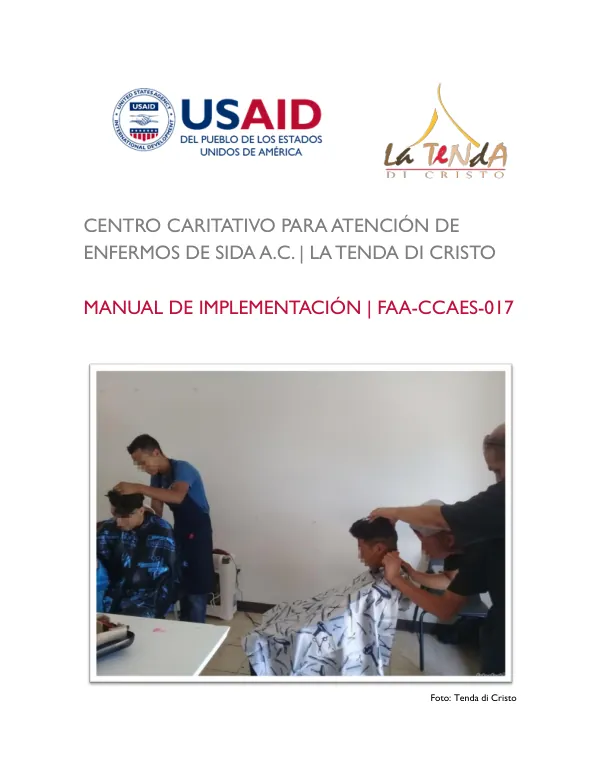
Manual de Implementación: Yo Soy Rediseño Social
The Yo Soy Rediseño Social (YSRS) program is a comprehensive initiative aimed at providing support and guidance to young individuals in conflict with the law.
2019 · 25 pages
Sign in to readA free account is required to download.
Abstract
The program is designed to address the specific needs and circumstances of each beneficiary, with a focus on promoting social reintegration and personal growth. The beneficiaries of YSRS are primarily young males between the ages of 15 and 19, with a small percentage of female participants. They come from low-income families, often living in marginalized neighborhoods with limited access to resources and services. Many of these young individuals have experienced violence, neglect, and abuse, which has led to behavioral problems and a lack of supervision. The program's approach is centered on a personalized and holistic model of care, which includes four phases: assessment, treatment, reintegration, and follow-up. Each phase is designed to address the specific needs and challenges faced by the beneficiaries, with a focus on promoting social, emotional, and cognitive development. The YSRS program is structured around several key areas, including coordination, systematization, law, psychology, social work, labor and education, and workshops. Each area has specific functions and responsibilities, which are outlined in the program's manual. The program's methodology is based on a combination of individual and group therapy, as well as educational and vocational training. The beneficiaries are encouraged to participate in activities that promote socialization, self-esteem, and personal growth, with a focus on developing skills and competencies that will enable them to reintegrate into society. The YSRS program has been in operation since 2015, with a focus on providing support and guidance to young individuals in conflict with the law. The program has received funding from various sources, including USAID, which has enabled the development of a comprehensive and sustainable model of care. The program's outcomes have been positive, with a significant reduction in recidivism rates and an improvement in the social and emotional well-being of the beneficiaries. The program's success has been attributed to its personalized and holistic approach, which takes into account the unique needs and circumstances of each beneficiary. The YSRS program is committed to promoting social reintegration and personal growth among young individuals in conflict with the law. The program's approach is centered on a comprehensive and sustainable model of care, which addresses the specific needs and challenges faced by the beneficiaries. The program's outcomes have been positive, with a significant reduction in recidivism rates and an improvement in the social and emotional well-being of the beneficiaries. The program's manual outlines the specific functions and responsibilities of each area, as well as the activities and products generated by the program. The manual also includes a decalogue of conduct, which outlines the code of ethics that applies to both the beneficiaries and the program's staff. The YSRS program has received recognition for its innovative approach and commitment to promoting social reintegration and personal growth among young individuals in conflict with the law. The program's success has been attributed to its personalized and holistic approach, which takes into account the unique needs and circumstances of each beneficiary. The program's geographic focus is on marginalized neighborhoods in Mexico, with a focus on promoting social reintegration and personal growth among young individuals in conflict with the law. The program's timeframes are flexible, with a focus on providing ongoing support and guidance to the beneficiaries.