USAID
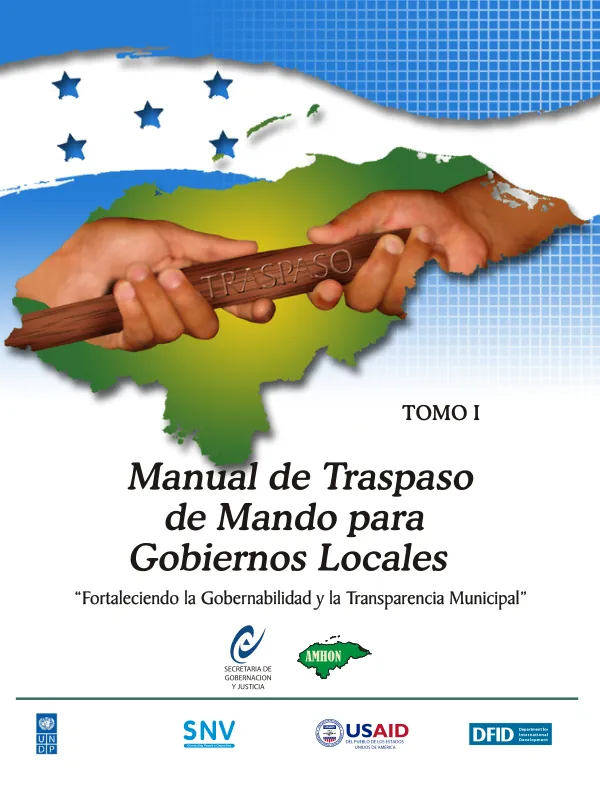
Manual de Traspaso de Mando para Gobiernos Locales
The Manual of Transfer of Mandate for Local Governments, "Fortaleciendo la Gobernabilidad y la Transparencia Municipal," aims to facilitate the transfer of power from outgoing to incoming municipal governments.
61 pages
Sign in to readA free account is required to download.
Abstract
The manual is designed to be a simple and practical tool for the transition process, outlining the actions to be taken by outgoing and incoming authorities, as well as the necessary information to be shared. The manual is part of the Program of Decentralization and Local Development (PRODDEL) and has been developed by the Mesa de Cooperantes para el Apoyo a la Descentralización de Honduras, with the support of the Government of Honduras and the Asociación de Municipios de Honduras (AMHON). The manual is intended to promote democratic governance and transparency at the local level, and to contribute to the improvement of the transition process between municipal governments. The Constitution of Honduras establishes that municipalities are autonomous and self-governing, with a four-year term of office. The municipal government is responsible for the administration of the municipality and the well-being of its inhabitants. The municipal corporation is the deliberative body of the municipal government, elected by the people and responsible for the administration of municipal finances. The transfer of power from one municipal government to another is a critical process that requires careful planning and execution. The manual outlines the key stages of the transfer process, including the willingness of the outgoing authority to initiate the transfer, the analysis and verification of municipal information, and the ceremony of transfer of power. The manual also emphasizes the importance of transparency and accountability in the transfer process. The manual is divided into two tomes: the first tome presents a simple and practical scheme for the transfer of power, outlining the activities to be carried out by the different actors involved, including the society, candidates, elected authorities, and municipal technicians. The second tome presents the necessary elements for a practical induction of the authorities who are about to begin their management activities, in order to carry out their administrative tasks. The manual is expected to serve as a guide for local actors, society, authorities, and municipal officials in achieving a stable, participatory, and orderly transition process. The lessons learned from this exercise are expected to contribute to the development of new proposals for reform that will help to improve the transition period between municipal governments in future elections.
Related documents