CONSULTORÍA PARA LOS DERECHOS HUMANOS Y EL DESPLAZAMIENTO – CODHES
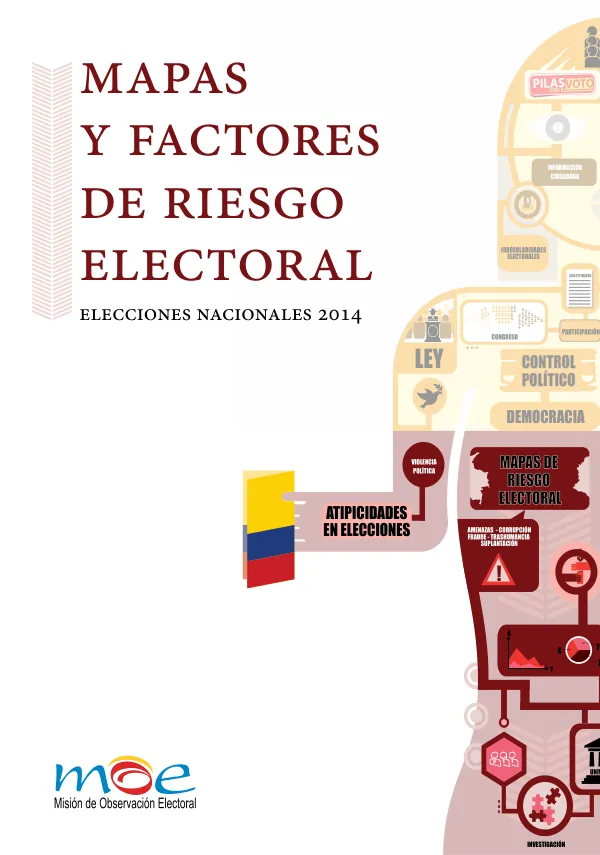
Mapas y factores de riesgo electoral: Elecciones nacionales 2014
The document "Mapas de Riesgo Electoral" focuses on the electoral risk factors in Colombia during the 2014 national elections.
2014 · 220 pages
Sign in to readA free account is required to download.
Abstract
The study was conducted by a group of researchers from various universities and institutions, including the Universidad Nacional de Colombia, Universidad del Rosario, and Universidad de los Andes. The team was led by Alejandra Barrios Cabrera, Directora Nacional of the Misión de Observación Electoral. The study identified several risk factors, including limitations to electoral competition, atypical voting patterns, and violence. The researchers also analyzed the impact of these factors on the electoral process and the participation of citizens. The study used a combination of quantitative and qualitative methods, including surveys, interviews, and statistical analysis. The document is divided into several chapters, each focusing on a specific aspect of electoral risk. Chapter 1 presents an overview of the study and its methodology. Chapter 2 examines the limitations to electoral competition, including the number of candidates and parties, as well as atypical voting patterns. Chapter 3 analyzes the impact of violence on the electoral process, while Chapter 4 examines the role of guerrillas and neoparamilitaries in the electoral risk. The study also includes a chapter on the cartography of electoral risk, which uses a combination of geographic information systems (GIS) and statistical analysis to identify areas of high electoral risk. The researchers used data from various sources, including the Misión de Observación Electoral, the Centro de Recursos para el Análisis de Conflictos (CERAC), and the Fundación para la Libertad de Prensa (FLIP). The study's findings highlight the complexity of electoral risk in Colombia and the need for a comprehensive approach to address these challenges. The researchers recommend that policymakers and electoral authorities take into account the various risk factors identified in the study and develop strategies to mitigate their impact.