MINISTRY OF AGRICULTURE
Mapping and Valuing Forest Ecosystem Services in Lebanon
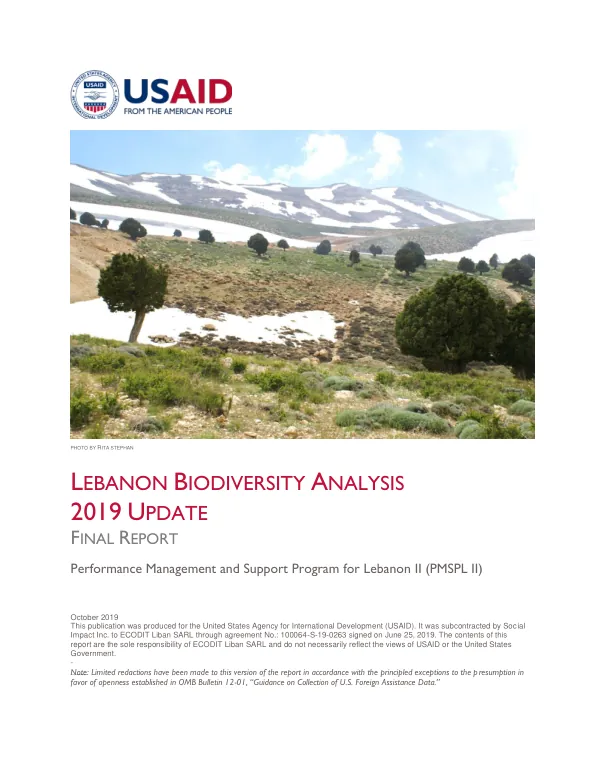
Ecosystem Services Valuation of Lebanese Forests - Overview of Context, General Methodology and Results The valuation of forest ecosystem services in Lebanon is a critical component of the country's efforts to conserve and sustainably manage its natural resources.
2021 · 108 pages
Sign in to readA free account is required to download.
Abstract
The Livelihoods in Forestry (LiF) project, funded by the United States Agency for International Development (USAID), has been instrumental in promoting the importance of forest ecosystem services and their economic value. This report provides an overview of the context, general methodology, and results of the ecosystem services valuation of Lebanese forests. The conceptual framework for forest ecosystem service valuation is based on the understanding that forests provide a range of services, including honey provision, tourism, carbon sequestration and storage, and air quality enhancement. These services have economic value and can be quantified using various methods, including cost-benefit analysis and contingent valuation. The general methodology used in this study involves the application of a framework adapted from Emerton (2014), which provides a structured approach to valuing ecosystem services. The study focuses on four key forest ecosystem services: honey provision, tourism, carbon sequestration and storage, and air quality enhancement. The valuation of these services is based on data collected from various sources, including government reports, academic studies, and field surveys. The results of the valuation exercise indicate that the total value of forest ecosystem services in Lebanon is significant, with honey provision and tourism being the most valuable services. Forest Honey Provision The study found that the total value of forest honey provision in Lebanon is estimated to be around $1.3 million per year. This value is based on data from various sources, including the number of registered beehives and honey production per year. The distribution of calculated forest honey values across different districts in Lebanon is also presented, with the highest values found in the Mount Lebanon and Bekaa districts. Forest Tourism The study found that the total value of forest tourism in Lebanon is estimated to be around $10.5 million per year. This value is based on data from a forest tourism survey, which collected information on the number of tourists visiting different nature reserves and protected areas in Lebanon. The survey also collected data on the expenditure patterns of tourists, including accommodation, food, and transportation costs. The results of the survey indicate that the most popular nature reserves and protected areas among tourists are the Horsh Ehden Nature Reserve and the Bentael Nature Reserve. Forest Carbon Sequestration and Storage The study found that the total value of forest carbon sequestration and storage in Lebanon is estimated to be around $23.6 million per year. This value is based on data from various sources, including government reports and academic studies. The results of the study indicate that the highest values of carbon sequestration and storage are found in the Mount Lebanon and Bekaa districts. Enhancement of Air Quality The study found that the total value of air quality enhancement in Lebanon is estimated to be around $1.8 million per year. This value is based on data from various sources, including government reports and academic studies. The results of the study indicate that the highest values of air quality enhancement are found in the Mount Lebanon and Bekaa districts. The results of this study provide valuable insights into the economic value of forest ecosystem services in Lebanon. The findings highlight the importance of conserving and sustainably managing Lebanon's natural resources, particularly its forests, which provide a range of ecosystem services with significant economic value. The study's results can be used to inform policy and decision-making at the national and local levels, and to promote the importance of forest ecosystem services in Lebanon.