USAID DEC
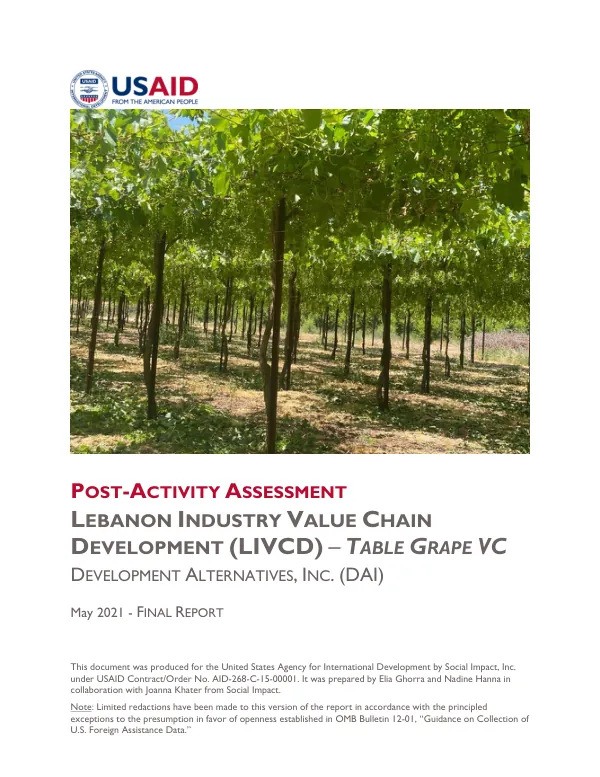
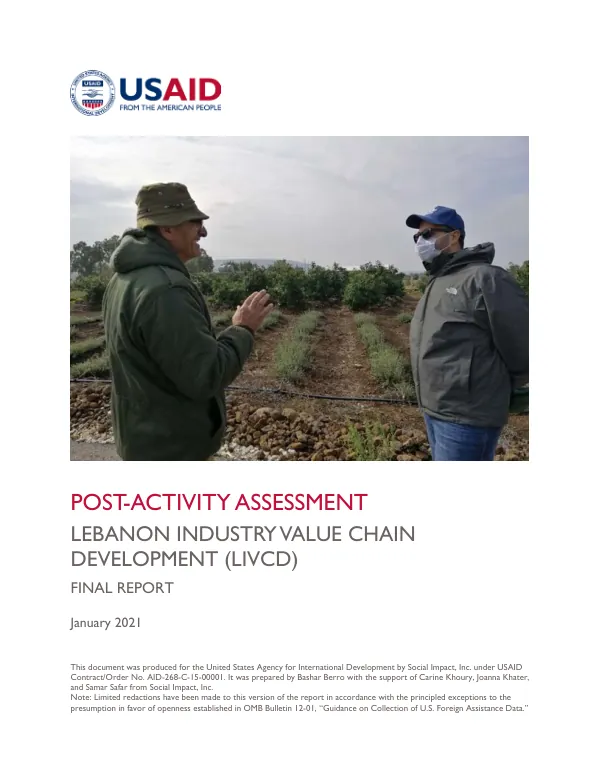
Post-Activity Assessment Lebanon Industry Value Chain Development (LIVCD) Final Report
Sign inDEVELOPMENT ALTERNATIVES, INC./FINNET
Post-Activity Assessment Lebanon Industry Value Chain Development (LIVCD) Final Report
The Lebanon Industry Value Chain Development (LIVCD) was a $46.2-million activity implemented by Development Alternatives, Inc.
2021 · 29 pages
Sign in to readA free account is required to download.
Abstract
(DAI) from September 2012 to January 2019. The activity aimed to develop inclusive and competitive value chains (VCs) and raise the incomes of the rural population in Lebanon, including micro-, small-, and medium-size enterprises (MSMEs). LIVCD was comprised of three components: Initial Assessment, Value Chain Activities, and Accessing Value Chain Finance. The implementation of LIVCD commenced in October 2012 with Component One, a six-month phase of VC assessment. DAI selected several VCs for in-depth assessment using the following selection criteria: competitiveness, development impact, and feasibility. Following this assessment phase, the project selected eight VCs to target: pome fruits, stone fruits, table grapes, olive oil, rural basket of products, processed foods, rural tourism and handicrafts, and floriculture. In 2014, floriculture and handicrafts were excluded from LIVCD's portfolio. To achieve its objective, LIVCD collaborated with private sector actors within the selected VCs by providing technical assistance (TA), equipment, grants, and access to investment for VC financing to overcome constraints to competitiveness and inclusiveness. The activity aimed to facilitate positive and real change within the life of the project and within the contract budget. The purpose of this post-activity assessment is to assess LIVCD's interventions' sustainability beyond the project's lifetime. The assessment focuses on interventions related to the pome fruit VC, the avocado VC, and the beekeeping/honey VC. The assessment team collected documents produced by DAI, reviewed LIVCD-related reports, and conducted key informant interviews with candidates from each grant. The assessment team reviewed documents produced by DAI, including case studies, feasibility studies, and progress reports. The team also reviewed LIVCD-related reports produced by PMSPL II between 2012 and 2019, such as data verification exercises and performance evaluations. The key informant interviews were conducted with the presidents of the cooperatives and other relevant stakeholders. The pome fruit VC was one of the selected VCs, and a grant was provided to the Agricultural Cooperative Association in Brih. The assessment team reviewed the grant's progress and impact, including the use of equipment and the increase in income for beneficiaries. The avocado VC was another selected VC, and a grant was provided to the Agricultural Cooperative Association in Menjez. The assessment team reviewed the grant's progress and impact, including the use of equipment and the increase in income for beneficiaries. The beekeeping/honey VC was also a selected VC, and a grant was provided to Golden Queen Center. The assessment team reviewed the grant's progress and impact, including the use of equipment and the increase in income for beneficiaries. The assessment team also identified areas for improvement and recommendations for future activities. The assessment team's findings indicate that LIVCD's interventions have had a positive impact on the selected VCs, including the pome fruit, avocado, and beekeeping/honey VCs. The grants provided to the cooperatives have increased the income of beneficiaries and improved their livelihoods. However, the assessment team also identified areas for improvement, including the need for further technical assistance and equipment to overcome constraints to competitiveness and inclusiveness. The assessment team's recommendations include the need for continued support to the selected VCs, including the provision of technical assistance and equipment. The team also recommends the development of a strategy to sustain the impact of LIVCD's interventions beyond the project's lifetime. The assessment team's findings and recommendations will contribute to the development of outcomes in situations where tangible results were not captured during LIVCD's lifetime due to a delay in implementation and/or in the completion of activities before the project's end date.