STANFORD UNIVERSITY
Mass media in rural education
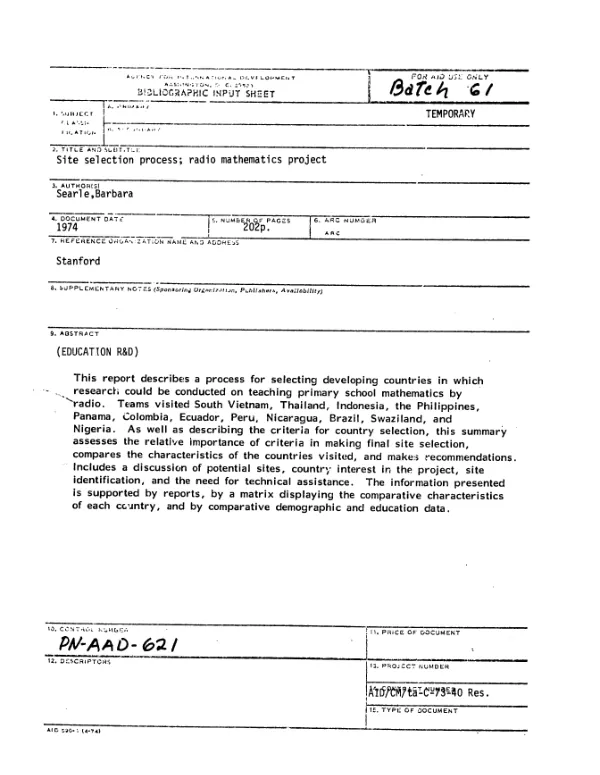
The focus in this discussion is upon the developing nations of Africa, Asia and Latin America for it is here that the need for rural education is most urgent and here that a broader use of the mass media is being most vigorously advocated.
Hornik, Robert C.; Mayo, John K. +1 more · 1970
Sign in to readA free account is required to download.
Abstract
Educators in the developing countries are turning their attention to the problems of rural education as a matter of social justice as well as political necessity. They realize that the neglect of rural people is no longer tolerable. As investments in education have grown, it has become obvious that schooling, like most social institutions remains essentially an urban phenomenon, particularly at the secondary and university levels. In most developing countries, the vast majority of rural youth are still denied the opportunity to study beyond the second or third grade, while a significantly larger number of their counterparts in the urban areas are able to progress through more advanced academic levels. Such educational imbalances help attract the ablest young people to the cities and make the development of the rural, agricultural economy much more difficult. To promote a more balanced growth between the urban and rural sectors, educators have advocated not only the extension of educational opportunities, but also the establishment of different kinds of educational services for rural areas.
Connected topics
Related documents