FAMILY HEALTH INTERNATIONAL
MCHIP Nigeria FY11 Quarter 2 Report
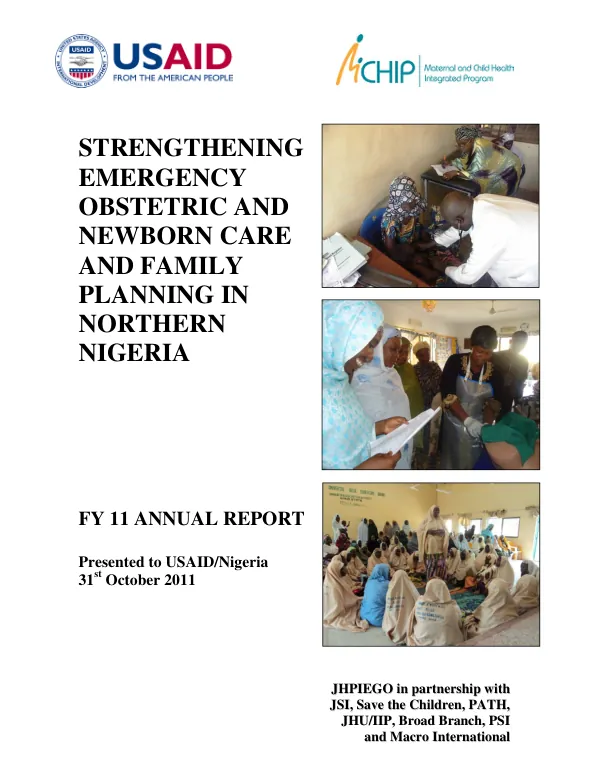
MCHIP Nigeria FY11 Quarter 2 Report highlights the organization's efforts to strengthen emergency obstetric and newborn care (EmONC) in Northern Nigeria.
2011 · 11 pages
Sign in to readA free account is required to download.
Abstract
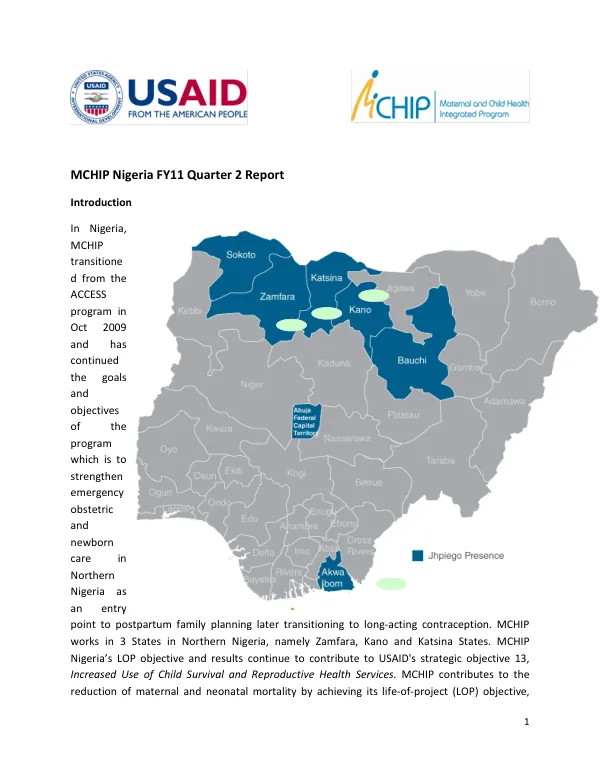
MCHIP transitioned from the ACCESS program in October 2009 and has continued to work towards its life-of-project (LOP) objective of increasing utilization of quality EmONC services by pregnant women, mothers, and their newborns. MCHIP operates in three states in Northern Nigeria: Zamfara, Kano, and Katsina. The organization's LOP objective contributes to USAID's strategic objective 13, Increased Use of Child Survival and Reproductive Health Services. To achieve this objective, MCHIP has six intermediate results, focusing on improving the enabling environment and scale-up of best practices for EmONC at national and state levels, increasing availability and distribution of EmONC-trained healthcare workers, improving quality of EmONC services, improving quality of family planning (FP) services, increasing demand for maternal and newborn services, and improving management of maternal and newborn services. MCHIP has implemented various strategies to address barriers to EmONC implementation, including human resources and health financing constraints. The organization has trained corps members, midwives, and community health extension workers (CHEWs) to provide high-quality maternal and newborn services. MCHIP has also strengthened the capacity of midwives serving under the new MSS program and trained CHEWs to provide selected basic EmONC services. To improve the quality of EmONC services, MCHIP has upgraded healthcare facilities, donated basic obstetric equipment, and provided technical assistance for the implementation of the Standards-Based Management and Recognition (SBM-R) approach. The organization has also supported the introduction of neonatal sepsis management at primary healthcare centers and within communities using government-paid CHEWs. MCHIP has continued to work with stakeholders to ensure their active participation in EmONC activities, strengthening the leadership, managerial, and advocacy skills of local government area (LGA) health management teams. The organization has also improved supervision and support for SBM-R and recognized high-performing EmONC champions, communities, and facilities. During the quarter (January 1st to March 31st, 2011), MCHIP achieved several results, including the adoption of the MCHIP MNH Client Booklet by the Hospital Management Board in Kano State and the printing of the booklet for use in all health facilities in Katsina State. MCHIP also continued its support to FP service providers working in MCHIP-supported health facilities to attend bi-monthly contraceptive review and supply meetings with the State Ministry of Health and DELIVER. The organization maintained a 4-month maximum stock level of FP commodities at all supported facilities through procurement of required commodities.